Reactiondiff
Reaction-Diffusion — Turing pattern generator.
What I asked each model — the Reactiondiff prompt
Every model on this page got this exact prompt inside the Agent Operating System: Reaction-Diffusion — Turing pattern generator.
Single HTML file out. No iteration. No examples in the system prompt. Whatever each model produced on the first run is what's on this page. 24 frontier models have attempted it so far: Claude Fable 5, Fugu Ultra, Fugu Mini, Fusion, Gemini 3.6 Flash, GLM-5.2, GPT-5.6 Sol, Grok, Inkling, Kimi K3, MiniMax M3, Hermes MoA, Muse Spark 1.2, Opus 4.8, Claude Opus 5, Qwen 3.8, Qwen 3.7, Claude Sonnet 5, Kimi K2.7 · Fast, Kimi K2.7 · No-Think, Kimi K2.7 · Quality, DeepSeek V4 Pro, DeepSeek V4 Flash, Kimi K2.7.
Why this task matters. Reactiondiff is a textbook test of sim-class capability — the kind of build that exposes whether a model is doing pattern-matching or actual reasoning. Shipping this cleanly is the floor for what I expect from a frontier model — every model on the leaderboard should at least attempt it.
How each model handled Reactiondiff
Ranked by my 0–10 score from the source comparison guides on agentos.guide. Click any to play the actual one-shot HTML the model produced.
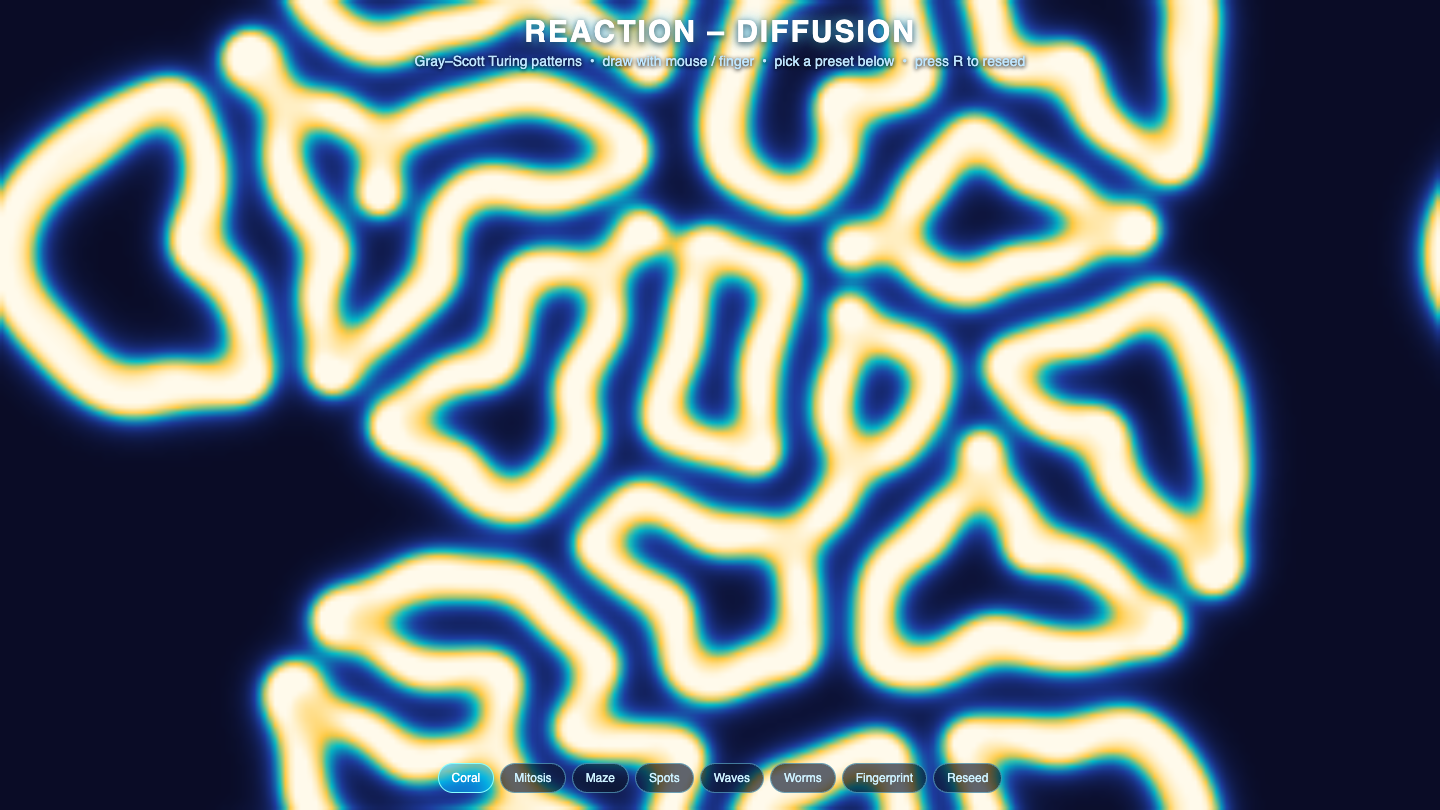
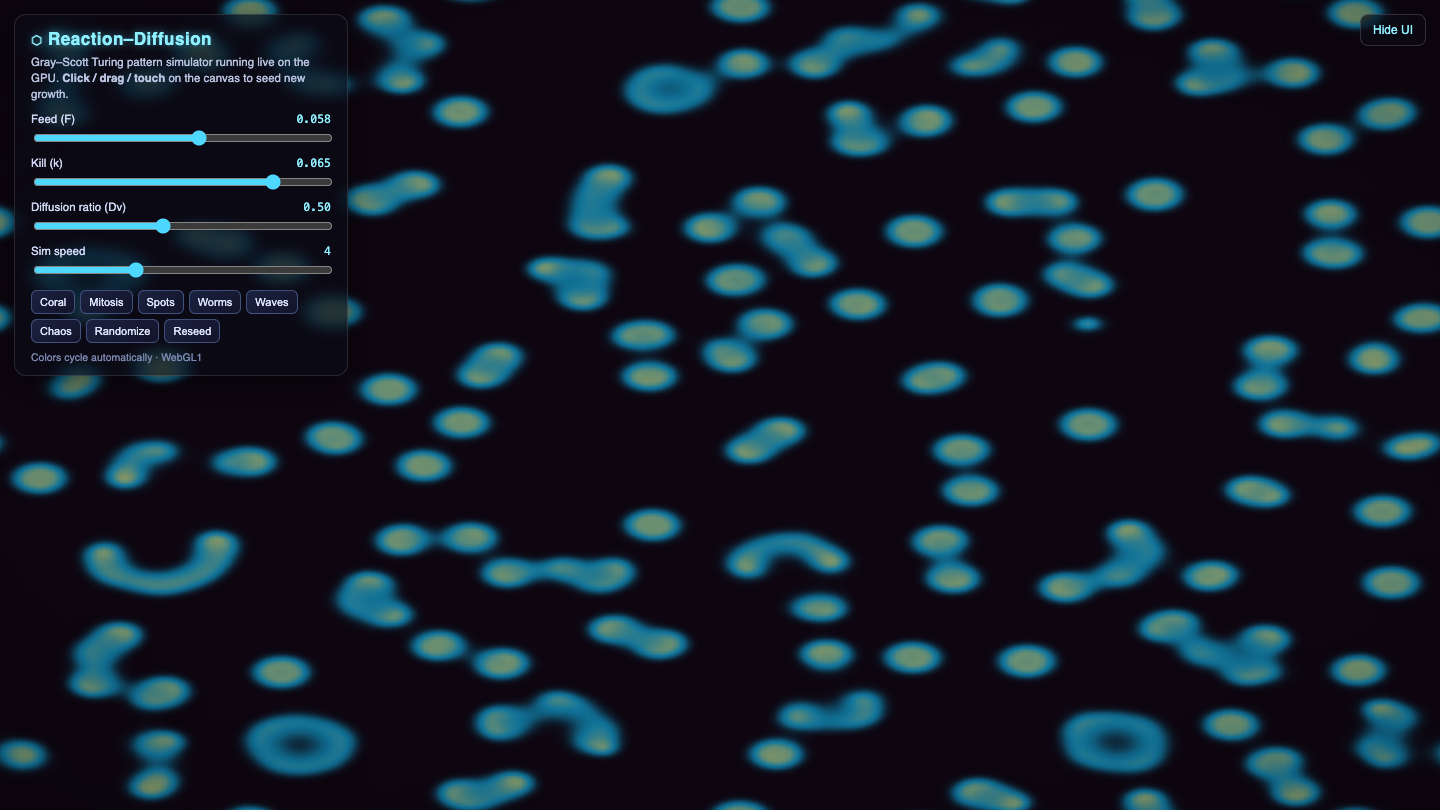
What I saw: Strong Gray-Scott implementation with a beautiful teal-gold glowing palette, clean coral maze patterns filling the screen, and solid UI with presets, drawing, and reseed; the smooth-scaled upsampling looks lush though slightly soft/blurry rather than crisp, keeping it just shy of the top.
What I saw: Ultra v2 — Gray-Scott reaction-diffusion. Smoke-test PASS.
What I saw: Gray-Scott reaction-diffusion shader. Smoke-test PASS, patterns visibly evolve.
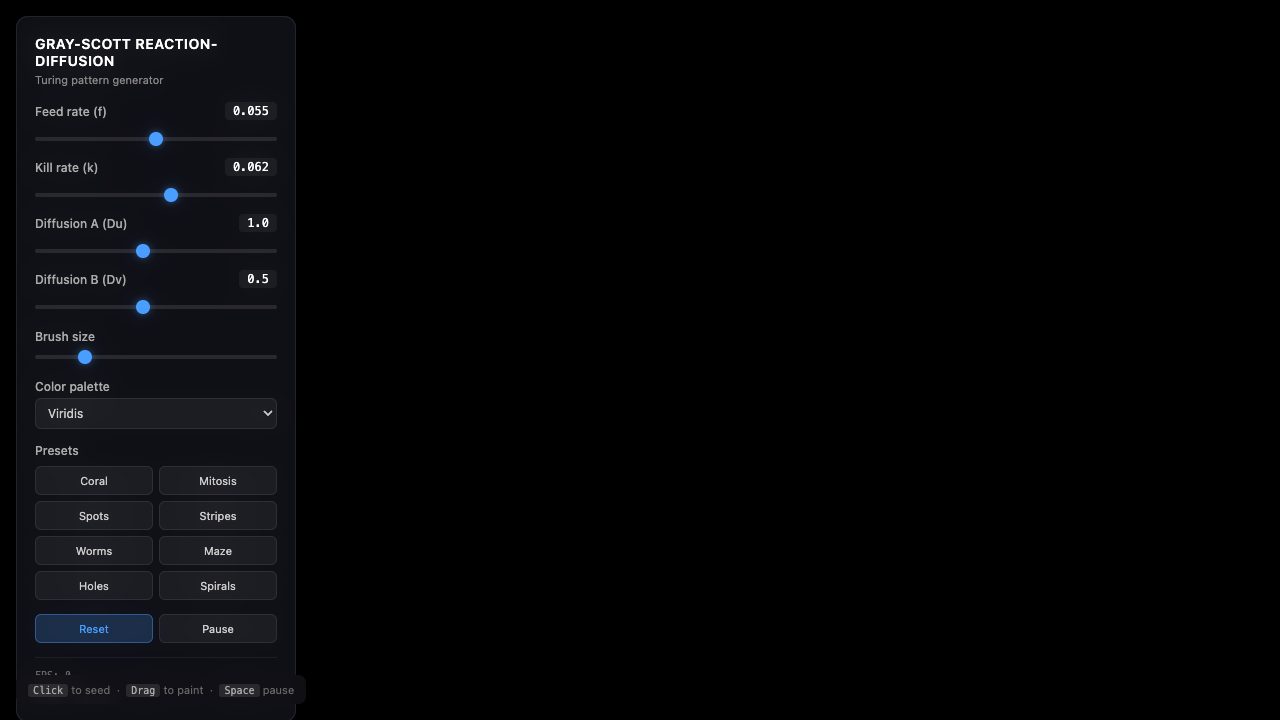
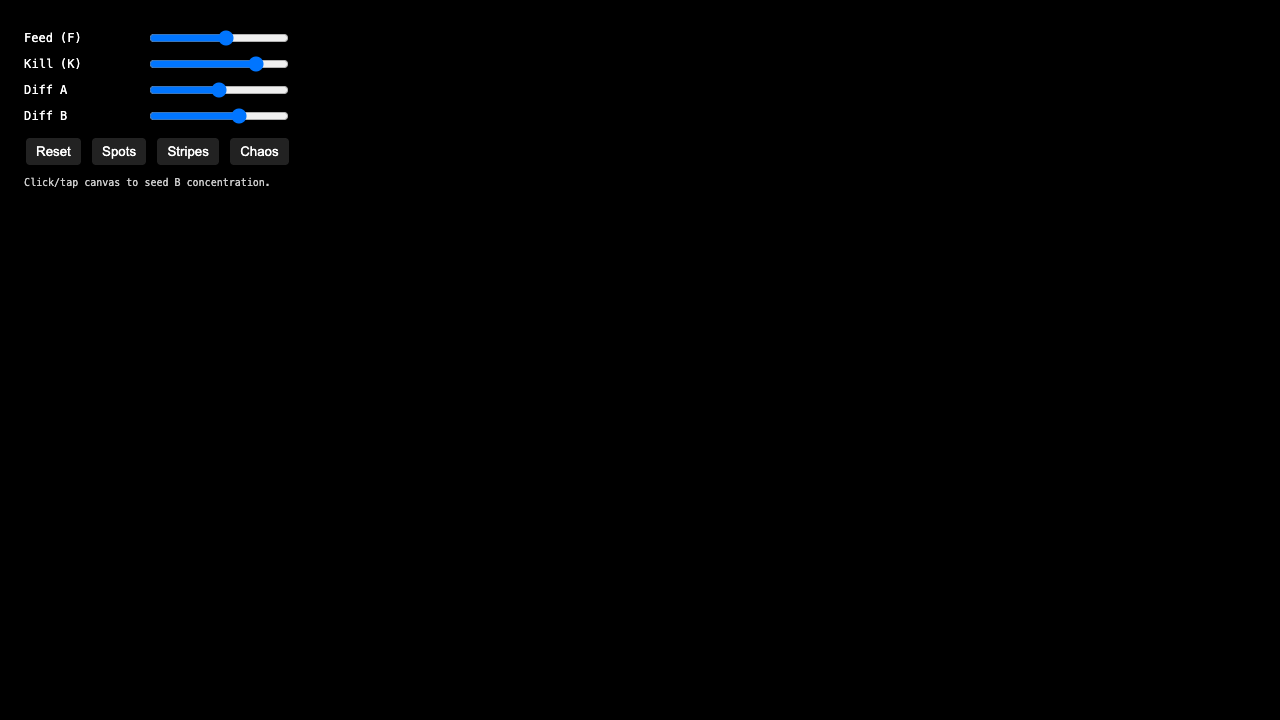
What I saw: Gray-Scott reaction-diffusion as a WebGL shader. Click to seed concentrations, real-time Turing patterns emerge. Sliders for f and k.
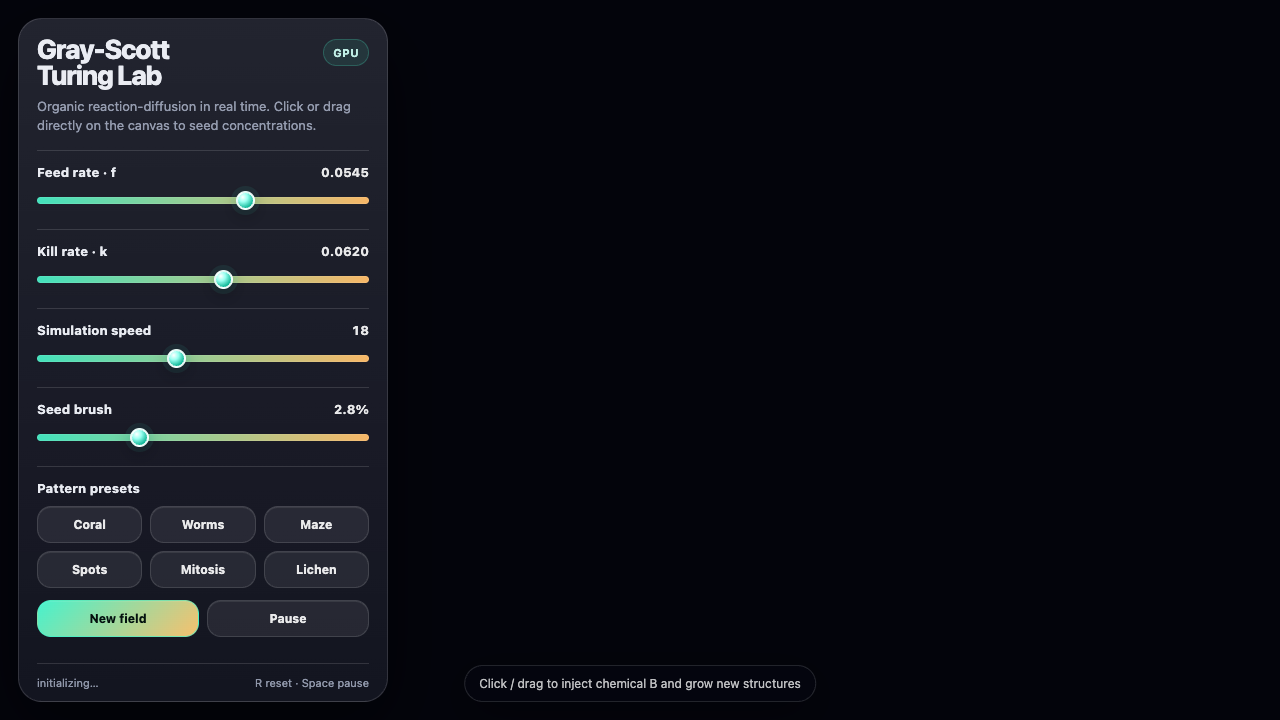
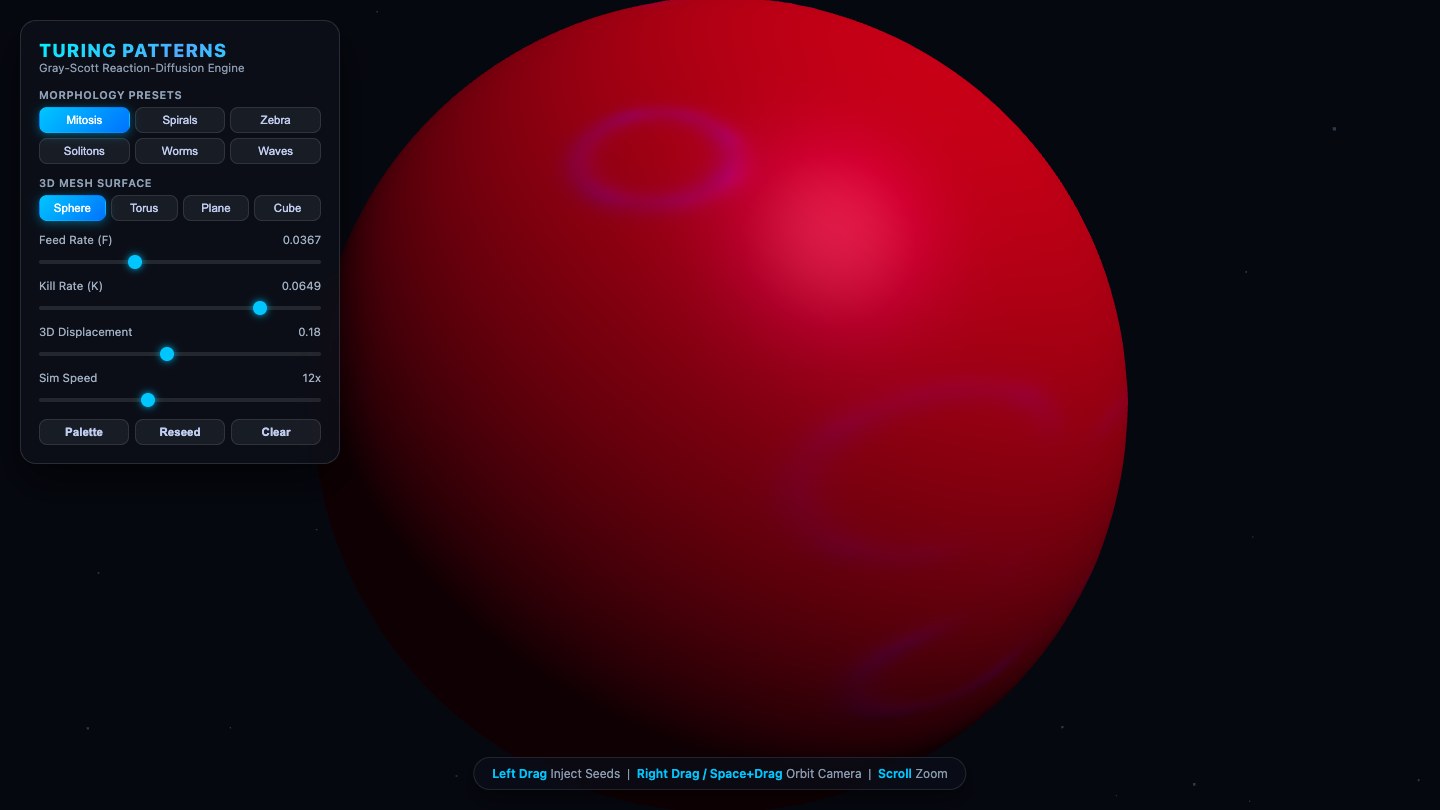
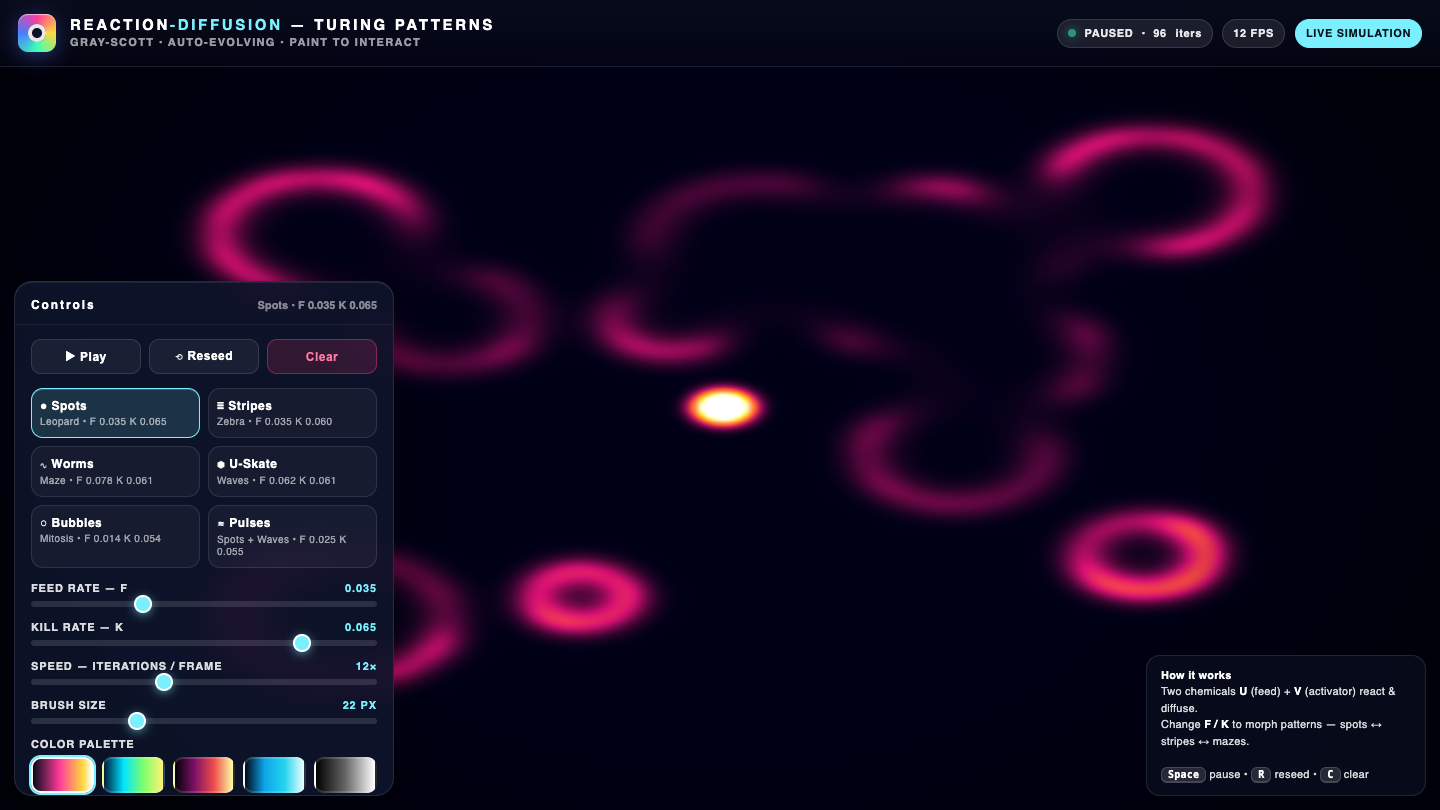
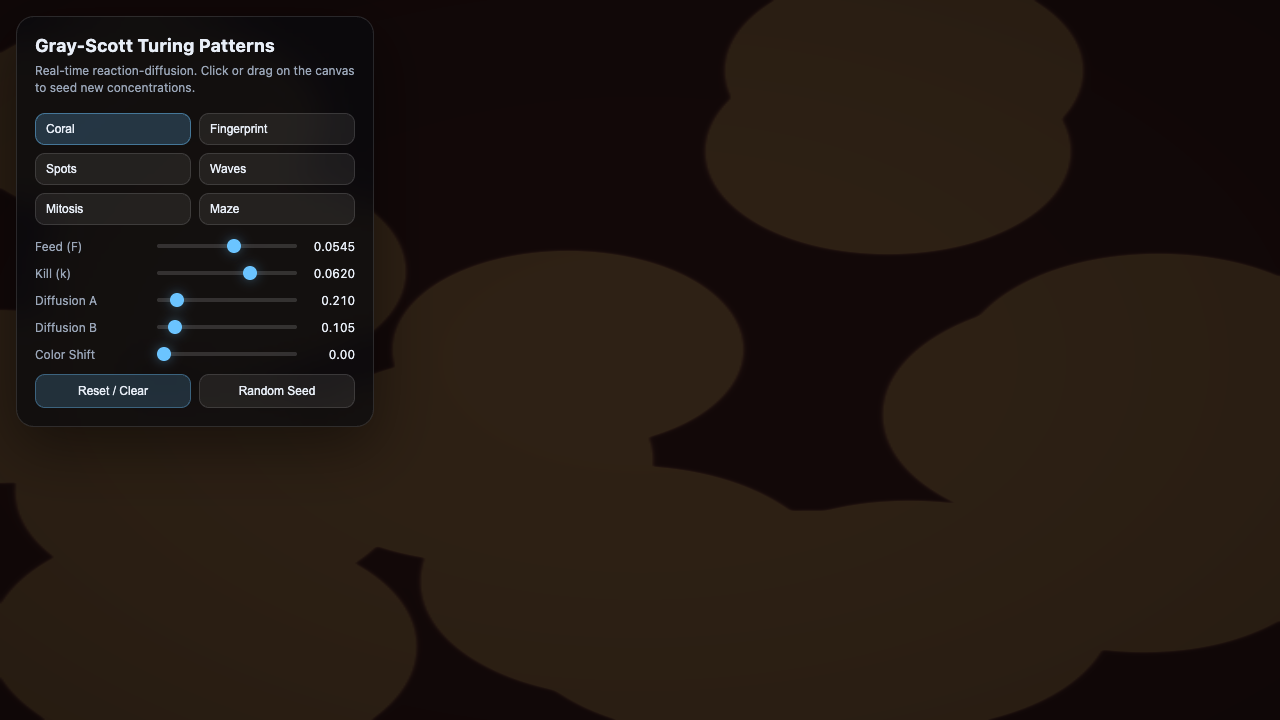
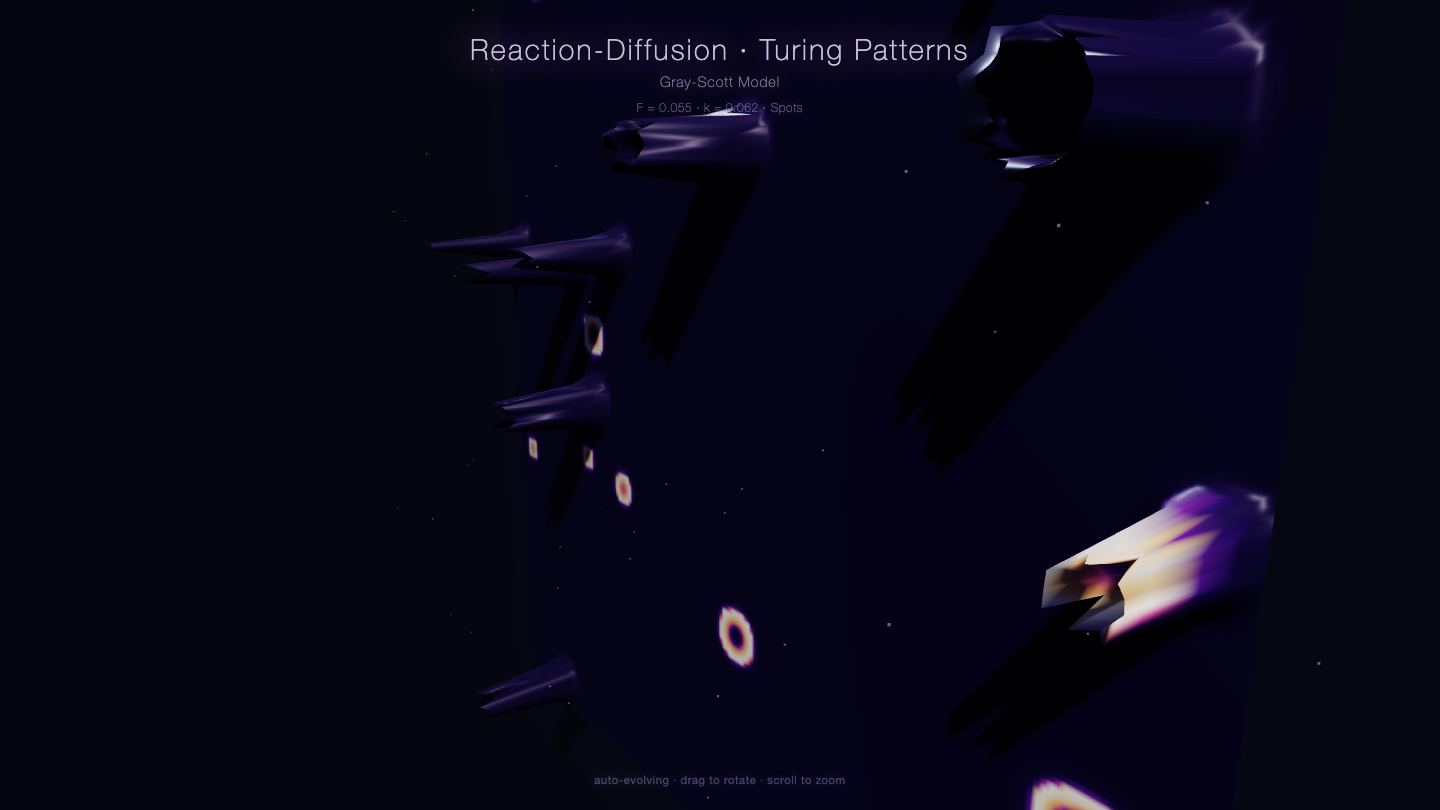
What I saw: Ambitious GPU Gray-Scott on a 3D sphere with a polished UI and rich presets, but the screenshot shows only faint blobs rather than crisp Turing patterns — the reaction-diffusion isn't clearly resolving into the characteristic spots/stripes that define this task.
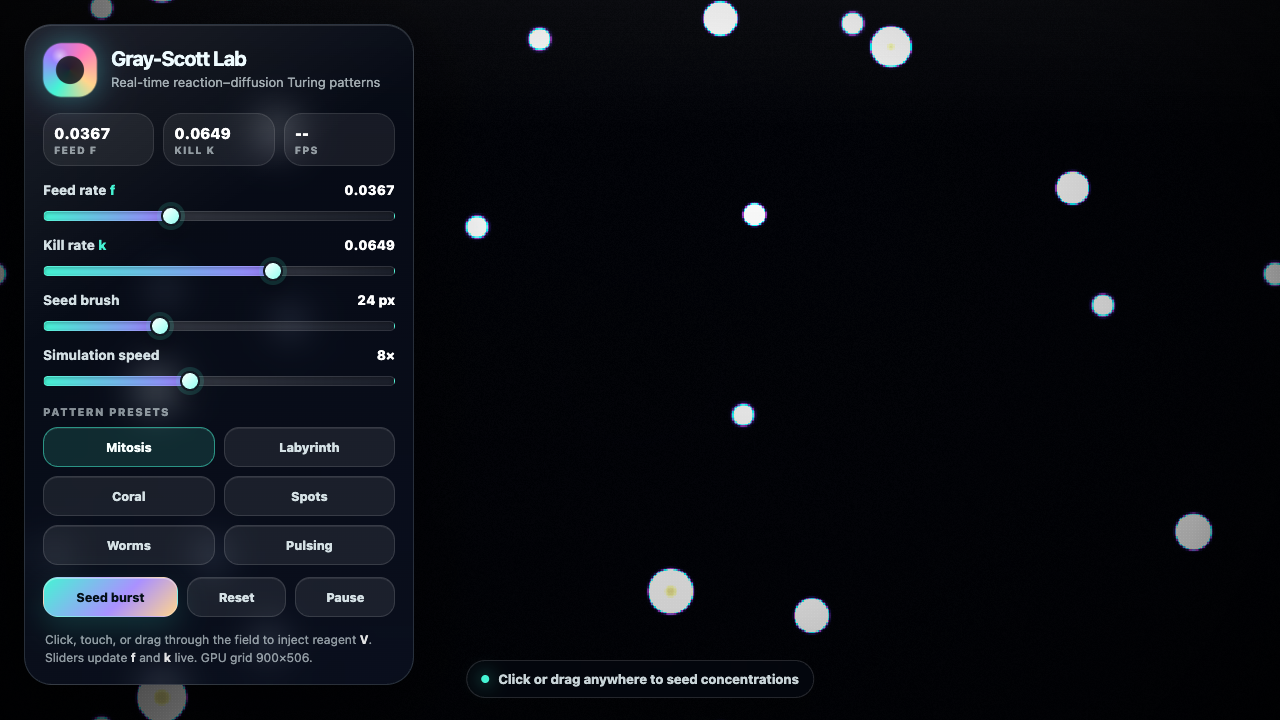
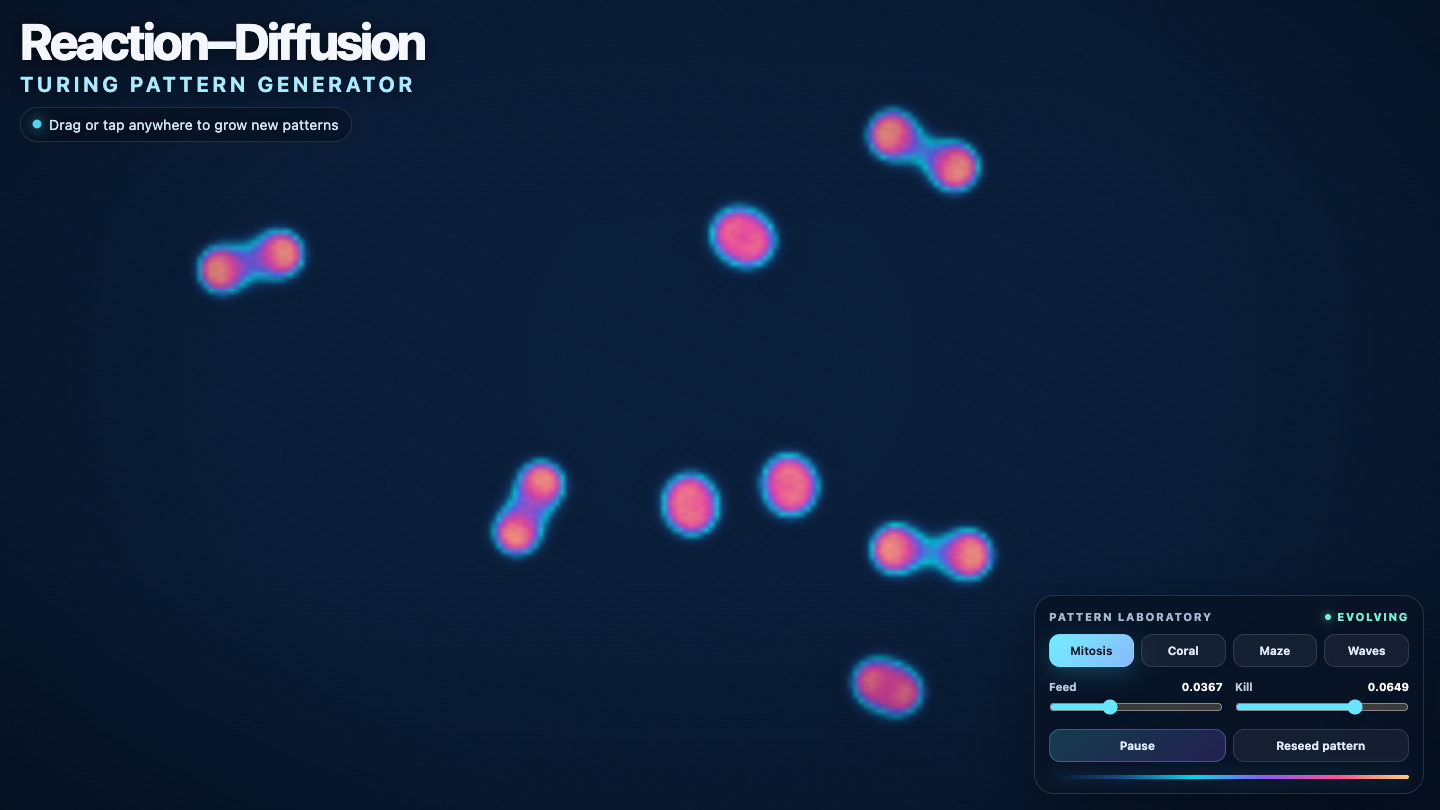
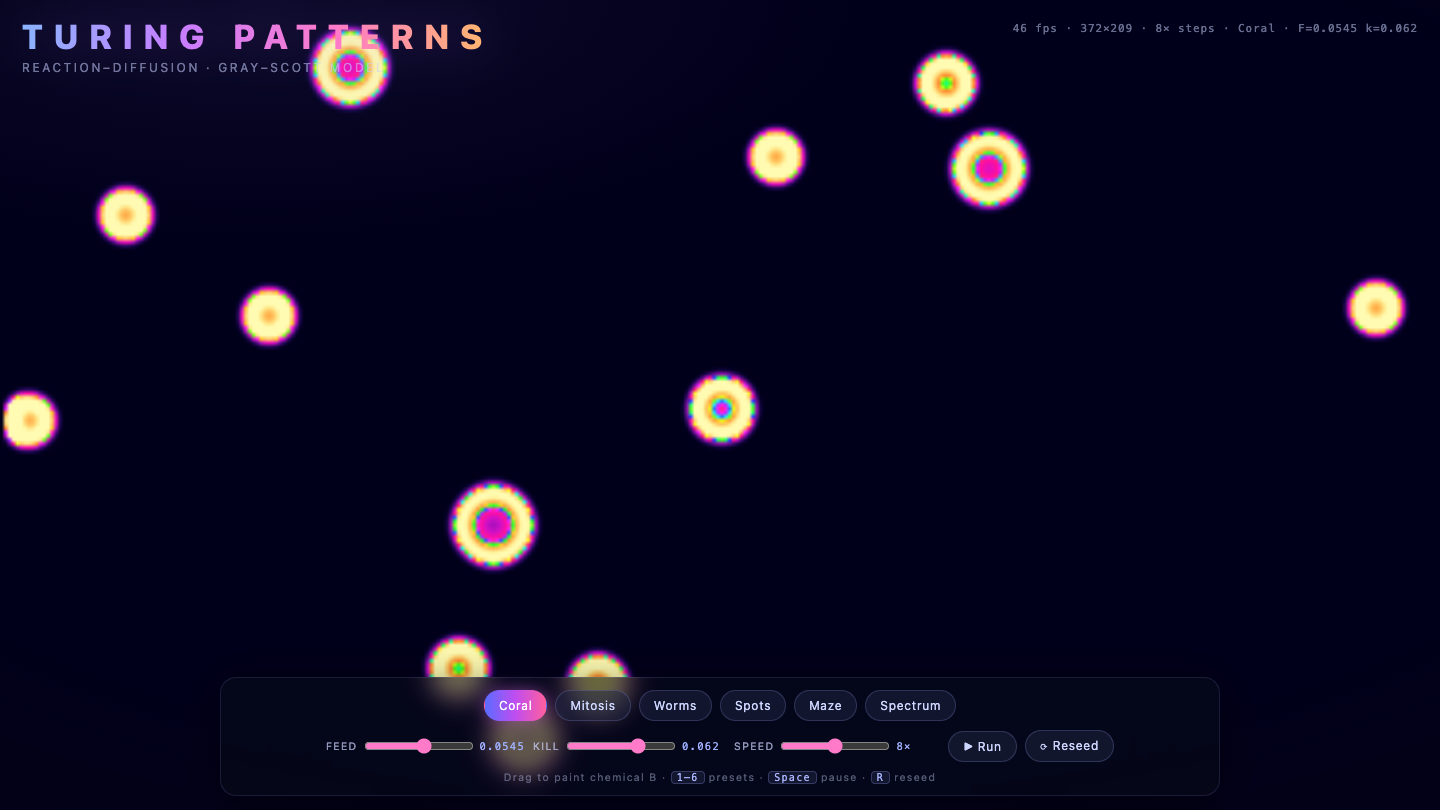
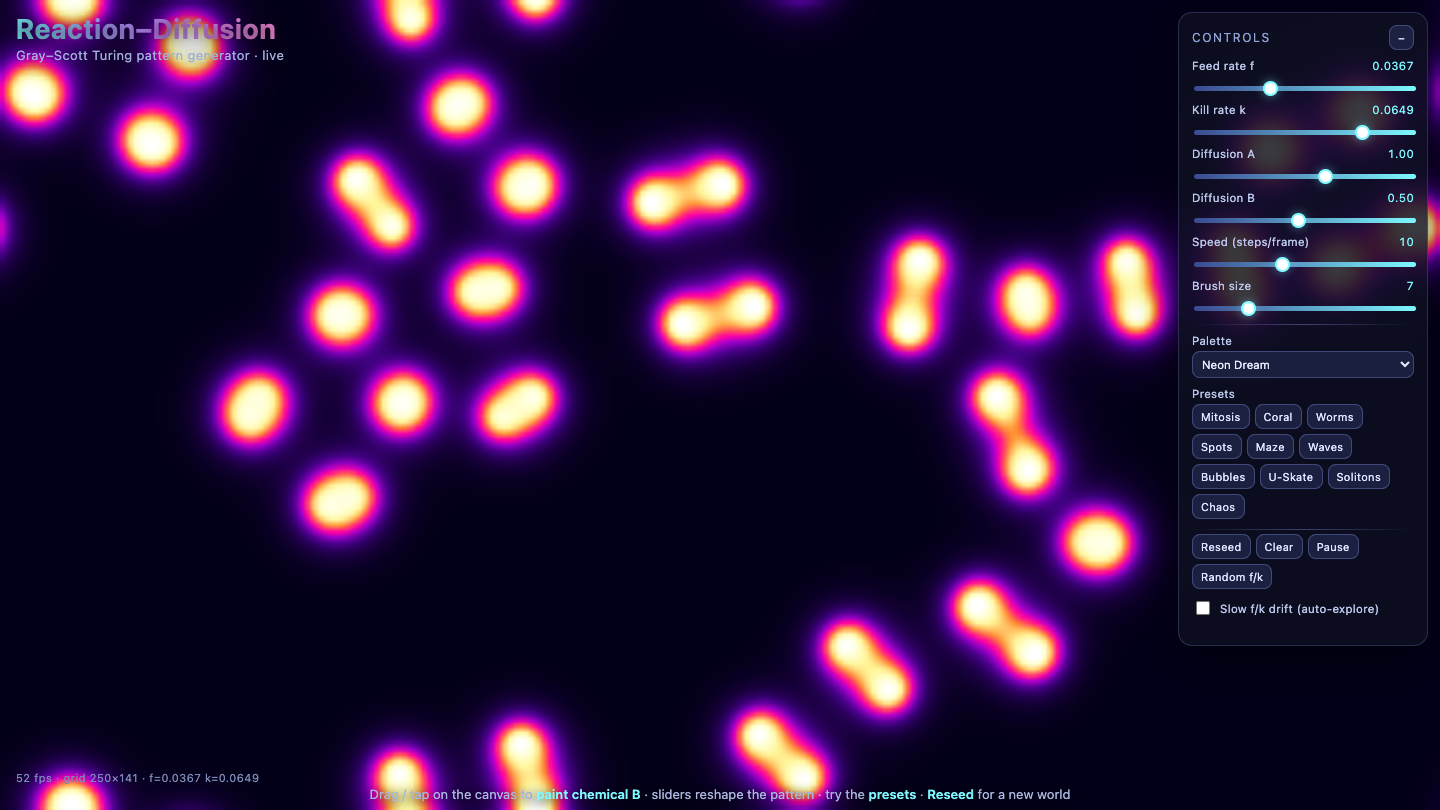
What I saw: Strong Gray-Scott implementation with clean toroidal Laplacian, presets, feed/kill sliders and a polished glass UI; the screenshot shows the correct mitosis dividing-cell blobs with a nice color palette. It reads slightly early/sparse (few cells, lots of empty space) rather than the dense filled Turing field of the top build, keeping it shippable-strong but just shy of the winner bar.
What I saw: Gray-Scott reaction-diffusion on WebGL with click-to-seed + f/k sliders. 19KB.
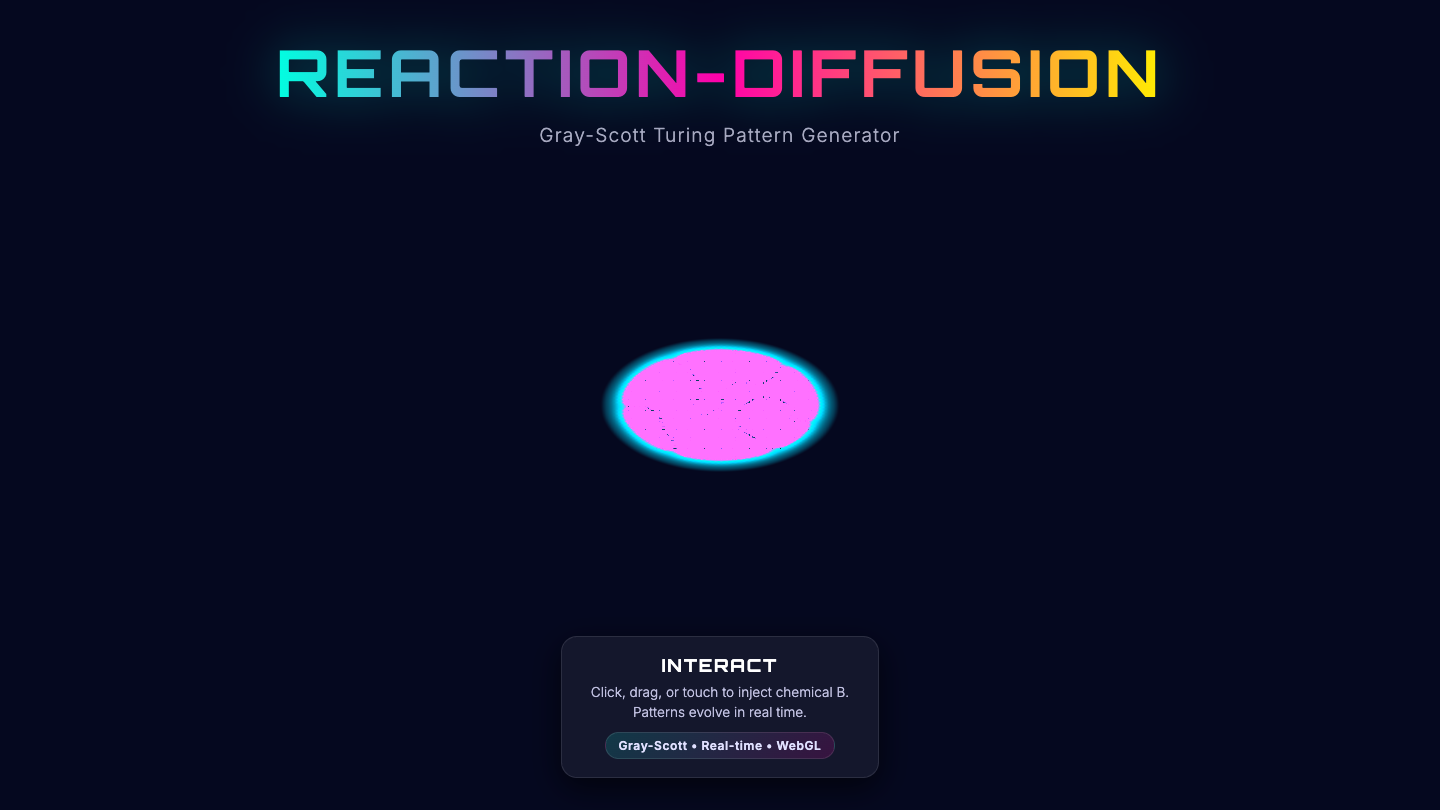
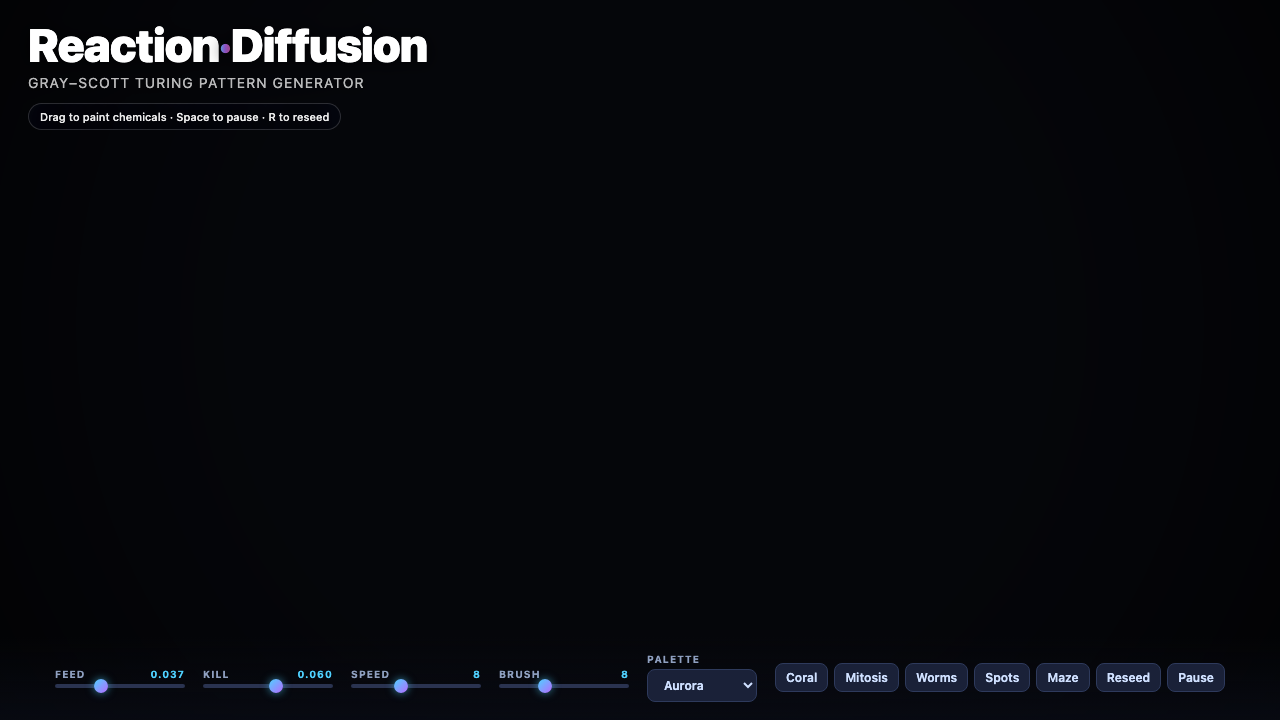
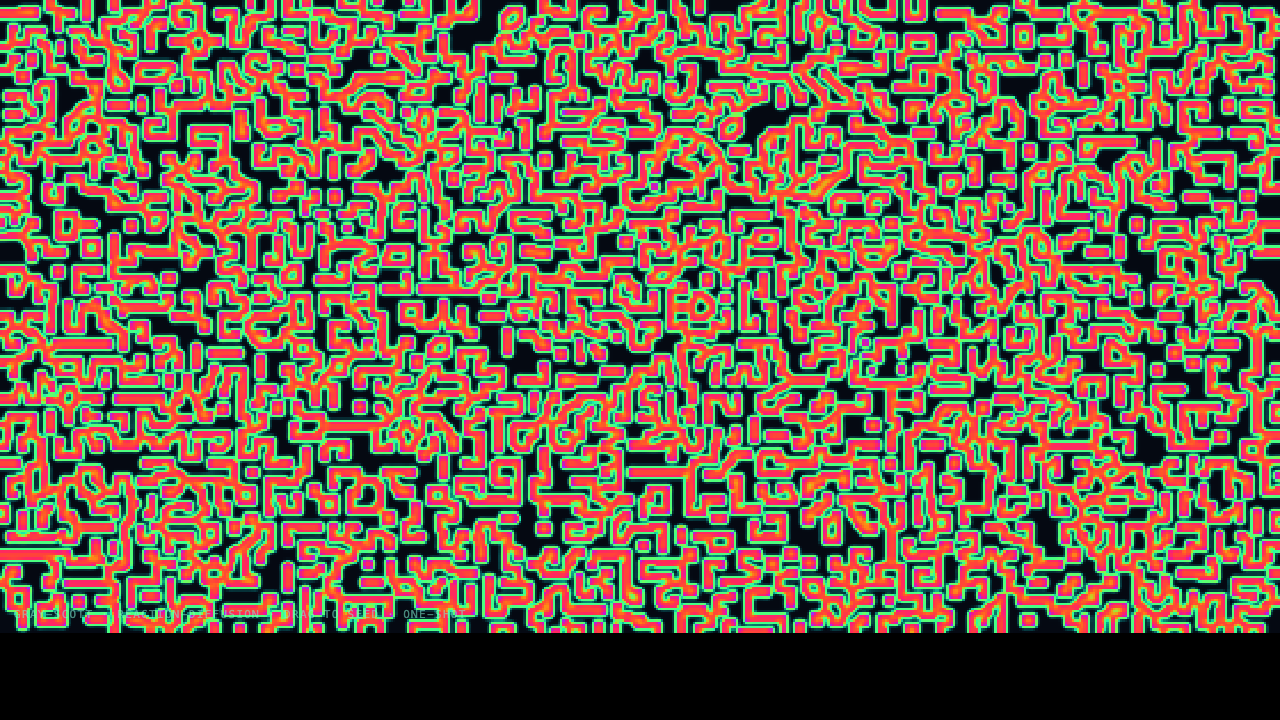
What I saw: Strong header/UI polish but the simulation fails the core brief: instead of intricate Turing patterns it shows a uniform pink blob with no structure — the seed/color mapping saturated B everywhere and the classic Gray-Scott spots/stripes never emerge. The stretched aspect ratio (canvas is full-screen but sim is square) also distorts the field.
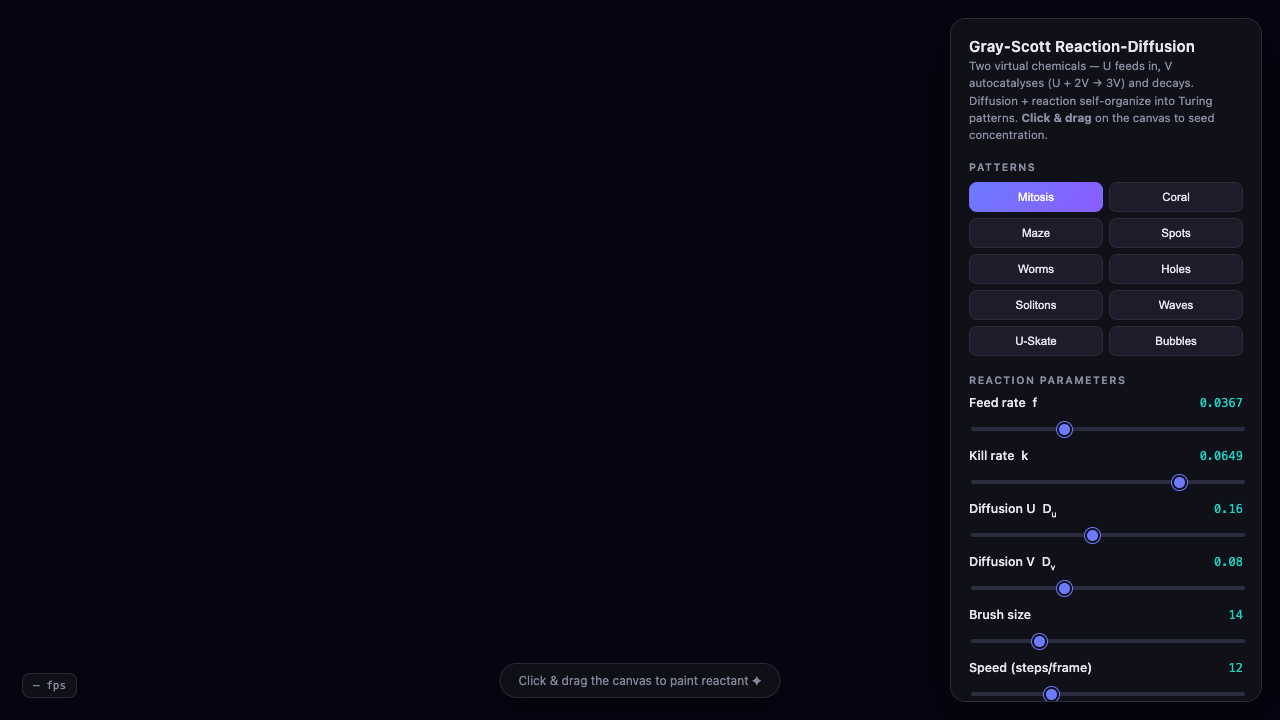
What I saw: Strong UI polish with gradient title, glassy HUD, presets and sliders, but the screenshot shows only isolated seed blobs rather than the emergent Turing patterns the sim should grow — it appears paused (Run button showing) so the reaction-diffusion character isn't visible, undermining the core brief.
The winner on Reactiondiff
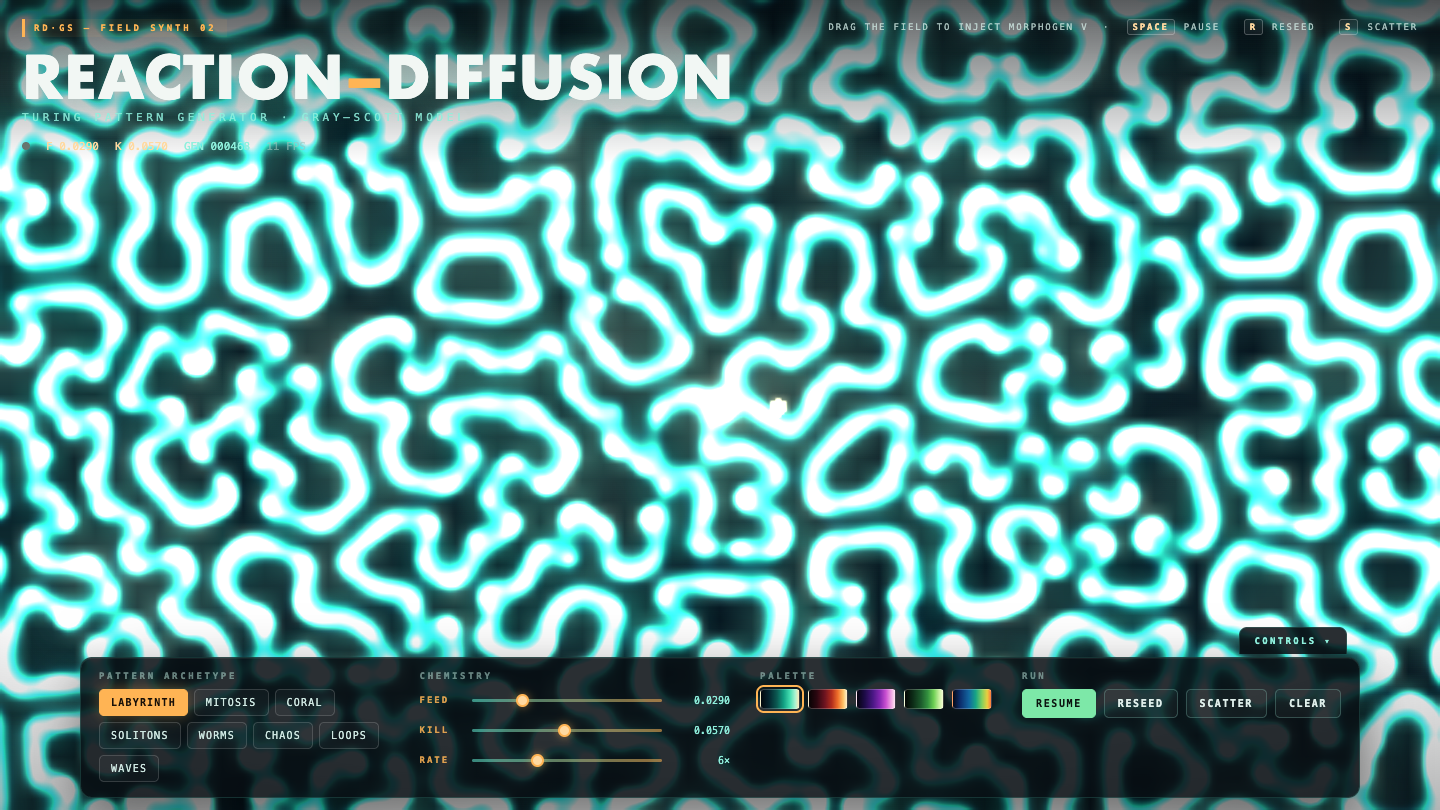
Qwen 3.8 took gold on this task. Glowing Turing labyrinth.
What I saw: Strong Gray-Scott simulation producing a crisp, organic labyrinth pattern with beautiful bioluminescent glow, backed by a polished HUD, 8 presets, live chemistry sliders, and multiple palettes. The rendered field is genuinely on-brief and visually superior to a flat greyscale sim — this tops the field.
See Qwen 3.8's full model card: /models/qoder. Direct head-to-head against the runner-up: Qwen 3.8 vs Hermes MoA.
Every attempt — live, playable
Side by side. Click any tile to run that model's actual one-shot HTML in a new tab.
 ▶ LIVE
 ▶ LIVE
 ▶ LIVE
 ▶ LIVE
 ▶ LIVE
 ▶ LIVE
 ▶ LIVE
 ▶ LIVE
 ▶ LIVE
 ▶ LIVE
 ▶ LIVE
 ▶ LIVE
 ▶ LIVE
 ▶ LIVE
 ▶ LIVE
 ▶ LIVE
 ▶ LIVE
 ▶ LIVE
 ▶ LIVE
 ▶ LIVE
 ▶ LIVE
 ▶ LIVE
 ▶ LIVE
 ▶ LIVE
How I scored Reactiondiff — methodology
Three axes, 0–10 each, averaged. Runs: drop the .html in a browser; if it opens to a broken page, it scores zero. Hits the brief: did the model ship the thing the prompt asked for, or a different thing it found easier. Looks good: visual polish, motion, interactivity — where most of the gap between gold and silver lives.
My scores trace back to the source comparison guides on agentos.guide. See the full methodology page for data provenance, including which source guide each cell's score came from.
Related
More sim benchmarks: all tasks in the Sim category · See the best AI model for Reactiondiff · Back to the leaderboard
Run this stack yourself.
Every demo on this bench was built inside the Agent Operating System — one prompt, one shot, single HTML file out. The Agent OS, the prompts, the templates, the weekly walkthroughs and 4,000+ founders shipping with it every day all live inside the AI Profit Boardroom.