GoldieBench Blog · 9 min read
Hermes Agent Bedrock: How It Works, How To Set It Up, And Which Bedrock Models Are Worth Running
Hermes Agent Bedrock support is native. Get the setup, the config keys, the caveats and costs, then see how the models Bedrock offers score.
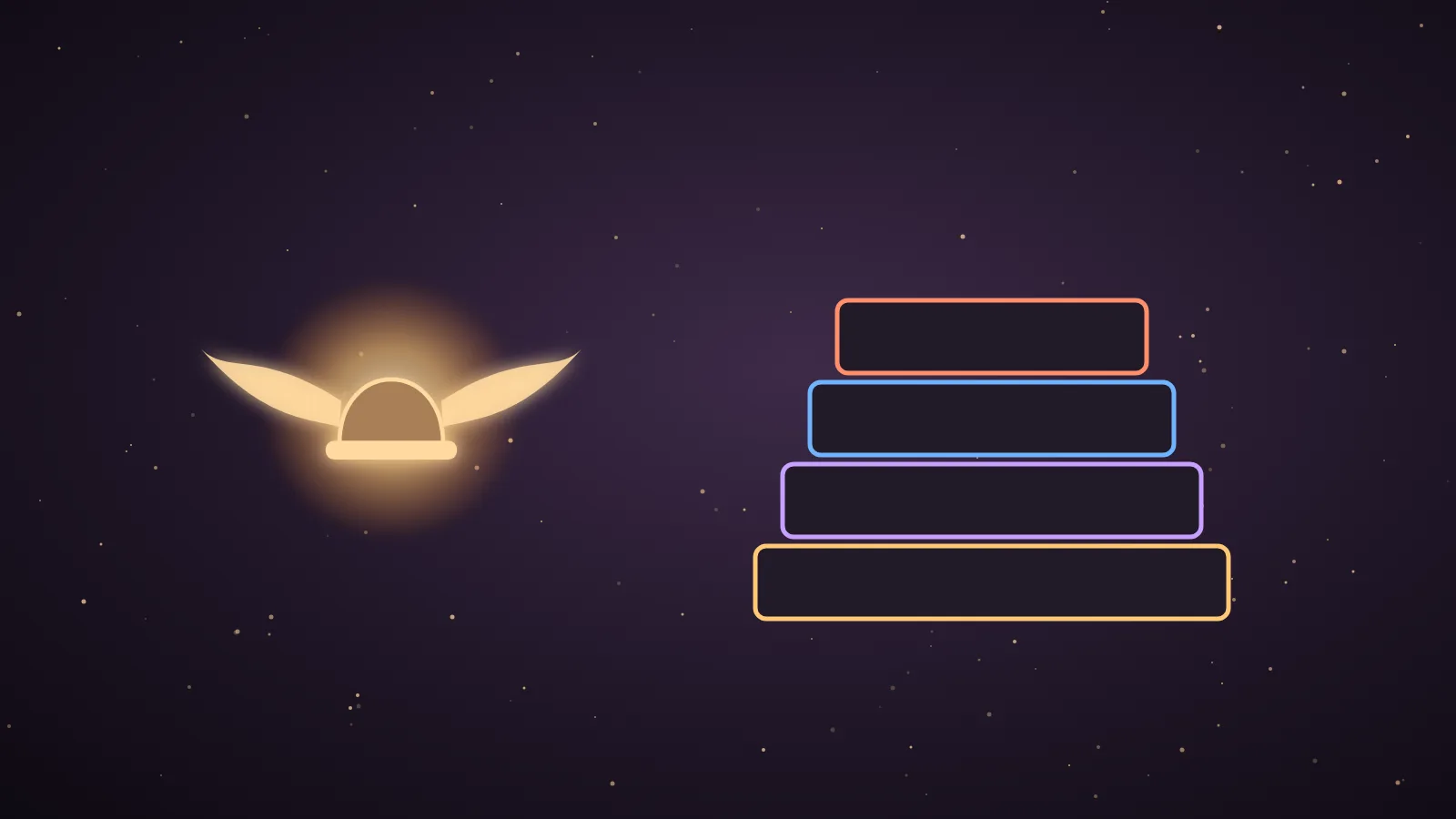
Hermes Agent Bedrock support is native, so you choose "AWS Bedrock" in hermes model and Hermes calls Amazon Bedrock directly with your normal AWS credentials.
You don't need LiteLLM, a proxy or OpenRouter in the middle, because the official Hermes docs list bedrock as a built-in provider.
I run Hermes every day, but I haven't published a Bedrock test of my own.
Everything below comes from the official Hermes docs, the Hermes source code in my install (v0.21.4) and the AWS docs, all read on 12 October 2026.
You'll get what it is, how it works, the setup, the config keys, the caveats and the costs first, and a section on model performance comes near the end.
What Hermes Agent Bedrock support is
Hermes Agent is the open-source AI agent from Nous Research, and it is the harness that runs tools, memory and messaging.
Amazon Bedrock is the AWS service that serves models from many makers through one AWS account.
The official Hermes AWS Bedrock guide says Hermes supports Bedrock as a native provider, with IAM authentication, Guardrails, cross-region inference profiles and Bedrock's foundation models.
There is no API key to buy, because Hermes reads the AWS credentials that already exist on the machine.
How Hermes talks to Bedrock
The docs say Hermes routes each model family through the API that serves it best.
| Model family | Route Hermes uses | Why the docs say it does that |
|---|---|---|
| Anthropic Claude | The Anthropic SDK's Bedrock client | It keeps prompt caching, thinking budgets and adaptive thinking. |
| OpenAI GPT-5.5 and GPT-5.6 | The Bedrock Mantle OpenAI Responses endpoint | Those models are Mantle-only on Bedrock. |
| Nova, DeepSeek, Llama and the rest | The native Bedrock Converse API | It gives guardrails, inference profiles and streaming. |
All three routes share the same AWS credentials and the same region setting.
You set Bedrock up once and switch between Claude, Nova and Llama with the /model command.
What you need before you start
- You need an AWS account with a valid payment method.
- You need a region where Bedrock offers the model you want.
- You need an AWS identity that is allowed to call Bedrock.
- You need Hermes Agent installed already.
The Hermes docs list four IAM permissions as the minimum.
The permissions bedrock:InvokeModel and bedrock:InvokeModelWithResponseStream are for inference.
The permissions bedrock:ListFoundationModels and bedrock:ListInferenceProfiles are for model discovery.
You only add bedrock:GetInferenceProfile if your default model is an application inference profile ARN.
How to set up Hermes Agent Bedrock
Step 1: Check model access
AWS changed how this works, so older tutorials are out of date.
The AWS model access docs say access to many Bedrock models is enabled by default when you have the right AWS Marketplace permissions.
Anthropic models are the exception, because AWS says first-time customers must submit use case details once per account or organisation.
You submit that form by selecting an Anthropic model in the Bedrock console's model catalogue.
Step 2: Sign the machine in to AWS
Hermes uses the standard boto3 credential chain, so an IAM role, a named profile, SSO or the usual AWS environment variables all work.
aws configure --profile hermes
On AWS compute, you attach an IAM role and the docs say Hermes detects it automatically.
You should never paste an AWS secret into a chat with the agent.
Step 3: Install the Bedrock extra
Bedrock needs the AWS library boto3, which Hermes ships as an optional extra.
cd ~/.hermes/hermes-agent && python -c "import pm; pm.sync_venv(['bedrock'], explicit=True)"
Restart Hermes after it finishes.
Step 4: Choose AWS Bedrock in the picker
hermes model
Choose "More providers...", then "AWS Bedrock".
The wizard asks for your AWS region and then for an authentication method.
The IAM credential chain is option 1 and is marked as recommended, and a Bedrock API Key is option 2.
Hermes then discovers the text models in your region and shows the recommended ones first.
Step 5: Check it and chat
hermes doctor
hermes chat
The docs say hermes doctor checks your AWS credentials, the boto3 install, whether the Bedrock API is reachable and how many models your region has.
You can also try one model for a single session.
AWS_PROFILE=hermes AWS_REGION=us-east-1 hermes chat --provider bedrock --model us.anthropic.claude-sonnet-4-6
The Hermes Agent Bedrock config keys
After the wizard runs, the docs say your ~/.hermes/config.yaml holds the provider, the default model and the region.
model.provider: bedrock
model.default: us.anthropic.claude-sonnet-4-6
bedrock.region: us-east-2
| Key or variable | What it does |
|---|---|
model.provider: bedrock | It tells Hermes to use the Bedrock provider. |
model.default | It holds the inference profile ID of your default model. |
bedrock.region | It sets the AWS region and wins over the environment variables. |
AWS_PROFILE | It picks a named profile from your AWS credentials file. |
AWS_REGION | It sets the region when the config file doesn't. |
bedrock.guardrail | It attaches an Amazon Bedrock Guardrail to model calls. |
bedrock.discovery.provider_filter | It limits the picker to the model makers you list. |
Hermes reads bedrock.region first, then AWS_REGION, then AWS_DEFAULT_REGION, and it falls back to us-east-1.
The docs say AWS does not apply Guardrails to the Mantle endpoint that serves the OpenAI GPT-5.x models, so you use a Converse-served model when a guardrail is required.
Tool calling, caching and region caveats
An agent that can't call tools is just a chatbot, so this section matters more than the setup.
Hermes converts its tool definitions into the Bedrock Converse format for you.
The Hermes source keeps a short list of models that reject tools, which covers DeepSeek R1, Stability image models and embedding models.
The source treats every other model as tool-capable, so a small model may accept tools and still use them badly.
The docs say prompt caching is applied automatically, but only for Claude and Amazon Nova model IDs.
The docs say model IDs with a us. prefix use cross-region inference, and IDs with a global. prefix route across all available regions.
That matters if you chose Bedrock for data residency, so ask your compliance person to confirm the profile ID you use.
The docs also list Bedrock as a supported fallback provider, so it can back up another provider or be backed up by one.
What Hermes on Bedrock costs
Hermes Agent is free and open source, so the bill is the AWS bill.
Bedrock charges per token on demand, and the price depends on the model, the region and the service tier.
I read the Amazon Bedrock pricing page on 12 October 2026.
The lowest regional prices I could read were $0.50 per million input tokens and $1.50 per million output tokens for Mistral Large 3.
DeepSeek v3.2 showed $0.62 and $1.85 at its lowest, and other regions on the page were higher.
The Claude and Amazon Nova prices load dynamically on that page and I couldn't read them reliably, so I won't quote them.
The page also describes batch inference and service tiers called Standard, Priority, Flex and Reserved.
Why a business would choose Bedrock
A business usually picks Bedrock for reasons that have nothing to do with model quality.
The model spend lands on the AWS bill the company already manages.
Access is controlled with IAM roles and policies instead of a loose API key.
You choose the AWS region the agent calls, and you can attach Amazon Bedrock Guardrails.
AWS's data protection page says model providers don't have access to Bedrock logs or to customer prompts and completions.
I'm not going to tell you Bedrock makes you compliant with anything, because that is your auditor's call.
Troubleshooting Hermes Agent Bedrock errors
| What you see | What it means | The fix |
|---|---|---|
| "No API key found" or "No AWS credentials" | Hermes found nothing in the credential chain. | Run aws configure or attach an IAM role. |
| "on-demand throughput isn't supported" | You used a bare foundation model ID. | Use an inference profile ID with a us. or global. prefix. |
AccessDeniedException | The model isn't enabled, the Anthropic form is pending or IAM blocks it. | Check model access, wait for the subscription and check the policy. |
ThrottlingException | You hit the per-model rate limit. | Hermes retries with backoff, and you can request a quota increase. |
| "No models found" | The identity can't list models. | Add bedrock:ListFoundationModels to the policy. |
A model can exist on Bedrock and still not be offered in your region.
The Hermes setup code only shows models your region can route to, so a model missing from the picker usually points at the region.
Run hermes doctor first, because it tells you which layer is broken.
Alternatives if Bedrock is more than you need
| Route | What you need | When I'd choose it |
|---|---|---|
| AWS Bedrock | An AWS account, IAM and model access | Your team already lives in AWS and wants IAM, regions and Guardrails. |
| Nous Portal | One OAuth login | You want the route the Hermes docs recommend. |
| Anthropic direct | One API key | You only want Claude and no cloud console. |
| OpenRouter | One API key | You want many models on one simple bill. |
The Hermes docs call Nous Portal the recommended way to run Hermes Agent.
Two sister posts from this batch cover the surrounding pieces: the Hermes Agent backend guide and the explainer on Hermes Agent by Nous Research.
Which Bedrock models are worth running: the benchmark view
This is the part GoldieBench can actually help with.
Hermes Agent doesn't ship its own model, so the brain you pick on Bedrock decides how good the agent feels.
I need to be precise about what these numbers are.
GoldieBench scores one-shot builds, and I ran those builds through each model's usual route and not through Bedrock.
The scores tell you how capable the model is, and they don't tell you how fast or reliable it is on AWS.
The Hermes docs list these models in their own Bedrock shortlist.
| Model | ID from the Hermes docs | What the docs say |
|---|---|---|
| Claude Sonnet 4.6 | us.anthropic.claude-sonnet-4-6 | It is the recommended balance of speed and capability. |
| Claude Opus 4.6 | us.anthropic.claude-opus-4-6-v1 | It is listed as the most capable. |
| Claude Haiku 4.5 | us.anthropic.claude-haiku-4-5-20251001-v1:0 | It is the fastest Claude in the list. |
| OpenAI GPT-5.6 Sol | openai.gpt-5.6-sol | It runs through Bedrock Mantle. |
| Amazon Nova Pro | us.amazon.nova-pro-v1:0 | It is described as Amazon's flagship. |
| Amazon Nova Micro | us.amazon.nova-micro-v1:0 | It is described as the fastest and cheapest. |
| DeepSeek V3.2 | deepseek.v3.2 | It is described as a strong open model. |
| Llama 4 Scout 17B | us.meta.llama4-scout-17b-instruct-v1:0 | It is Meta's entry in the list. |
None of the Claude versions in that shortlist are on the GoldieBench board, and Nova, Llama 4 Scout and DeepSeek V3.2 aren't on it either.
The only model that is in both the Hermes shortlist and on the board is GPT-5.6 Sol.
Bedrock's catalogue is wider than the shortlist, though.
The AWS models at a glance page listed the models below when I read it on 12 October 2026, and each one has a real score on the board.
| Model on the GoldieBench board | GoldieBench avg | Listed on AWS's Bedrock models page on 12 Oct 2026? | Route Hermes would use |
|---|---|---|---|
| Claude Opus 5 | 8.27 | Yes | Anthropic SDK |
| GPT-5.6 Sol | 8.16 | Yes | Bedrock Mantle |
| Claude Fable 5 | 8.10 | Yes | Anthropic SDK |
| Kimi K3 | 7.89 | Yes | Converse |
| Claude Opus 5.5 | 7.57 | Yes | Anthropic SDK |
| Opus 4.8 | 7.51 | Yes | Anthropic SDK |
| Grok 4.7 | 7.15 | Yes | Converse |
| Claude Sonnet 5 | 7.01 | Yes | Anthropic SDK |
| Grok 4.6 | 5.95 | Yes | Converse |
Treat the "listed" column as a starting point and not a promise.
A model on AWS's page can still be missing in your region or need extra account-level access, and I haven't confirmed that each one appears in the Hermes picker.
The pattern in the scores is clear enough to act on.
The strongest Claude and GPT models sit at the top, which matches what I'd expect for agent work where tool calling matters most.
Claude also gets the best-supported route in Hermes, because the Anthropic SDK path keeps prompt caching and thinking controls.
A higher score doesn't always mean the right pick, because a cheaper and faster model can be the better brain for simple scheduled jobs.
I can't give you a score for Amazon Nova, Mistral Large 3 or the Llama models, because I haven't benchmarked them.
My wider rankings are in the best Hermes Agent model post and the best LLMs for Hermes Agent breakdown.
If you'd rather run a brain on your own machine, the local models board shows what the local models scored.
Also On Our Network
- Agent Operatorsthe seven-step Hermes Bedrock setup with IAM and config keys
- AI Income Deskwhen a business should run its Hermes agent on AWS
- AI Tool Verdictevery Hermes Bedrock feature checked, with a verdict
- agentos.guidethe Bedrock quick-start and how it fits an Agent OS
- agentos.guideRun Hermes on your Claude subscription, on agentos.guide
Set up the provider, pick a brain that scores well on the board, and test a real multi-step task before you trust your Hermes Agent Bedrock setup with scheduled work.
FAQ
Does Hermes Agent support Amazon Bedrock?
Yes. The official Hermes docs say Hermes Agent supports Amazon Bedrock as a native provider. You choose AWS Bedrock in hermes model, and the provider name in config.yaml is bedrock.
Do I need LiteLLM or OpenRouter to use Bedrock with Hermes?
No. Hermes calls Bedrock directly through the Anthropic SDK's Bedrock client for Claude, Bedrock Mantle for OpenAI GPT-5.x models and the native Converse API for everything else.
Does Hermes Agent ship its own model for Bedrock?
No. Hermes Agent is the harness and doesn't ship its own model, so you choose a Bedrock model such as Claude, Nova, Llama or DeepSeek to act as the brain.
Which Bedrock model is best for Hermes Agent?
The Hermes docs recommend Claude Sonnet 4.6 in their own list. On GoldieBench, the highest-scoring models that AWS lists on Bedrock are Claude Opus 5 at 8.27 and GPT-5.6 Sol at 8.16, but those scores were not measured through Bedrock.
Were the GoldieBench scores measured on Bedrock?
No. The builds were run through each model's usual route, so the scores show model capability and not Bedrock speed or reliability.
Has Julian tested Hermes on Bedrock?
Not in a published test. This post is based on the official Hermes docs, the Hermes source code and the AWS docs, read on 12 October 2026.
Keep reading
 Hermes Herald AI Agent: Which Brain To Run It On, With Real GoldieBench Scores
 Herald OS: What It Is, How To Set It Up, And Which Benchmarked Models To Run Under It
 Hark AI Agent: What It Is, The Model Behind It, And How Those Brains Score On GoldieBench
🌐 Sister-site take: read this on agentos.guide