GoldieBench Blog · 10 min read
Herald OS: What It Is, How To Set It Up, And Which Benchmarked Models To Run Under It
Herald OS runs on Hermes Agent, so the model you plug in decides the results. Here's what Herald OS is, how to set it up, and how its brains score.
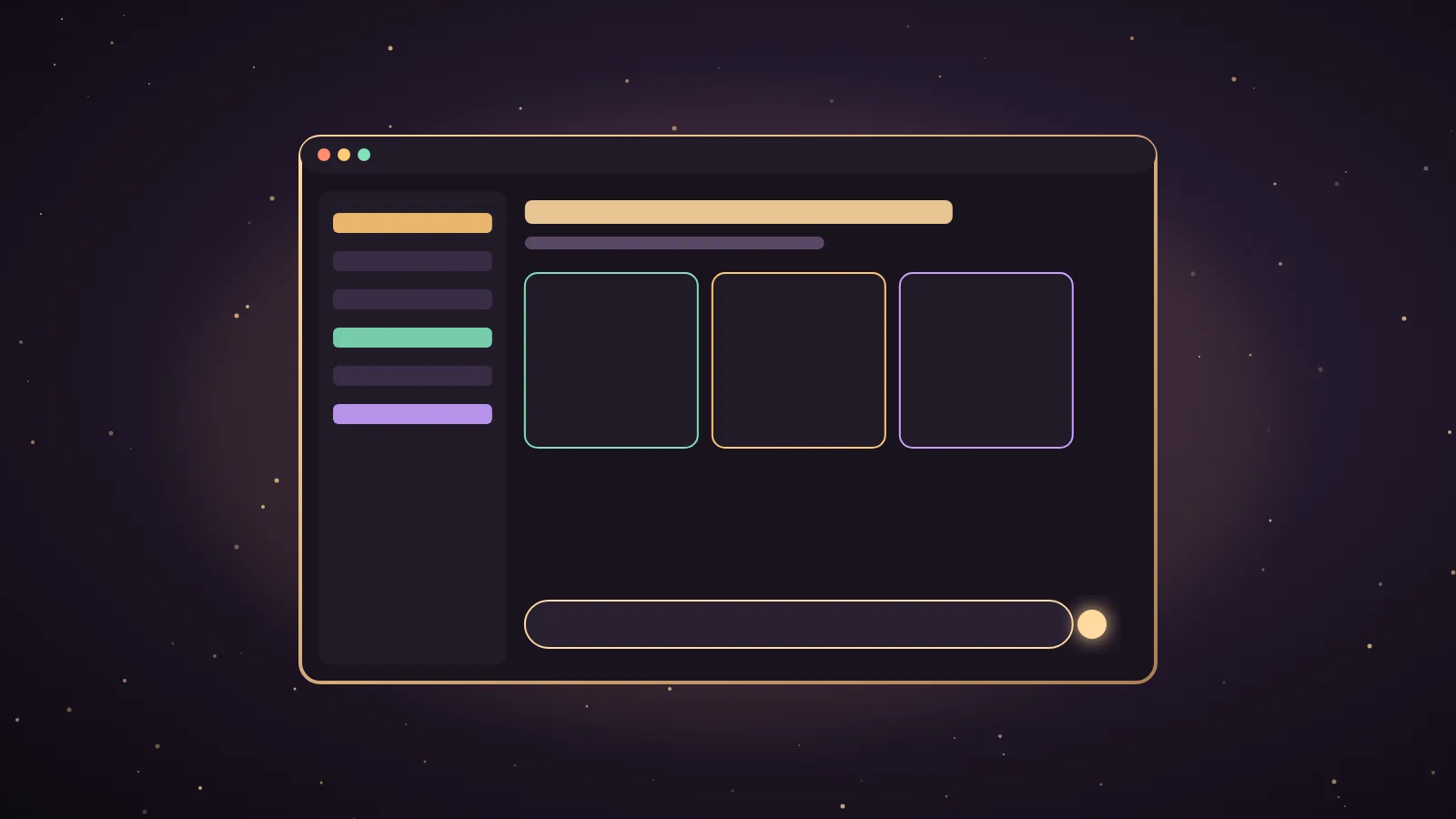
Herald OS is a free, open-source operating system with Hermes Agent as the interface, so you run your computer by talking or typing to one agent.
It was built by an independent developer called Luke The Dev, and it is not an official Nous Research product, even though Nous Research makes Hermes Agent.
The whole project is released under the MIT licence, so the software costs nothing to download, use or change.
It solves a simple problem, because Hermes is brilliant but most people do not want to live in a terminal, and Herald OS gives it a clean desktop with a dashboard, files, missions and settings.
I tested every page of it on camera, so this post explains what it is, how it works, how to set it up and what each feature does.
Near the end, I also cover which models are worth running underneath it, because that is the question builders ask me next.
What Herald OS is
The GitHub repo calls it "an agent-native operating system, with Hermes Agent as the interface".
Instead of clicking through menus, you ask Hermes, and it opens apps, organises files, remembers what matters, runs routines and builds software.
Anything that changes something goes through permission tiers, with an audit log and protected folders that are always refused.
| Question | Answer |
|---|---|
| Who makes it? | Luke The Dev (iamlukethedev) makes it as an independent project that is not affiliated with Nous Research |
| What does it cost? | Herald OS is free and MIT-licensed, and you pay only for the model unless you use a free one |
| How mature is it? | It is labelled alpha (0.1), and the repo was created on 6 October 2026 |
| Where does it run? | It runs on Apple Silicon Macs on macOS 13 or later, as Herald OS Linux on a PC, on Arch, Omarchy and other Linux, and in a VM |
| What is the brain? | It uses your normal Hermes Agent install, because Herald OS does not fork Hermes |
How Herald OS works
Herald OS is the front end, and Hermes Agent is the engine that does the thinking and the doing.
It adds its tools to Hermes as a plugin called herald-os-bridge, so your skills, memory and scheduled jobs stay exactly where they were.
When you ask for something, Hermes picks the right system tool, and the permission tier decides whether it runs straight away or asks you first.
That is also why my automations appeared in Herald OS, Hermes Desktop and my Agent OS at the same time, because all three talk to the same Hermes install.
How to set up Herald OS
I had Claude do my setup, and it took about two minutes.
First, install Hermes Agent with the official install script and run hermes setup to choose a model provider.
Second, download the Herald OS DMG from the GitHub releases page and drag it into Applications.
Third, run xattr -dr com.apple.quarantine "/Applications/Herald OS.app" once, because the Mac build is not notarized yet.
Fourth, open it, and remember that Cmd+Ctrl+F toggles fullscreen and Cmd+Q quits.
Every other install route, including Linux and the virtual machine, is in my Herald OS GitHub install guide.
Every Herald OS feature I tested
| Feature | What it does |
|---|---|
| Dashboard | It greets you (mine said "Good morning, Julian. Your day already in motion."), shows today's schedule from scheduled tasks, what needs attention, recent desktop screenshots, voice input and a chat with Preview and Sources |
| Pick up where you left off | It reads names of recent documents, projects, chats and calendar events and suggests where to continue, and you can toggle it on or off |
| Spaces | Ideas, Work and Personal ship by default, you can add spaces such as a client, and there is a default space setting |
| Missions | You give Hermes an active goal such as "build out a new website", and it plans it step by step |
| Memory | It shows everything Hermes remembers, and mine showed my Telegram details, so check it before screen-sharing |
| Files | It lists recent, favourites, projects, downloads, shared and deleted files |
| Automations | You switch routines on or off, and they synced across Herald OS, Hermes Desktop and my Agent OS |
| Connections | It is meant to hold tools, apps and external connections, but it did not connect or sync for me |
| Hermes and agents settings | They cover the preferred model, where agents run including Docker, background agents, remember preferences, auto-approve and activity history |
| General settings | They cover launch fullscreen, default space, default and projects folders, do not disturb, stay awake, screensaver, dictation and quit session |
| Look and software | You change colours and themes, and you add coding agents and local models such as Claude Code, Codex and LM Studio |
| Plugins | You paste a GitHub link to add one |
| Usage | It shows tokens used, your plan and your token balance |
| Voice | You switch the engine and speed, choose local or live voice, test it, and read a list of voice commands |
| System areas | It covers privacy, notifications, network, storage and accessibility |
My automations included a daily 6am to-do recap, a daily Japanese learning session and morning inbox triage.
The sidebar is resizable, but the UI was cut off slightly at the top of my screen, which is a normal alpha rough edge.
Herald OS limits to know first
Connections did not connect or sync for me, so do not rely on them yet.
The Mac build is not notarized, so only download it from the official releases page.
It is an alpha, and the README tells you to keep backups of anything an agent touches.
Herald OS is free, but a paid model will still bill you, which is why the next part of this post is about the brain.
Why the model matters more than the interface
Herald OS does not come with its own model, because it runs whatever model your Hermes install is set up with.
Herald OS makes Hermes look great, but it does not make Hermes smarter.
If your Hermes runs a weak model, Missions plan badly and builds come out broken, however nice the dashboard looks.
That is why I treat Herald OS as the front end and the model as the engine.
The Settings page lets you pick the preferred model, and the Usage page tells you what that model is costing you.
On my machine, the preferred model showed GPT-6 Astra, which I had plugged in through a CLI, and that model is not on GoldieBench.
To compare the brains you can plug in, I use GoldieBench, the leaderboard where I score models on real one-shot builds.
Herald OS is an interface rather than a model, so it is not on the board and never will be.
What GoldieBench measures, and what it does not
GoldieBench gives every model the same one-shot prompt to build a game, a page, a simulation or a visual, then scores the rendered result from 0 to 10.
That maps well to the Studio and to Missions that build things.
It does not measure how pretty an interface is, how well connections sync, or how fast a dashboard loads.
So use the board to choose the brain, and use your own week of testing to judge Herald OS itself.
Free Nous Portal models you can run under Herald OS
Hermes can sign in to Nous Portal, and when I recorded my Solar Mini 4 video, the free list showed several models.
Only two of them are on the board so far.
| Free model on Nous Portal | On GoldieBench? | Live avg | What it tells you |
|---|---|---|---|
| Meituan LongCat 2.0 | Yes, provisional | 8.12 across 4 tasks | It scored high on a small sample, so treat it as promising rather than proven |
| Poolside Laguna XS 2.1 | Yes | 3.93 across 42 tasks | It struggles on one-shot builds, so keep it on light chores |
| Upstage Solar Mini 4 | No | Not benched | It was fast and fine for basic agent tasks in my test, but it is not frontier level |
| NVIDIA Nemotron, inclusionAI Ling, StepFun Step | No | Not benched | Test them on your own jobs before you trust them |
Free models can get rate limited, so refresh the model list or switch to another free model if one stops answering.
The full free walkthrough is in my Solar Mini 4 Hermes post, and the cost side of Herald OS is in my free Hermes Agent OS breakdown.
Paid brains for Herald OS: Claude, GPT and OpenRouter
If you want Missions to plan and build well, these are the strongest options on the live board.
| Model | Live avg | Tasks scored | Input price per 1M | Best Herald OS job |
|---|---|---|---|---|
| OpenRouter Fusion | 8.59 | 47 | Varies by panel | Hard planning where you want several frontier models to agree |
| Claude Opus 5 | 8.27 | 50 | $5 | Big Missions and code builds in the Studio |
| Hermes MoA | 8.17 | 47 | Panel calls via OpenRouter | Hermes-native mixture of agents for tough jobs |
| GPT-5.6 Sol | 8.16 | 50 | $5 | An OpenAI brain at near-top quality |
| Claude Fable 5 | 8.10 | 47 | $10 | Top-tier Claude when quality matters more than cost |
| MiniMax M3 | 7.97 | 47 | $0.30 | Daily automations at a fraction of frontier prices |
| Kimi K3 | 7.89 | 50 | $3 | A strong all-rounder |
| GLM-5.2 | 7.77 | 47 | Open weights | A capable brain you can also self-host |
| Claude Opus 5.5 | 7.57 | 50 | $4 | Newest Claude on the board |
| Grok 4.7 | 7.15 | 20 | $2 | A Grok brain if you already use xAI |
For most Herald OS users, I would put a value model like MiniMax M3 on the routine automations and save Claude Opus 5 or GPT-5.6 Sol for Missions.
Watch the Usage page for the first week, because the README says it warns you at 90% of your plan.
Local models for Herald OS
Herald OS has a Software page that adds local model apps such as LM Studio, and the manual says Ollama and LM Studio models can be set to "Use with Hermes".
That makes local brains a one-click option.
| Local model | Live avg | Tasks scored | My take |
|---|---|---|---|
| Qwable 5 27B Coder | 7.14 | 41 | The best local builder on the board, but slow at about 20 tok/s and MLX only |
| Agents-A1 | 4.83 | 45 | Agent-tuned and fast at about 95 tok/s, which suits long agent loops |
| Gemma-4 12B Coder | 4.25 | 6, provisional | A lightweight free option for simple chores |
The full local ranking is on the local models board.
Local brains keep your files on your machine, but they are well behind the paid models for big builds.
How to switch the model Herald OS uses
There are three ways to change the brain, and they all change the same Hermes.
First, open Settings, go to Hermes and agents, and pick from the preferred model list.
The settings page says to open a session before you change the model, so start a chat first if it asks you to.
Second, run hermes model in a terminal, which is the route the Herald OS FAQ gives.
Third, run hermes dashboard, open Models and click Set main model.
If you go for a free Nous Portal model, pick the free variant, because the paid version can sit right next to it in the list.
Whichever route you use, Herald OS, Hermes Desktop and my Agent OS all picked up the change, because they share one Hermes install.
Which model for which Herald OS job
Herald OS gives Hermes very different kinds of work, so one model for everything is rarely the smartest setup.
| Herald OS job | What it needs | What I would run |
|---|---|---|
| Dashboard briefings and pick up where you left off | It needs short, cheap and fast replies many times a day | MiniMax M3 (7.97) or a free Nous Portal model |
| Automations such as a 6am recap or inbox triage | It needs reliable tool calls on a schedule | MiniMax M3 (7.97) or Kimi K3 (7.89) |
| Missions such as building a new website | It needs planning plus long multi-step work | Claude Opus 5 (8.27) or GPT-5.6 Sol (8.16) |
| Studio builds you watch live | It needs clean one-shot code, which is exactly what GoldieBench tests | Claude Opus 5 (8.27) or Hermes MoA (8.17) |
| Private files you never want to leave the Mac | It needs a local brain | Qwable 5 27B Coder (7.14) |
Hermes uses one main model at a time, so the simplest version of this is a strong main model for Missions and a cheaper one when you are only running routines.
Keep approvals on whichever model you choose, because a weaker brain is more likely to suggest a wrong action.
Herald OS vs Hermes Desktop on the model question
Both run the same Hermes, so the model choice is identical in each.
My automations synced across Herald OS, Hermes Desktop and my Agent OS, because they share one Hermes install.
So switching interface never forces you to switch model, and switching model never forces you to switch interface.
Herald OS wins on design, and Hermes Desktop is the more settled app today with its one-click plugin marketplace.
Also On Our Network
- Agent Operatorsthe operator's Herald OS install and settings walkthrough
- AI Income Desknine business uses for Herald OS
- AI Tool Verdictmy scored Herald OS review
- agentos.guidea Herald OS quick-start for your Agent OS
- aiprofitboardroom.comthe Hermes Agent OS explained on the AI Profit Boardroom blog
Set it up, learn the screens, then give it a brain the board backs, and you will get far more out of Herald OS.
FAQ
Does Herald OS come with its own model?
No. Herald OS is an interface for Hermes Agent, so it uses whatever model your Hermes install is set up with. Hermes needs a model provider, such as a Nous Portal account, an OpenRouter, OpenAI or Anthropic key, or a local model.
What model does Herald OS use?
Herald OS uses whatever model your Hermes Agent is set up with, such as a Nous Portal model, an OpenRouter, OpenAI or Anthropic key, or a local model. You change it in Settings or with hermes model.
Is Herald OS on GoldieBench?
No. Herald OS is an interface for Hermes Agent, not a model, and GoldieBench scores models on one-shot builds. The board does score many of the models you can run under it, such as Claude Opus 5 at 8.27 and GPT-5.6 Sol at 8.16.
What is the best free model to run under Herald OS?
Of the free Nous Portal models, Meituan LongCat 2.0 scores 8.12 on GoldieBench but on only 4 tasks, so it is provisional. Poolside Laguna XS 2.1 scores 3.93 across 42 tasks. Solar Mini 4 is free but not benched.
What is the best local model for Herald OS?
Qwable 5 27B Coder is the best local builder on the board at 7.14, but it runs at about 20 tokens a second. Agents-A1 scores 4.83 and is much faster for agent loops.
Is Herald OS free?
Yes. Herald OS is free and MIT-licensed. You pay your model provider unless you choose a free model, and the Usage page shows what Hermes has used.
Who made Herald OS?
Herald OS was made by the independent developer Luke The Dev. It runs on Hermes Agent from Nous Research but is not affiliated with Nous Research.
Keep reading
 Hermes Herald AI Agent: Which Brain To Run It On, With Real GoldieBench Scores
 Hark AI Agent: What It Is, The Model Behind It, And How Those Brains Score On GoldieBench
 Kolibri AI: What It Is, How It Benchmarks, And How It Compares With The Local Models On GoldieBench
🌐 Sister-site take: read this on agentos.guide