GoldieBench Blog · 10 min read
The Best Hermes Agent UI In 2026: Nine Interfaces Ranked, Then The Models To Run Behind Them
The best Hermes Agent UI is Hermes Desktop, then Herald OS and Hermes WebUI. See all 9 ranked, how to set each up, and which benched model to run with it.
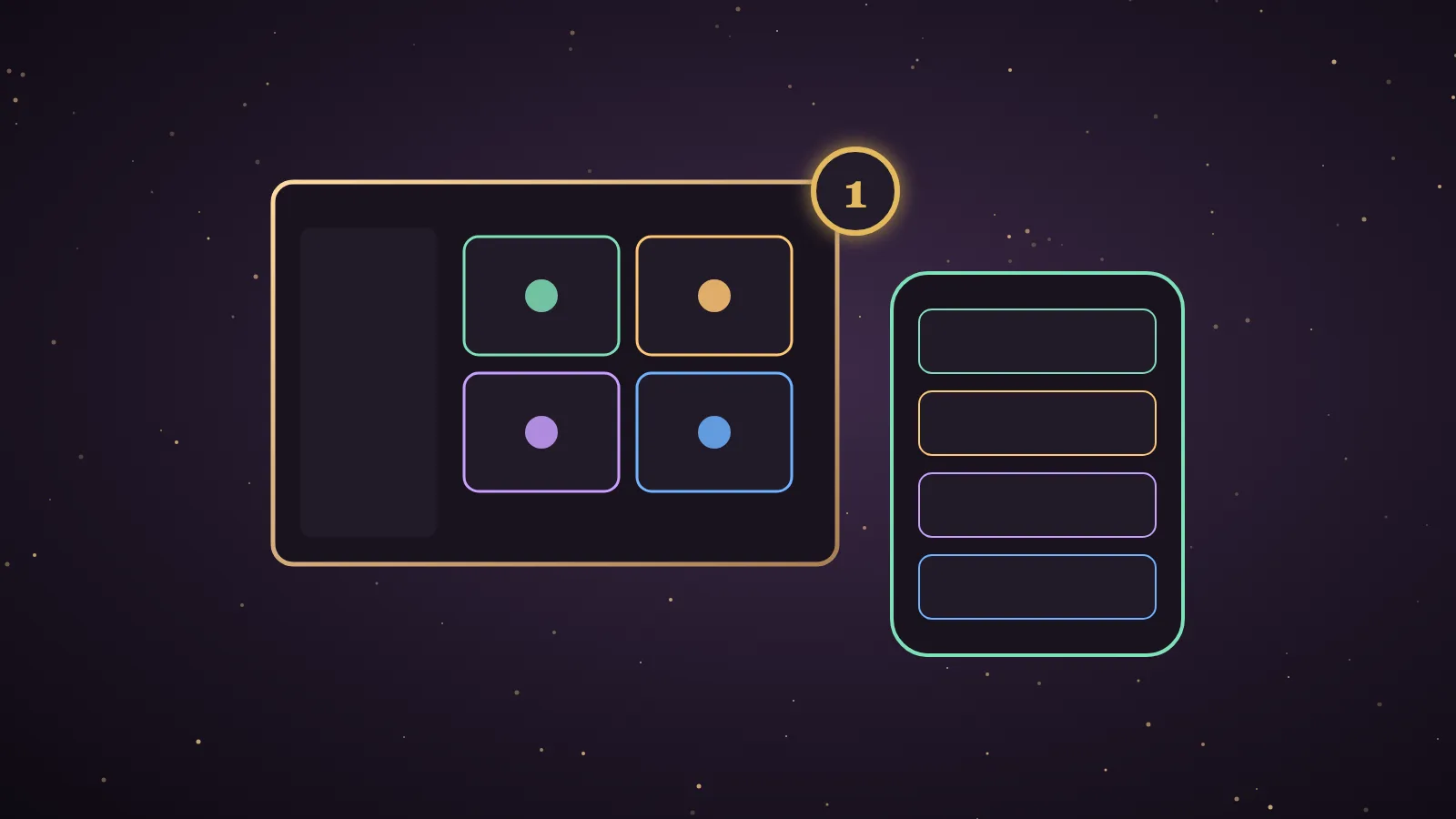
The best Hermes Agent UI in 2026 is Hermes Desktop, the free official app from Nous Research that runs on Mac, Windows and Linux.
Herald OS is my second pick because it is the best-looking Hermes front-end I have used, and Hermes WebUI is third because it works in any browser, including on a phone.
A Hermes Agent UI is simply a screen that sits on top of Hermes Agent, so you can chat with it and manage it without typing commands.
I have used every interface on this list on my own machine, so the order is my own first-person pick and not a measured score.
I'll give you the ranked list first, then how each one works and how to set it up, then the limits, and finally the real bench scores for the models you can run behind them.
The top three Hermes Agent UI picks at a glance
- 🥇 Hermes Desktop is the best overall, because it is official, free and stable.
- 🥈 Herald OS is the best-looking, with Spaces, Missions and a morning dashboard, but it is an alpha.
- 🥉 Hermes WebUI is the best for using Hermes from a browser or a phone.
What a Hermes Agent UI is and why it matters
Hermes Agent is the free, open-source AI agent from Nous Research.
It can use tools, run scheduled jobs, remember what it learns and answer on messaging apps.
It started in the terminal, and when I first ran it there around March and April 2026 it felt messy.
A Hermes Agent UI solves that by giving the same agent a proper window.
The official docs say all the front-ends talk to the same agent and share state, so a session you start in one can be resumed in another.
That means choosing an interface is a low-risk decision, because you can switch at any time.
How I ranked the best Hermes Agent UI options
I ranked every interface on four things.
The first is how quickly you can install it and send a first message.
The second is how stable it felt when I used it.
The third is how much of Hermes you can control from it.
The fourth is how it looks, because you will spend hours in it.
The nine best Hermes Agent UI options, ranked
| Rank | Interface | Who makes it | Cost | Best for | Main limit |
|---|---|---|---|---|---|
| 1 | Hermes Desktop | Nous Research (official) | Free | Most people | Voice permissions were hit and miss on my Mac in June |
| 2 | Herald OS | Luke The Dev (independent) | Free | The nicest look and separate Spaces | It is an alpha, and Connections did not sync for me |
| 3 | Hermes WebUI | nesquena (community) | Free | Browser and phone access | You secure remote access yourself |
| 4 | Hermes Workspace | outsourc-e (community) | Free | Running several agents with a kanban board | It needs the gateway and dashboard running |
| 5 | Hermes web dashboard | Nous Research (built in) | Free | Keys, config, logs and cron jobs | Its Chat tab only embeds the terminal UI |
| 6 | Hermes Pixel Office | Teknium | Free | Watching agents work | It is a window and not a controller |
| 7 | StarNet | androoAGI (independent) | Free | Fun | It is a separate harness, and API keys don't transfer |
| 8 | Hermes Cloud | Nous Research (hosted) | Paid | Always-on agents | It costs money while it works |
| 9 | Terminal and TUI | Nous Research (built in) | Free | Developers and servers | It is the least friendly for beginners |
How each Hermes Agent UI works and how to set it up
1. Hermes Desktop
Hermes Desktop is the native app built on the same agent core, config, keys, sessions, skills and memory as the command line.
It gives you streaming chat, a side-by-side preview rail, a file browser, voice, cron, profiles, skills and settings.
If Hermes is already installed, you run hermes desktop and it launches against your existing setup.
If it is not, you download the installer for macOS on Apple Silicon, Windows or Linux from the Hermes Desktop page.
It also has a plugin marketplace, where I found around 500 free community plugins with an "Open in Hermes Desktop" button.
2. Herald OS
Herald OS is an agent-native operating system with Hermes Agent as the interface, and it is not affiliated with Nous Research.
Its dashboard greets you, shows today's schedule and offers a "Pick up where you left off" card.
Spaces split your work into Ideas, Work and Personal, and Missions let Hermes plan a goal step by step.
On a Mac you need macOS 13 or later on Apple Silicon, and you install Hermes first and then download Herald OS from its GitHub releases page.
The build is not notarised yet, so you run one xattr command before it opens.
Honestly, I think it looks nicer than Hermes Desktop, and my full walkthrough is in my Herald OS post.
3. Hermes WebUI
Hermes WebUI is a lightweight browser app with sessions on the left, chat in the middle and a workspace file browser on the right.
It is plain Python and JavaScript, so there is no build step.
You clone the repository, run python3 bootstrap.py, and reach it from other devices through an SSH tunnel or Tailscale.
4. Hermes Workspace
Hermes Workspace is a browser command centre with chat, memory, skills, files, a terminal and a kanban task board.
Its one-line installer sets it up, and you then run hermes gateway run and pnpm dev and open localhost on port 3000.
Version 2 added profiles, a live inspector and an editable memory browser, and I use its kanban board as an AI to-do list.
5. The Hermes web dashboard
The web dashboard ships with Hermes, and you open it by running hermes dashboard.
It appears on 127.0.0.1 at port 9119 and manages config, API keys, MCP servers, sessions, logs, analytics, cron jobs and skills.
The API keys and model pages are the ones that matter most for this post, because that is where you choose the brain.
6. Hermes Pixel Office
Hermes Pixel Office is a plugin by Teknium that shows each agent session as a pixel character at a desk.
You clone it into the Hermes plugins folder, run hermes plugins enable pixel-office, start a new session and open 127.0.0.1 on port 8113.
A red exclamation mark appears over any agent that is waiting for your approval.
The Hermes Office plugin offers a similar visual office with a one-click install in Hermes Desktop.
7. StarNet
StarNet is a free agent harness that looks like a pixel-art space station.
It can import an existing Hermes agent by reading the persona, instructions, memory and model from your Hermes folder.
I think it's fun to play with, but I honestly don't think it has a massive number of practical use cases yet.
The details are in my StarNet AI agent post.
8. Hermes Cloud
Hermes Cloud is the hosted Hermes from Nous Research, where the agent runs around the clock on their servers.
You sign in to Nous Portal, name the agent and pick a model, then chat in the browser or through Telegram, Discord, Slack or email.
When I set it up in July 2026, it needed at least $10 in credits or an active Nous subscription.
9. The terminal and the TUI
The terminal is the baseline, and you start the modern terminal UI with hermes --tui.
The docs call the TUI the recommended way to run Hermes interactively, and it costs nothing.
Where my own Agent OS fits
I also run Hermes inside my own Agent OS, and I have left it out of the ranking because it is my own product.
It puts Hermes behind thirteen rooms next to Claude and my other agents, all under one shared memory.
It is only available to AI Profit Boardroom members as an installable zip, so it is not a free download.
I'd rather be upfront about that than rank myself first in my own list.
The honest limits of every Hermes Agent UI
Hermes Desktop is the safest pick, but voice permissions were hit and miss on my Mac when I tested them in June.
Herald OS is an alpha at version 0.1, and its repository was only created on 6 October 2026.
The Connections page in Herald OS did not sync for me, and the top of the interface was slightly cut off on my screen.
Hermes WebUI and Hermes Workspace are community projects, so you keep them updated yourself.
Pixel Office only watches, so it cannot stop a bad run.
StarNet copies a Hermes agent in, but API keys never transfer and there is a slight delay when you send a message.
Hermes Cloud is the only interface here with its own bill.
Whichever you choose, check the Memory page before you share your screen, because I spotted my Telegram details in mine.
Which Hermes Agent UI should you pick?
Pick Hermes Desktop if you want one stable app.
Pick Herald OS if looks matter and you can live with alpha rough edges.
Pick Hermes WebUI or Hermes Workspace if your agent lives on a server.
Pick the dashboard for admin work and Pixel Office for visibility.
If you want the whole stack ranked, read the best Hermes Agent setup.
If Hermes is not for you, the best Hermes Agent alternative covers the other options.
No Hermes Agent UI ships its own model, so pick the brain
Here is the part most interface lists skip.
Not one of these interfaces comes with its own model, because each one runs whatever model your Hermes install is connected to.
A beautiful dashboard does not make Hermes smarter.
If the brain is weak, Missions plan badly and builds come out broken, however nice the screen looks.
Hermes needs a model provider, which can be a Nous Portal account or an API key for OpenRouter, OpenAI, Anthropic or a local model.
In my Herald OS, the preferred model showed GPT-6 Astra, which I had plugged in through a CLI, and that model is not on GoldieBench.
In my StarNet, the agents run on my Grok sign-in with Grok 4.6, which is on the board.
So I use GoldieBench to compare the brains, and I use my own week of testing to judge the interface.
The strongest brains to run behind a Hermes Agent UI
These are live averages from the board on 10 October 2026, and each model link opens its full page.
| Model | Live avg | Tasks scored | Why it suits a Hermes interface |
|---|---|---|---|
| Claude Opus 5 | 8.27 | 50 | It is the top single model on the board, so it suits big Missions and builds |
| Hermes MoA | 8.17 | 47 | It is the Hermes-native mixture of agents, which you can pick inside Hermes |
| GPT-5.6 Sol | 8.16 | 50 | It is the strongest OpenAI brain I have benched |
| Qwen 3.8 | 8.10 | 45 | It is the highest-scoring Chinese model with a near-full run |
| MiniMax M3 | 7.97 | 47 | It is strong and cheap, so it suits daily automations |
| Kimi K3 | 7.89 | 50 | It is a solid all-rounder |
| GLM-5.2 | 7.77 | 47 | It has open weights, so you can also self-host it |
| Claude Opus 5.5 | 7.57 | 50 | It is the newest Claude on the board |
For the full Hermes-specific breakdown, read the best LLMs for Hermes Agent and the newer best Hermes Agent model ranking.
Grok 4.6 vs Grok 4.7 behind a pixel-art interface
I chose Grok 4.6 over 4.7 when I set up StarNet, because I actually prefer how it talks.
The board tells a different story for building things.
Grok 4.7 scores clearly higher across the same 20 game builds.
So I would keep Grok 4.6 for chat if you like its style, and switch to 4.7 when you want an agent to build something.
That is a good example of why the interface and the brain are two separate choices.
Free and local brains for a free Hermes Agent UI
Every free interface on this list can stay free if the model is free too.
Qwable 5 27B Coder is the strongest local model I have benched, with a live average of 7.14 across 41 tasks on my own Mac. LongCat-2.0 averages 8.12, but only across four tasks, so the board marks it as provisional. Laguna XS 2.1 averages 3.93 across 42 tasks, so I would keep it on light chores.The local models board shows everything I have run on my own machine, and the best local model for Hermes Agent goes deeper.
You can also put any three models side by side on the compare page.
What GoldieBench does and does not tell you about a Hermes UI
GoldieBench gives every model the same one-shot prompt to build a game, a page or a simulation, and then scores the rendered result from 0 to 10.
The methodology page explains exactly how each build is scored.
That maps well to Missions and builds inside any Hermes interface.
It does not measure how pretty a dashboard is, how well connections sync or how fast an app opens.
No interface is on the board, and none ever will be, because the board scores models.
So use the board to choose the brain, and use this ranking to choose the window.
Also On Our Network
- Agent Operatorsthe install commands for every Hermes front-end
- AI Income Deskwhich Hermes interface fits your business
- AI Tool Verdictnine Hermes interfaces scored in a full verdict
- agentos.guidea quick-start for each Hermes UI inside an Agent OS
- agentos.guideThe Hermes Command Desk on agentos.guide
Choose the window you enjoy, check the live board for the brain, and you will end up with the best Hermes Agent UI for your own work.
FAQ
What is the best Hermes Agent UI?
Hermes Desktop is the best Hermes Agent UI for most people. It is the free official app from Nous Research for macOS, Windows and Linux, and it shares config, keys, sessions, skills and memory with the command line.
Do Hermes Agent UIs ship their own model?
No. Hermes Desktop, Herald OS, Hermes WebUI and the others all run whatever model your Hermes install is connected to, through Nous Portal, an API key or a local model. The interface changes the screen, not the brain.
Which model should I run behind a Hermes Agent UI?
Claude Opus 5 is the top single model on GoldieBench with a live average of 8.27 across 50 tasks, followed by Hermes MoA at 8.17 and GPT-5.6 Sol at 8.16. MiniMax M3 at 7.97 is a strong cheaper choice.
Is Herald OS on GoldieBench?
No. Herald OS is an interface, and GoldieBench scores models. The model I had set in Herald OS, GPT-6 Astra, is not on the board either.
Can a Hermes Agent UI be completely free?
Yes. Most of the interfaces are free and open source, and you can pair them with a free or local model. The strongest local model I have benched is Qwable 5 27B Coder at 7.14 across 41 tasks.
Keep reading
 Hermes Herald AI Agent: Which Brain To Run It On, With Real GoldieBench Scores
 Herald OS: What It Is, How To Set It Up, And Which Benchmarked Models To Run Under It
 Hark AI Agent: What It Is, The Model Behind It, And How Those Brains Score On GoldieBench
🌐 Sister-site take: read this on agentos.guide