GoldieBench Blog · 10 min read
The Best Hermes Agent Setup: Six Stacks Ranked, Then The Brain To Run In Each
The best Hermes Agent setup is Hermes, a Nous Portal brain, a local fallback and a memory vault. Six setups ranked, then real scores for the model in each.
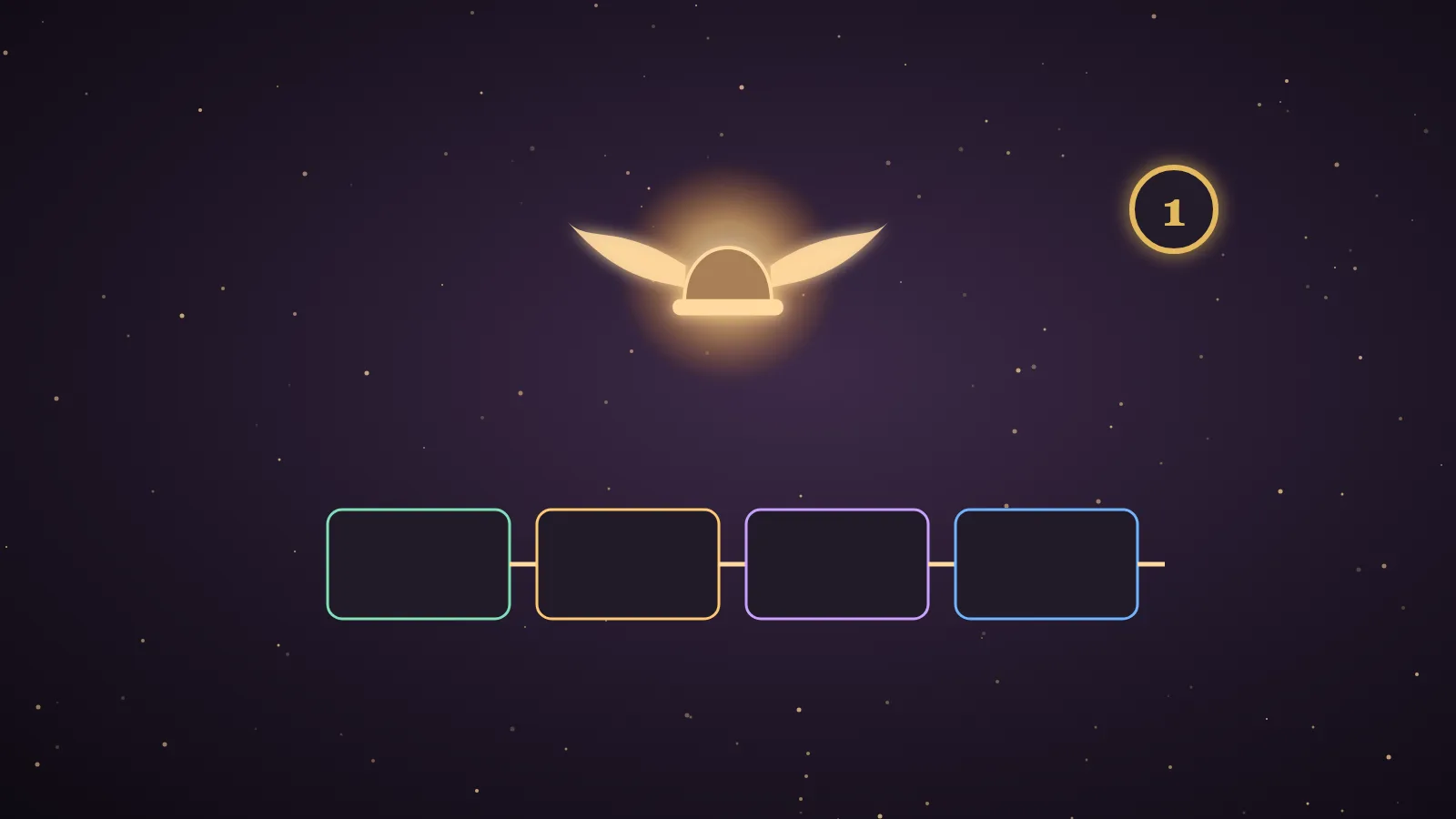
The best Hermes Agent setup is Hermes Desktop with a Nous Portal model as the main brain, a local Ollama model as the fallback, a plain-text memory vault and one dashboard on top.
I call that the three-layer setup, because it gives the agent a brain, a cockpit and a memory.
The free setup is my second pick, and the one-click beginner setup is my third.
Below you get all six setups ranked, the real commands for each one and the honest limits.
After that, I use live GoldieBench scores to show which model I would run inside each setup.
Top 3 picks at a glance
🥇 The three-layer setup is the best overall, because it fixes memory, control and cost together.
🥈 The free setup is the best for $0, because Hermes is free and some models are too.
🥉 The one-click beginner setup is the best starting point, because Hermes Desktop installs like a normal app.
What a Hermes Agent setup is
Hermes Agent is a free, open-source AI agent from Nous Research that can use tools, run commands and remember things.
It does not come with one fixed model, so setting it up means making five choices.
| Part | What it is | The command or tool |
|---|---|---|
| The install | The Hermes program itself | Hermes Desktop, or the official install script |
| The front end | Where you talk to the agent | Hermes Desktop, hermes dashboard or a chat app |
| The main model | The brain that does the thinking | hermes model |
| The memory | What the agent knows about you | Built-in memory, hermes memory setup and a notes vault |
| The plugins | Extra powers on top | hermes plugins install |
Every setup in this ranking is a different mix of those five parts.
How I ranked these setups
The setup ranking is my own first-person opinion, based on what I run daily and what I have covered in my guides.
It is not a measured score, and the only measured numbers in this post are the model scores further down.
I judged each setup on speed to a working agent, monthly cost, memory between sessions and whether it works while I am away.
The 6 best Hermes Agent setups, ranked
1. The three-layer setup (best overall)
This is Hermes with a brain, a cockpit and a memory built around it.
It is best for anyone who wants an agent they still use in three months.
The software is free, and the brain is free while you stay on a free Nous Portal model.
Install Hermes Desktop from the Hermes website, or run curl -fsSL https://hermes-agent.nousresearch.com/install.sh | bash.
Run hermes setup --portal to log in to Nous Portal and pick a model.
Run hermes fallback add and choose a backup model, such as a local one through Ollama.
Make a notes folder with an about-me note, a decisions log and a daily log, and tell Hermes to read it at the start of each session.
Run hermes dashboard to open the web dashboard, which runs on your own machine at port 9119 by default.
The full build is in my 3-Layer Hermes OS guide.
2. The free setup (best for $0)
This is Hermes on a model that costs nothing.
It is best for testing Hermes and for easy daily jobs such as summaries and research briefs.
Run hermes model, choose Nous Portal and pick a model that is marked free.
Run hermes model --refresh if a free model is missing, because the list is cached.
The other route is ollama launch hermes with a free Ollama cloud model, which has token limits.
Free models get rate limited at busy times, so add a second free model with hermes fallback add.
3. The one-click beginner setup (best for beginners)
This is the Hermes Desktop package for macOS or Windows.
It is best for first-time users who never want to open a terminal.
Download it, install it, sign in to Nous Portal inside the app and pick a model.
The Mac package supports Apple Silicon only.
The bundled package already contains the agent and its dependencies, so nothing has to be built on first launch.
4. The profile-per-model setup (best for power users)
A profile is a separate Hermes home with its own config, keys, memory, sessions and skills.
It is best for daily users who want a different brain for each job.
Run hermes profile create coder, then hermes -p coder to chat with it.
I keep one profile per model, so switching brains is a single flag.
You can run Claude on an existing Pro or Max subscription with hermes plugins install claude-subscription-directsdk.
That plugin needs Hermes 0.21.4 or newer, and Nous marks it experimental.
The official docs warn that two running agents should never share the same profile, because both write memory.
5. The always-on server setup (best for business)
This is Hermes on a Linux server or in Hermes Cloud, connected to your chat apps.
It is best for teams and for jobs that must run overnight.
Connect over SSH, run the install script and hermes setup, then run hermes gateway setup.
Run hermes gateway install and hermes gateway start so the gateway runs as a background service.
The dashboard binds to 127.0.0.1 by default, so reach it through an SSH tunnel or a private network.
There is also an official Docker image, which is nousresearch/hermes-agent.
Hermes Cloud is the managed route, and when I covered it a Cloud Agent needed $10 in credits or a Nous subscription to deploy.
6. The local private setup (best for privacy)
This is Hermes with a model that runs on your own machine through Ollama.
It is best for private files and for anyone who wants no meter at all.
Install Ollama, pull a local model, create a profile for it and point that profile at Ollama.
My run Hermes free forever guide has the exact commands for a small model on an 8GB machine.
The best Hermes Agent setups compared
| Rank | Setup | Best for | Cost | Main limit |
|---|---|---|---|---|
| 1 | Three-layer setup | Most people | Free software, free or paid brain | The memory vault needs a daily habit. |
| 2 | Free setup | Testing and light jobs | $0 | Free models get rate limited. |
| 3 | One-click beginner setup | First-time users | Free app | It stops when the app closes. |
| 4 | Profile-per-model setup | Power users | Depends on your models | Many profiles need upkeep. |
| 5 | Always-on server setup | Businesses and teams | A server or Hermes Cloud, plus the model | A server needs securing. |
| 6 | Local private setup | Private data | $0, plus hardware | Small models struggle with hard builds. |
Setup commands worth knowing
| Command | What it does |
|---|---|
hermes setup | It runs the interactive setup wizard. |
hermes model | It picks your default provider and model. |
hermes fallback add | It adds a backup model for when the main one fails. |
hermes profile create <name> | It makes a new isolated profile. |
hermes dashboard | It starts the web dashboard on your own machine. |
hermes gateway setup | It connects messaging platforms such as Telegram. |
hermes moa | It configures the Mixture of Agents model slots. |
hermes doctor | It checks your configuration and dependencies. |
hermes backup | It zips your Hermes home so you can restore it. |
I checked each of these against hermes --help on version 0.21.4.
Honest limits of every Hermes Agent setup
No setup fixes a weak brain, and that is why the model section below matters.
Free models are useful, but they get rate limited and the free lists rotate.
Plugins are mostly community-made, so install one at a time and read the repository first.
The dashboard should stay on your own machine rather than the public internet.
A memory vault only works if you end sessions by asking the agent to log what it did.
Run hermes backup before you update or change profiles.
Which model should run inside each Hermes Agent setup?
Hermes does not ship its own model, so the brain you pick decides how good any of these setups feels.
GoldieBench is my leaderboard, where every model gets the same one-shot build prompts and each build is rendered and scored from 0 to 10.
That is a strong signal of how well a model plans and writes working code in one go.
It is not a direct test of agent chores like inbox triage, so treat it as one input rather than the whole answer.
Every number below is the live average on 10 October 2026.
The brain for the three-layer and power-user setups
These are the strongest brains on the board that I have wired into Hermes.
| Model | GoldieBench avg | Scored tasks | Price as listed |
|---|---|---|---|
| Claude Opus 5 | 8.27 | 50 | $5 / $25 per M |
| Hermes MoA | 8.17 | 47 | Panel and aggregator calls via OpenRouter |
| Qwen 3.8 | 8.10 | 45 | Qoder plan |
| MiniMax M3 | 7.97 | 47 | $0.30 / 1M input, $1.50 / 1M output |
| Kimi K3 | 7.89 | 50 | $3 / M in |
| GLM-5.2 | 7.77 | 47 | Open weights, free for individuals |
Hermes MoA is Hermes Agent's own Mixture of Agents mode, and its 8.17 shows how high Hermes can climb with strong brains behind it.
Claude Opus 5 is the one I would give the hardest builds, and the subscription plugin means it does not need a separate API key.
MiniMax M3 is the value pick, because it gets close to the top at a small input price.
In a profile-per-model setup, I would make one profile for each of the brains you actually use.
The brain for the free setup
These are the free options that have a score.
| Model | How it is free | GoldieBench avg | Scored tasks |
|---|---|---|---|
| LongCat-2.0 | Open weights and a free web chat, and it was on the Nous Portal free list when I recorded | 8.12 (provisional) | 4 |
| Laguna XS 2.1 | Free tier on OpenRouter, and on the Nous Portal free list when I recorded | 3.93 | 42 |
LongCat-2.0 has the higher number, but only 4 tasks are scored, which is why the board marks it provisional.
Laguna XS 2.1 is easy to switch on, but 3.93 tells you to keep it on light jobs.
Upstage Solar Mini 4 is not on the board, so I will not give it a number.
It replied fast in my Hermes test, and I said at the time that it was not frontier level.
The brain for the local private setup
These are the local models on the local models board.
| Local model | GoldieBench avg | Scored tasks | How it runs |
|---|---|---|---|
| Qwable 5 27B Coder | 7.14 | 41 | Free, runs locally with MLX only |
| Agents-A1 | 4.83 | 45 | Free, runs locally |
| Gemma 4 12B MLX | 3.98 | 42 | Free, runs locally |
| Qwythos 9B | 2.98 | 42 | Free, runs locally |
Qwable 5 27B Coder is the strongest proven local builder at 7.14 across 41 tasks.
It needs a machine with plenty of memory, so it is not the 8GB option.
LFM2.5 2.6B, the small model I use on 8GB machines, is not on the board.
In my own test it handled five-step tool chains cleanly and failed at a full web app.
My best local model for Hermes Agent post goes deeper on this lane.
The brain for the always-on and beginner setups
An always-on agent runs many small jobs, so price per token matters more than peak quality.
I would start it on a free or cheap brain and add a stronger one as a fallback for hard tasks.
MiniMax M3 at 7.97 is the paid model I would look at first for that role.
A beginner should not overthink this, because any model that replies is enough to learn the tool.
You can change the brain later with hermes model, and nothing else in the setup has to change.
Matching the brain to the setup
| Setup | Brain I would run | Why |
|---|---|---|
| Three-layer setup | A strong Portal or subscription brain, plus a local fallback | The system keeps working when one brain is limited. |
| Free setup | A free Portal model, with a second free model as fallback | Free lists rotate and get rate limited. |
| One-click beginner setup | Whatever Portal model replies first | Learning the tool matters more than the score. |
| Profile-per-model setup | Claude Opus 5 for hard builds and MiniMax M3 for volume | The board shows both the quality gap and the price gap. |
| Always-on server setup | A cheap brain by default, with a strong fallback | Many small jobs add up. |
| Local private setup | Qwable 5 27B Coder if your machine can hold it | It has the strongest local build score. |
If you want the full brain ranking, read my best Hermes Agent model post and my best LLMs for Hermes Agent post.
If you are choosing a front end, my best Hermes Agent UI post covers it.
If you are choosing a server, my best Hermes Agent VPS post covers that.
Also On Our Network
- Agent Operatorsevery Hermes setup with the exact commands to build it
- AI Income Deskthe Hermes setup Julian would pick for a business or agency
- AI Tool Verdictall six Hermes setups scored in a full verdict
- agentos.guidethe seven-step Hermes setup quick-start for your Agent OS
- agentos.guideJulian's 3-Layer Hermes OS guide
Build the three layers first, then use the board to choose the brain, and you will have the best Hermes Agent setup.
FAQ
What is the best Hermes Agent setup?
My pick is the three-layer setup: Hermes Desktop or the official install script, a Nous Portal model as the main brain, a local Ollama fallback, a plain-text memory vault and a dashboard. The setup ranking is my own opinion from daily use, not a measured score.
How do I install Hermes Agent?
Download the Hermes Desktop package for macOS or Windows, or run curl -fsSL https://hermes-agent.nousresearch.com/install.sh | bash on Linux, macOS or WSL2 and then run hermes setup.
Does Hermes Agent come with its own model?
No. Hermes Agent runs whatever model you connect, through Nous Portal, another provider or a local model. That is why the brain you pick matters, and you can change it at any time with hermes model.
Which model scores highest for a Hermes Agent setup on GoldieBench?
Of the brains I have wired into Hermes, Claude Opus 5 averages 8.27 across 50 tasks and Hermes MoA averages 8.17 across 47 tasks. MiniMax M3 averages 7.97 at a much lower input price.
What is the best free brain for a Hermes Agent setup?
LongCat-2.0 scores 8.12 but only across 4 tasks, so the board marks it provisional. Laguna XS 2.1 averages 3.93 across 42 tasks. Solar Mini 4 is not benched, so it has no score.
What is the best local model for a private Hermes Agent setup?
Qwable 5 27B Coder is the strongest proven local builder on the board, averaging 7.14 across 41 tasks. It needs plenty of memory. The small LFM2.5 2.6B model I use on 8GB machines is not benched.
Keep reading
 Hermes Herald AI Agent: Which Brain To Run It On, With Real GoldieBench Scores
 Herald OS: What It Is, How To Set It Up, And Which Benchmarked Models To Run Under It
 Hark AI Agent: What It Is, The Model Behind It, And How Those Brains Score On GoldieBench
🌐 Sister-site take: read this on agentos.guide