Solar
Solar — accurate planetary solar system.
What I asked each model — the Solar prompt
Every model on this page got this exact prompt inside the Agent Operating System: Solar — accurate planetary solar system.
Single HTML file out. No iteration. No examples in the system prompt. Whatever each model produced on the first run is what's on this page. 24 frontier models have attempted it so far: Claude Fable 5, Fugu Ultra, Fugu Mini, Fusion, Gemini 3.6 Flash, GLM-5.2, GPT-5.6 Sol, Grok, Inkling, Kimi K2.7, Kimi K3, MiniMax M3, Hermes MoA, Muse Spark 1.2, Opus 4.8, Claude Opus 5, Qwen 3.8, Qwen 3.7, Claude Sonnet 5, Kimi K2.7 · Fast, Kimi K2.7 · No-Think, Kimi K2.7 · Quality, DeepSeek V4 Pro, DeepSeek V4 Flash.
Why this task matters. Solar is a textbook test of sim-class capability — the kind of build that exposes whether a model is doing pattern-matching or actual reasoning. Shipping this cleanly is the floor for what I expect from a frontier model — every model on the leaderboard should at least attempt it.
How each model handled Solar
Ranked by my 0–10 score from the source comparison guides on agentos.guide. Click any to play the actual one-shot HTML the model produced.
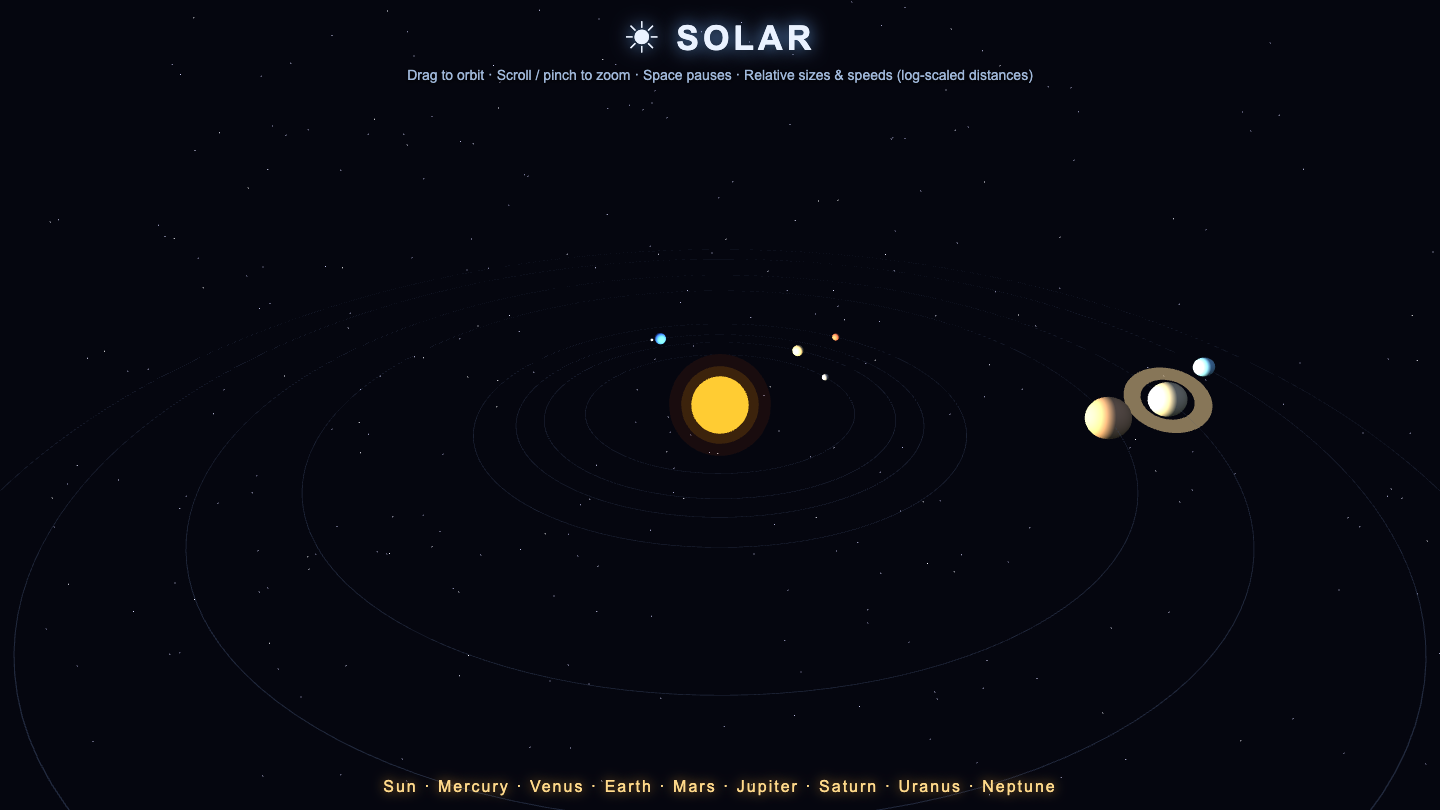
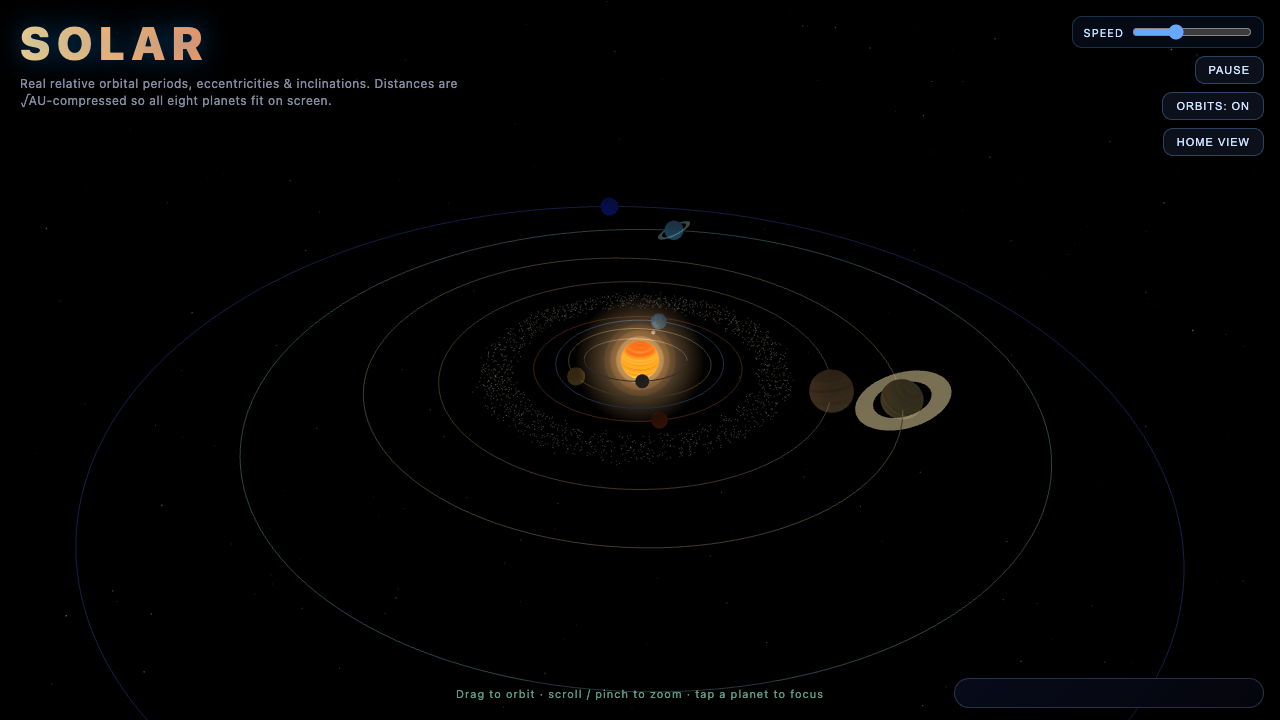
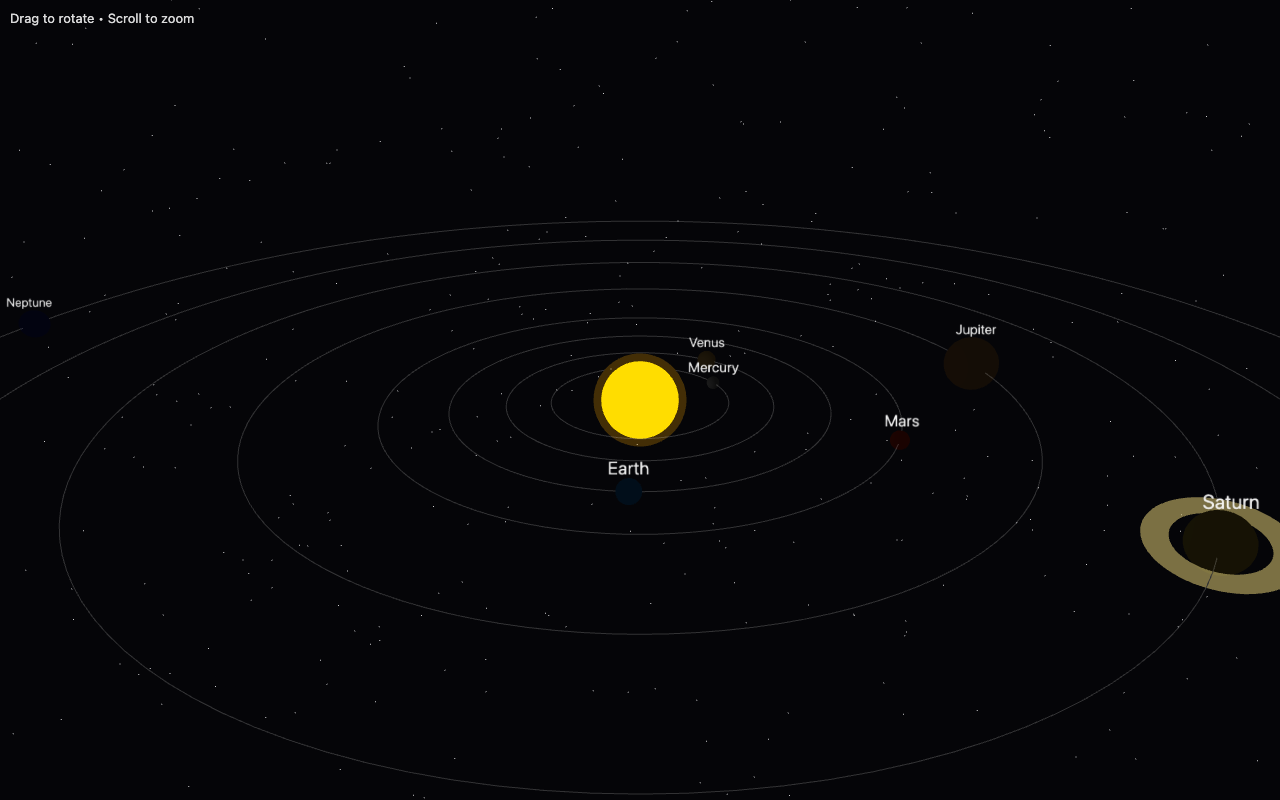
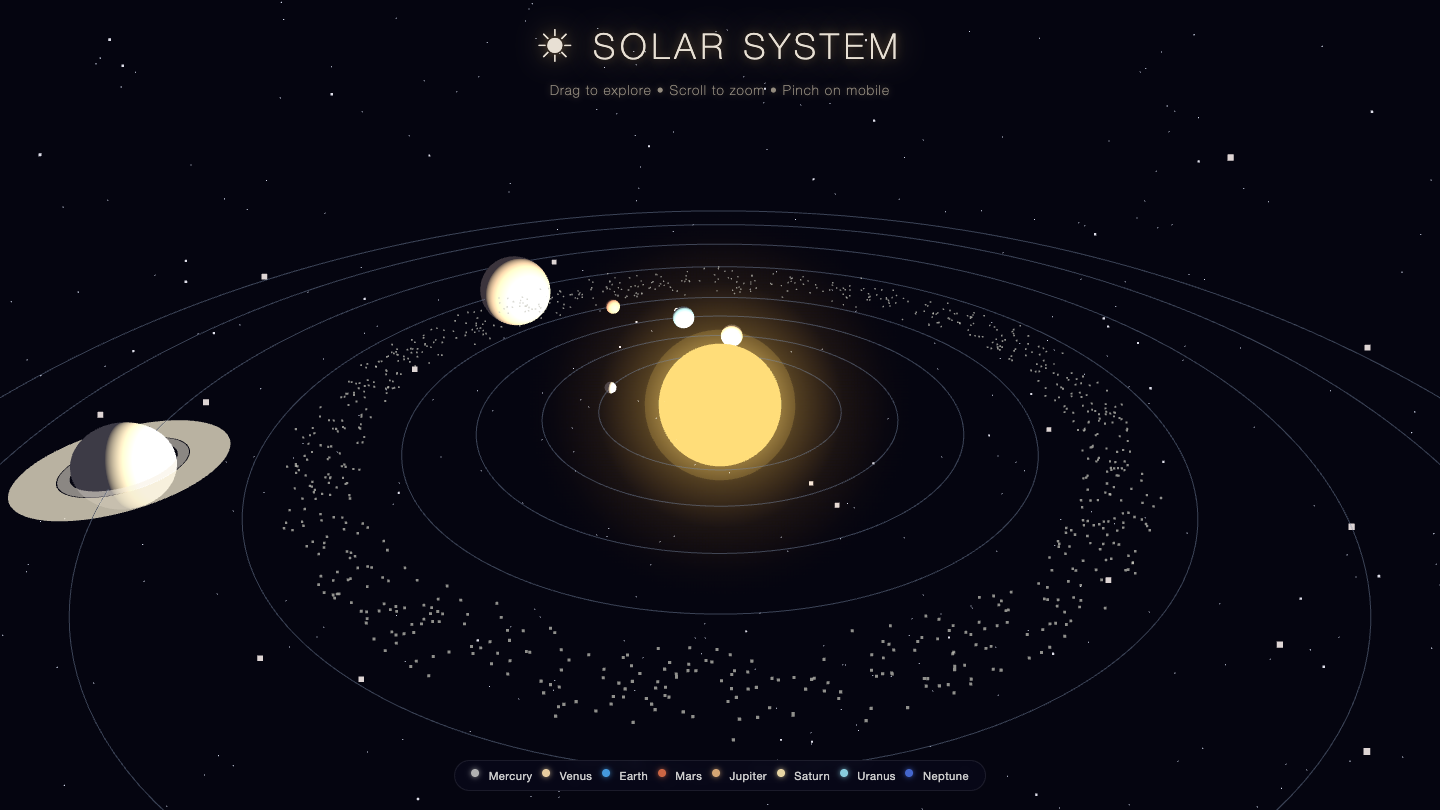
What I saw: Renders cleanly with all 8 planets, elliptical orbit rings, glowing sun, Saturn's ring, and a polished title/legend UI; log-scaled distances plus interactive orbit/zoom controls are a thoughtful touch. Weaknesses are flat-colored planets (no textures) and inner planets crowding the sun, keeping it strong-shippable rather than field-topping.
What I saw: Fugu Ultra v2 rebuild — 55.7KB solar system, the densest solar attempt on the bench. Full </html>, animation loop, Saturn rings, drag-to-orbit + scroll-to-zoom. Smoke-test PASS (3.6% pixel diff after drag, zero console errors). The panel ensemble produces a markedly richer build than Mini's 12KB single-model version.
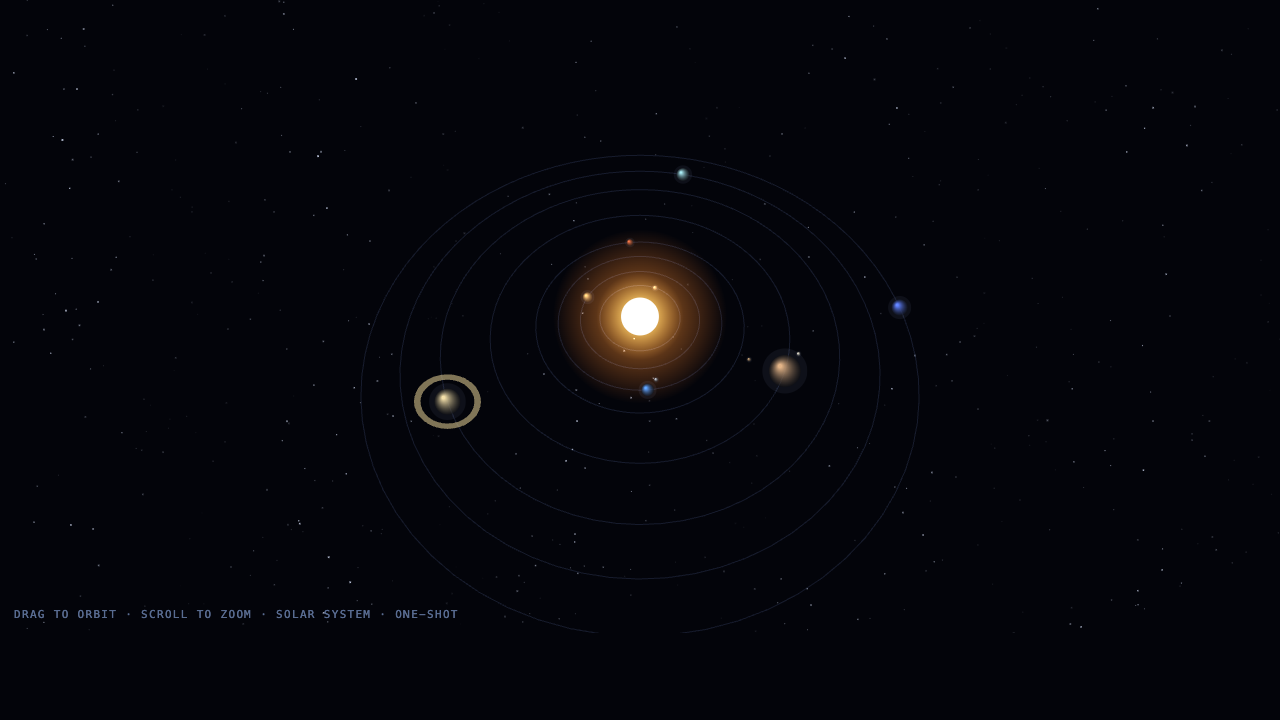
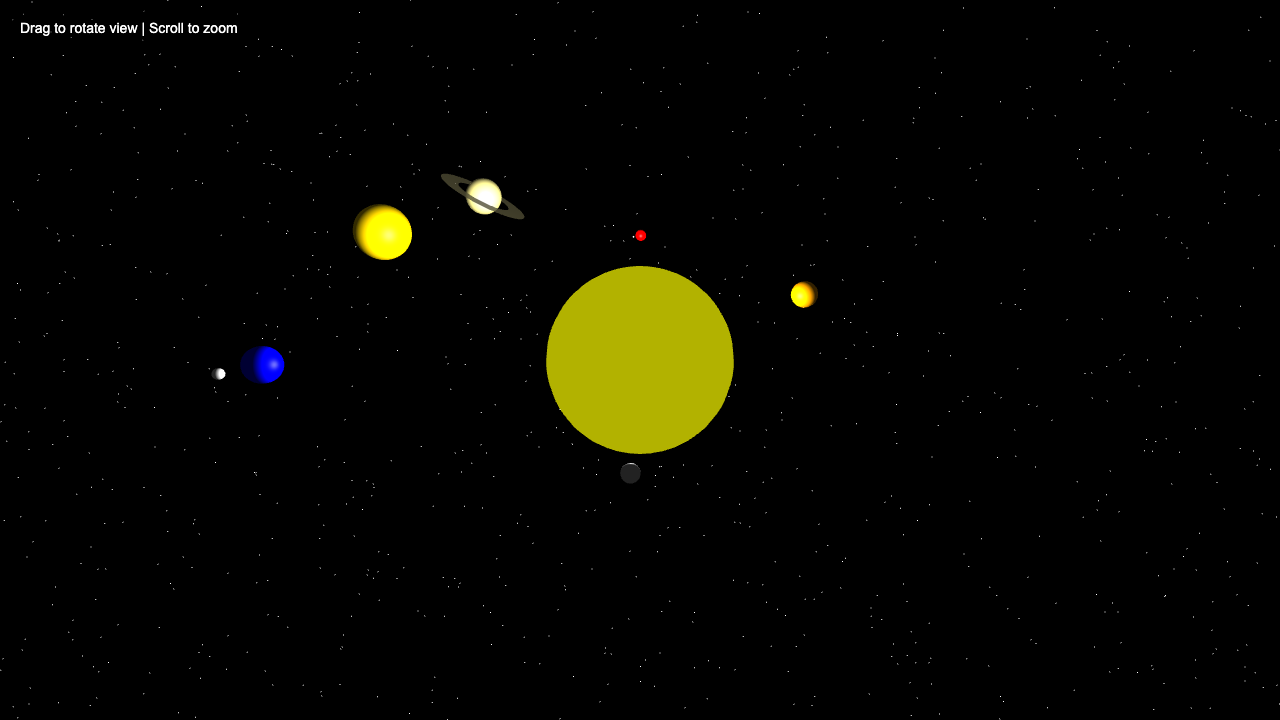
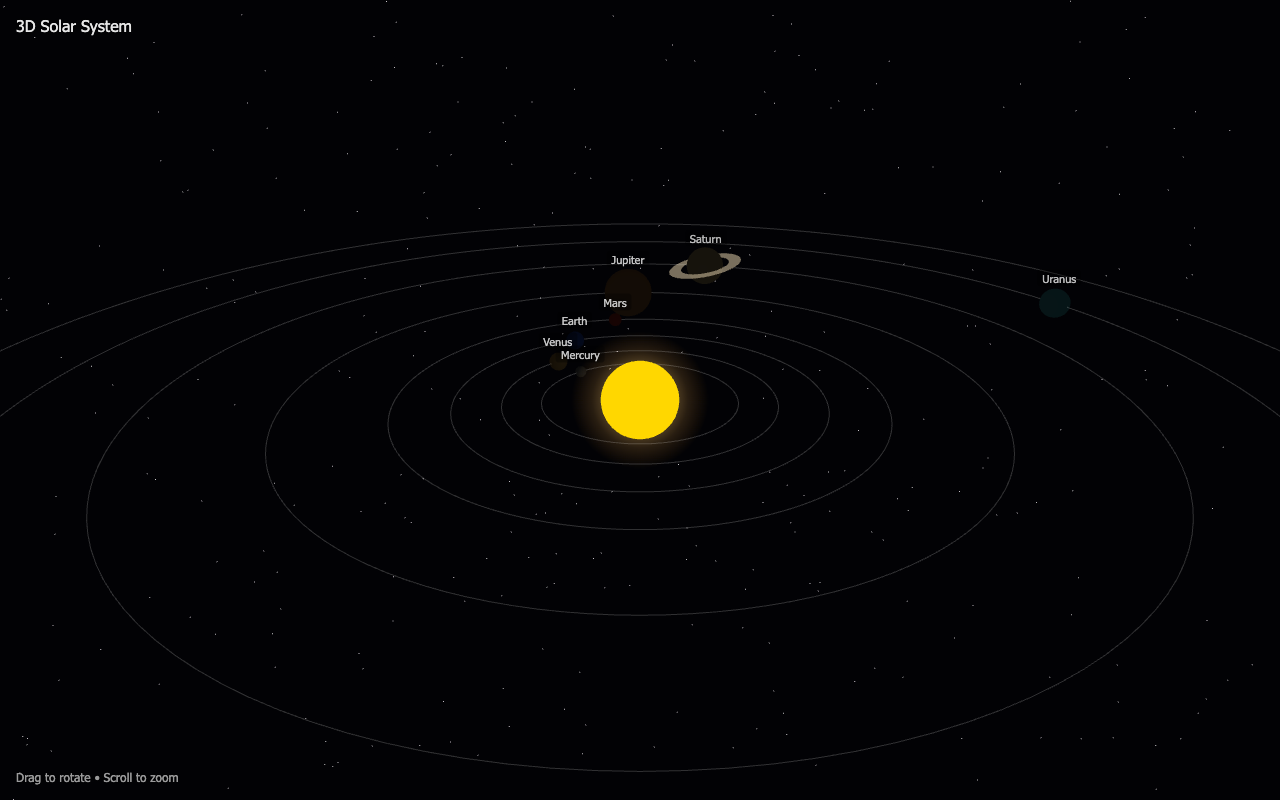
What I saw: Single-model Fugu Mini shipped a complete 12KB solar system in 3.5 min — full </html>, animation loop, Saturn rings, drag/orbit. Verified PASS by headless-Chrome smoke test (pixel-change + no console errors after click + WASD).
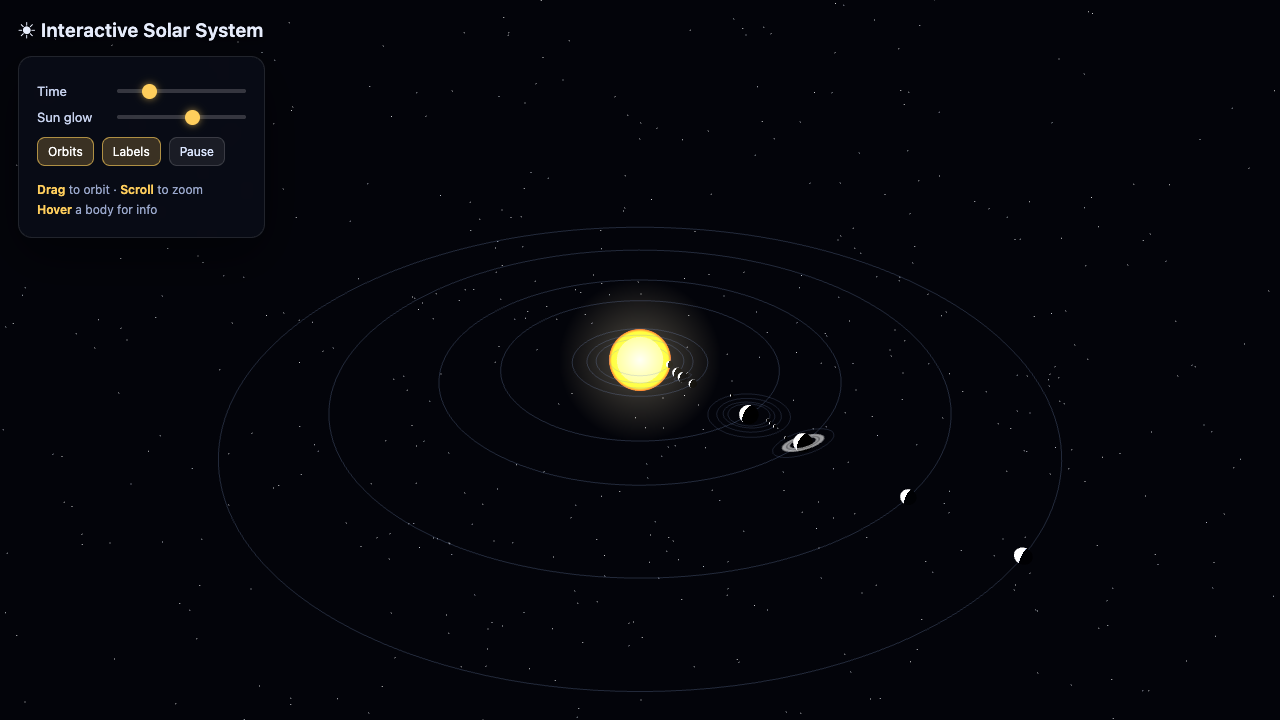
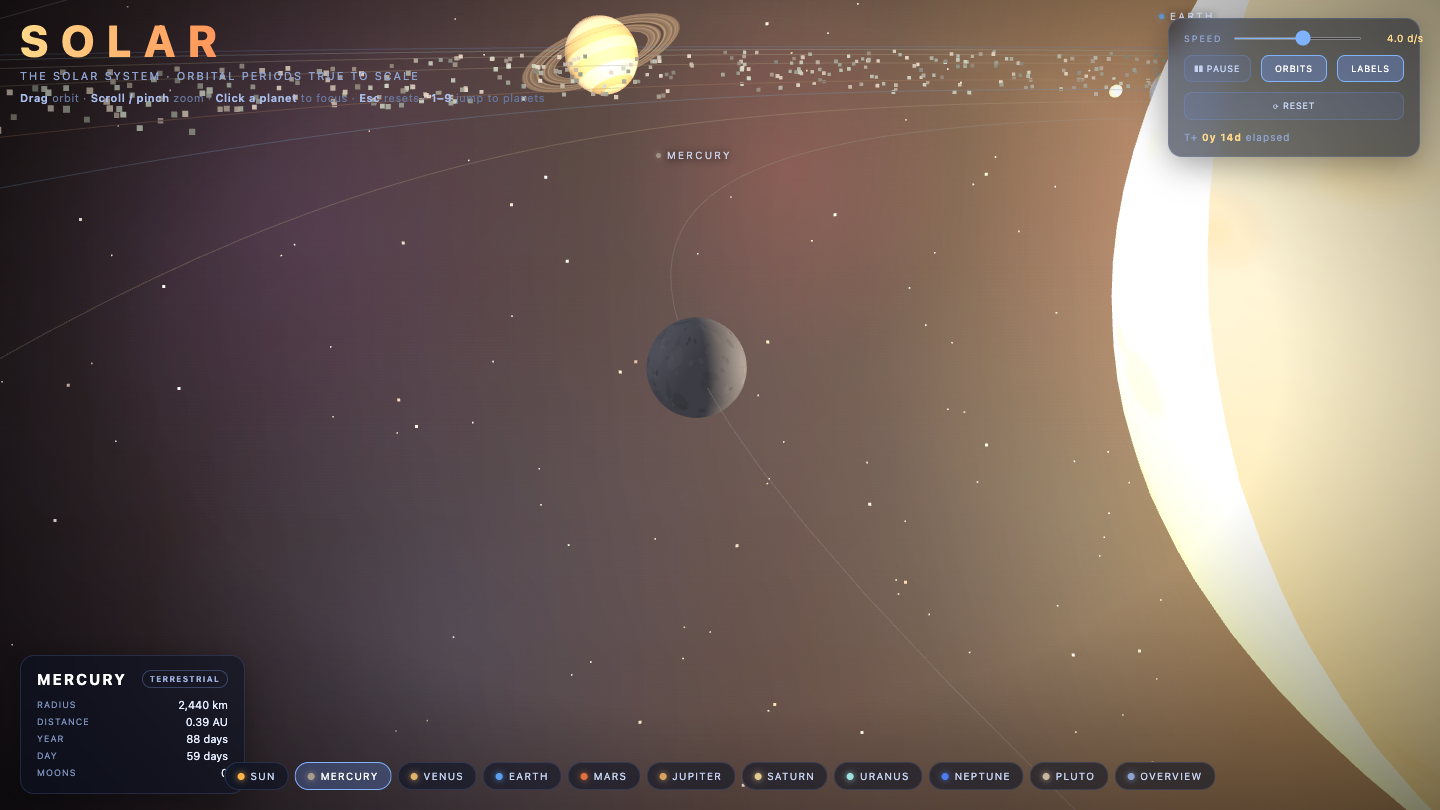
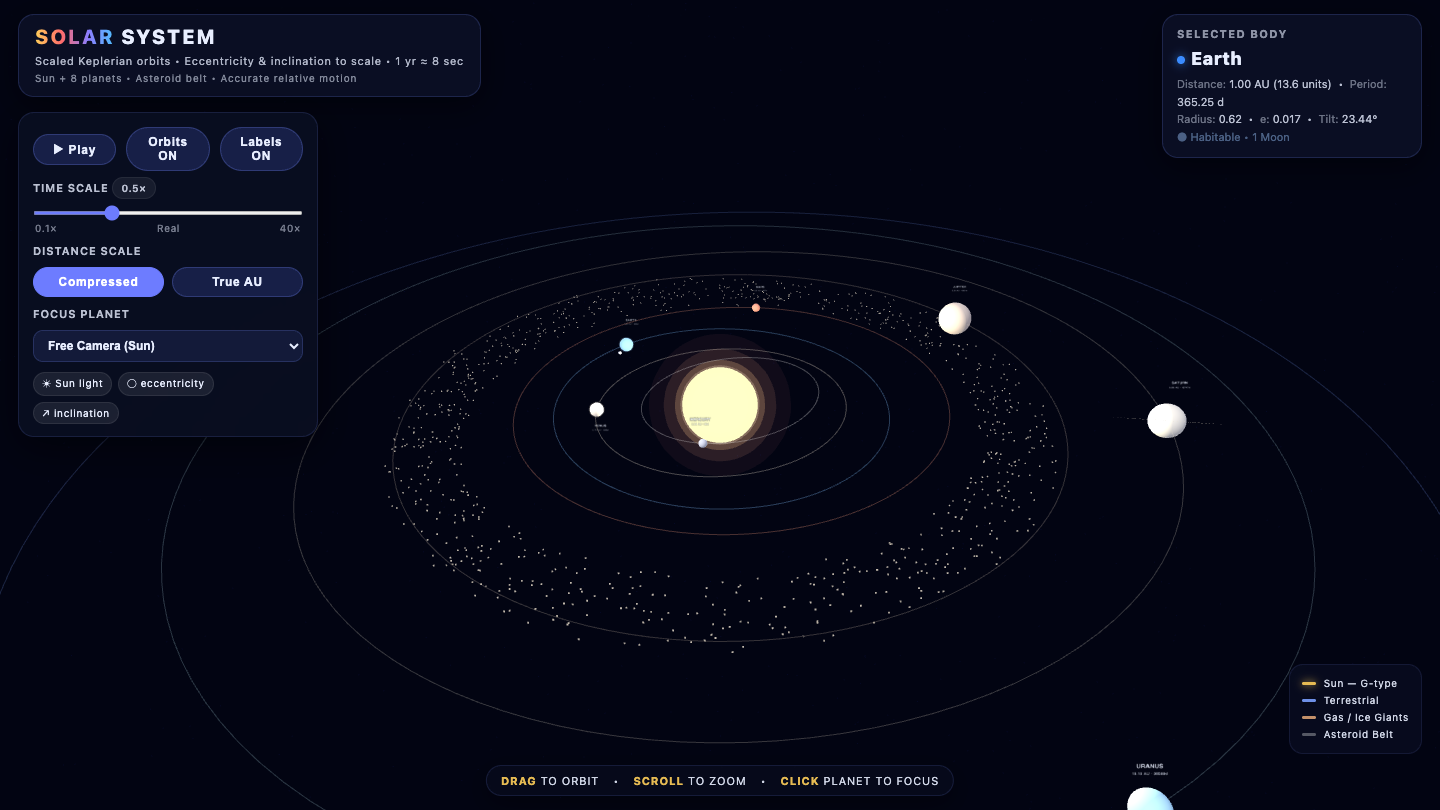
What I saw: Most polished solar attempt I've graded — glass-morphism control panel with time slider, sun-glow slider, orbits/labels/pause toggles, hover info cards on every planet, Saturn's rings, accurate moons. Drag-to-orbit + scroll-to-zoom. Beats Opus on UI density without losing the physics.
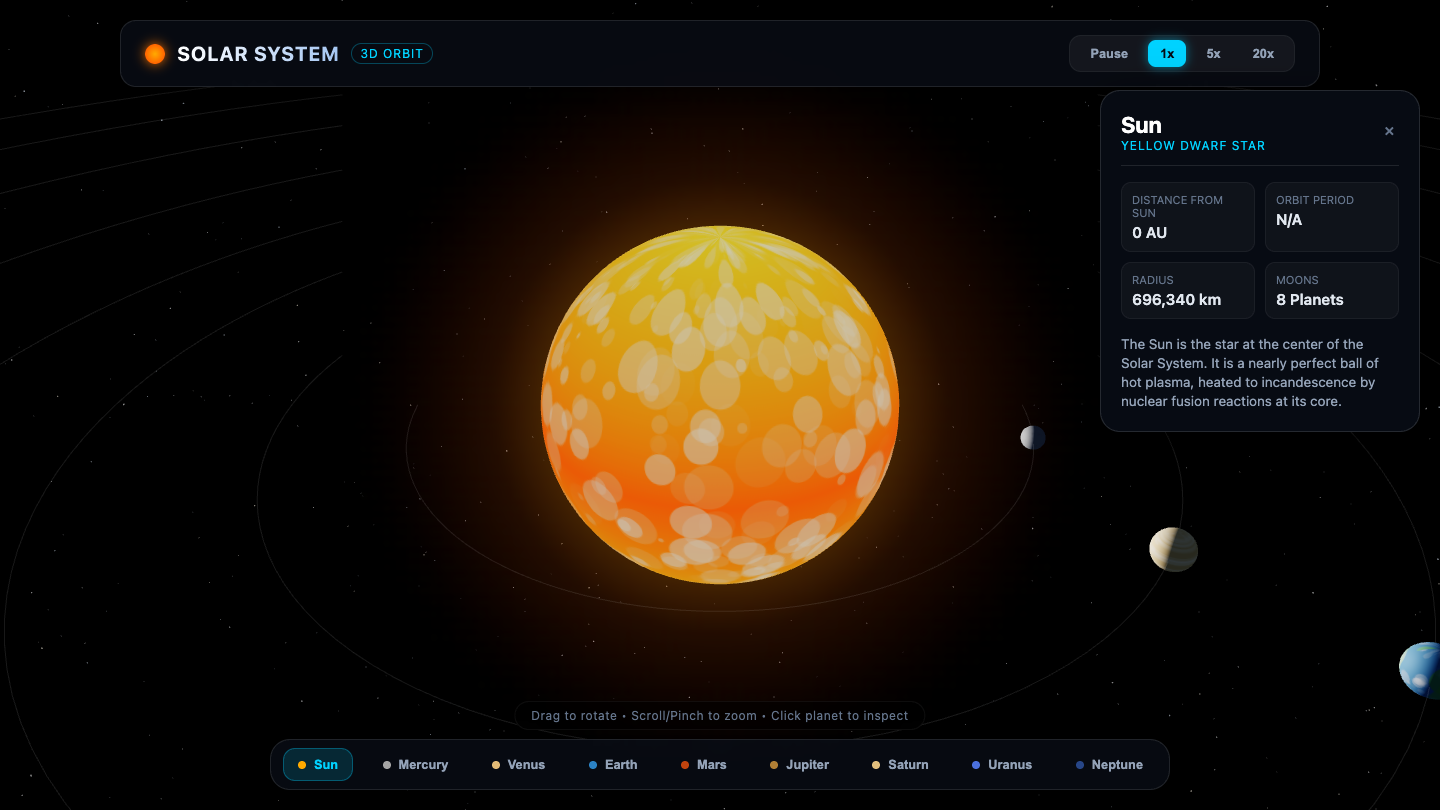
What I saw: Strong 3D Three.js render with a beautifully textured sun, visible orbital rings, detailed planets, and a clean glassmorphism UI with accurate per-planet data cards, speed controls, and a full nav bar. Slightly held back by the sun looking overly mottled/scaled and no visible orbital labels, but overall shippable and near the top of the field.
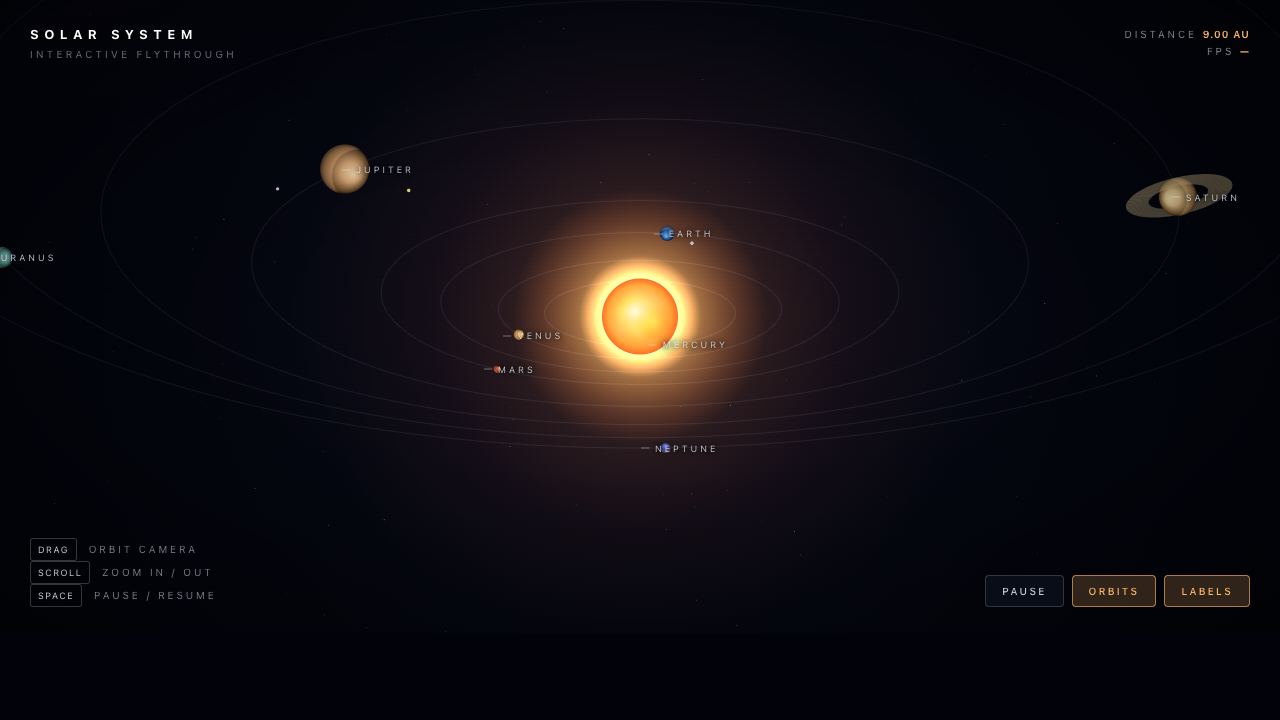
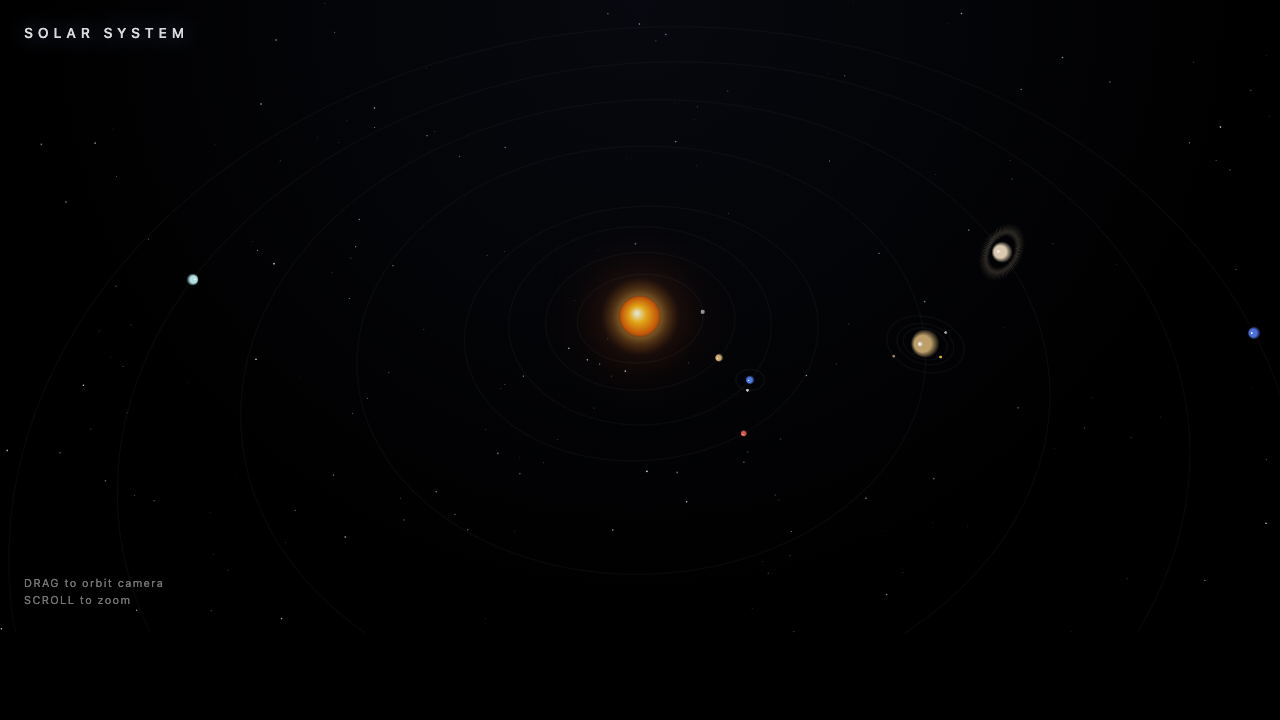
What I saw: Three genuinely good space sims. Opus tilts the orbits into real 3D with a bloom-heavy sun and Saturn's rings. GLM's is the most product-like — labelled planets, orbit and label toggles, a clean HUD. Kimi's is a tidy tilted-orbit system with rings and a deep starfield. Opus and GLM are neck-and-neck; Opus takes it on the 3D feel.
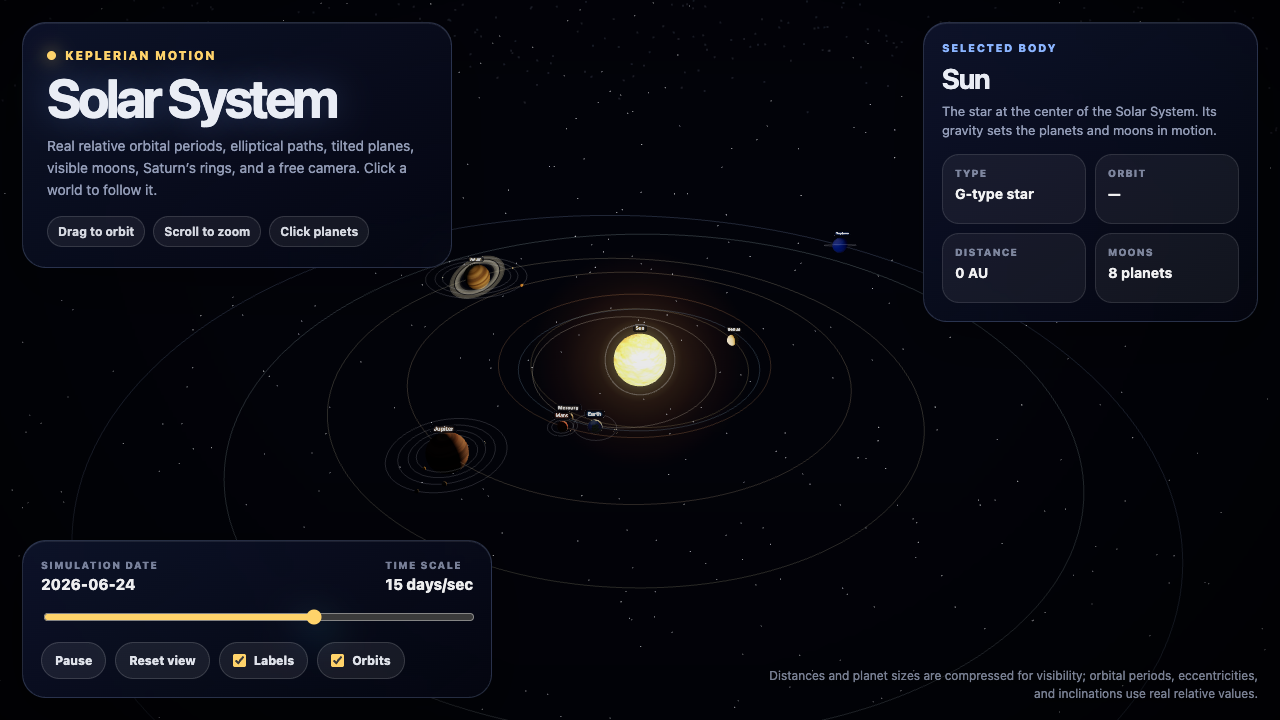
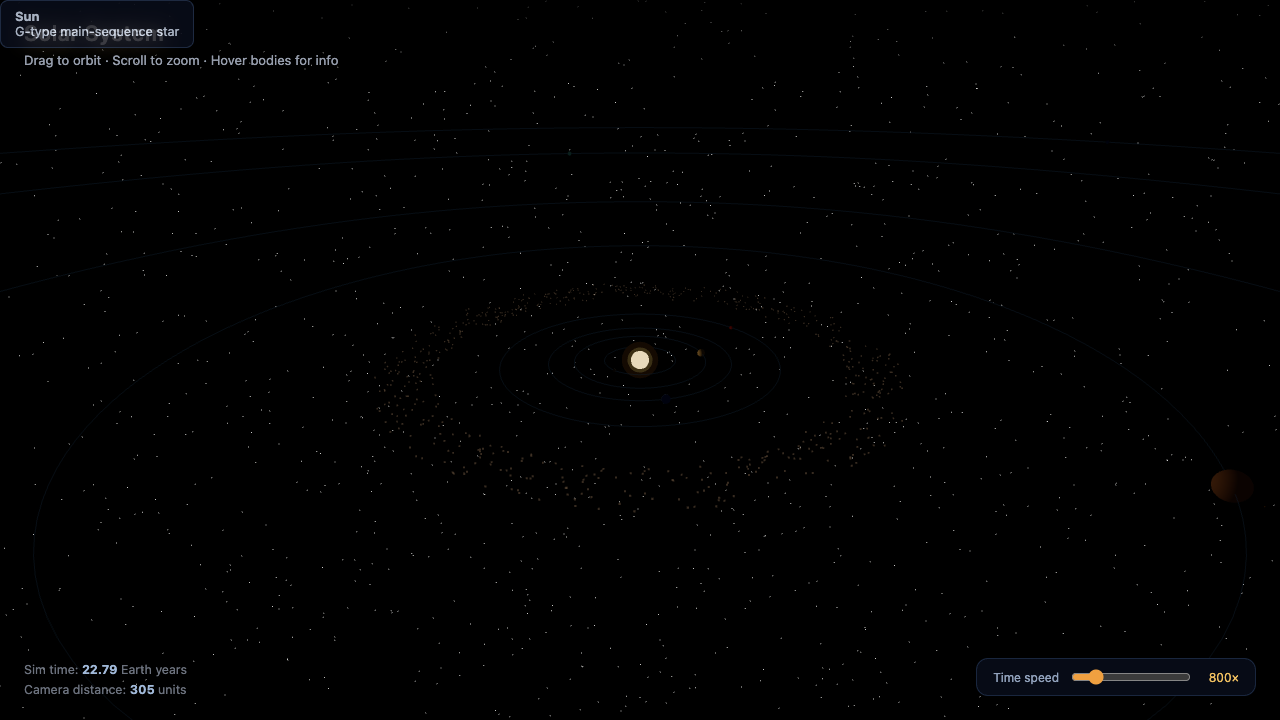
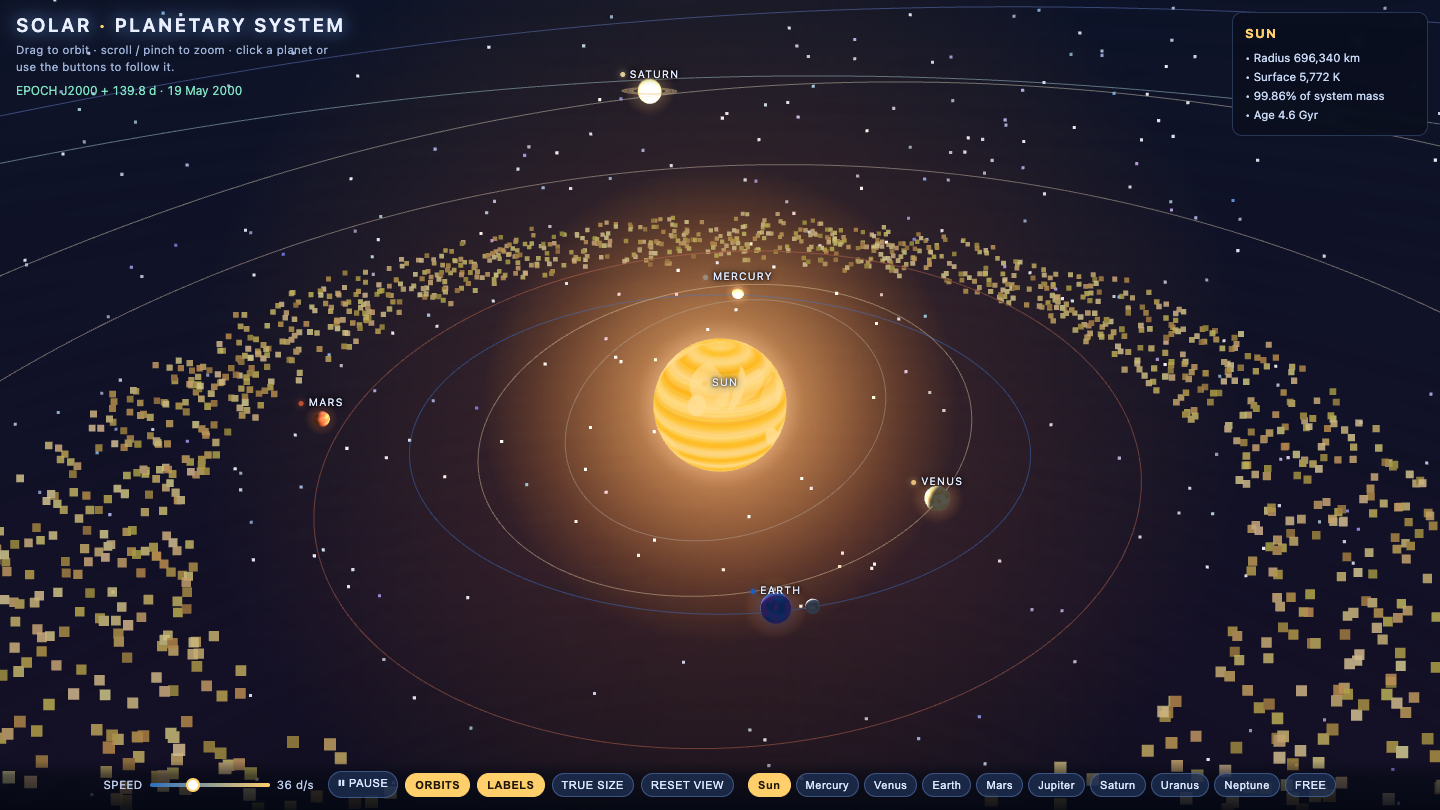
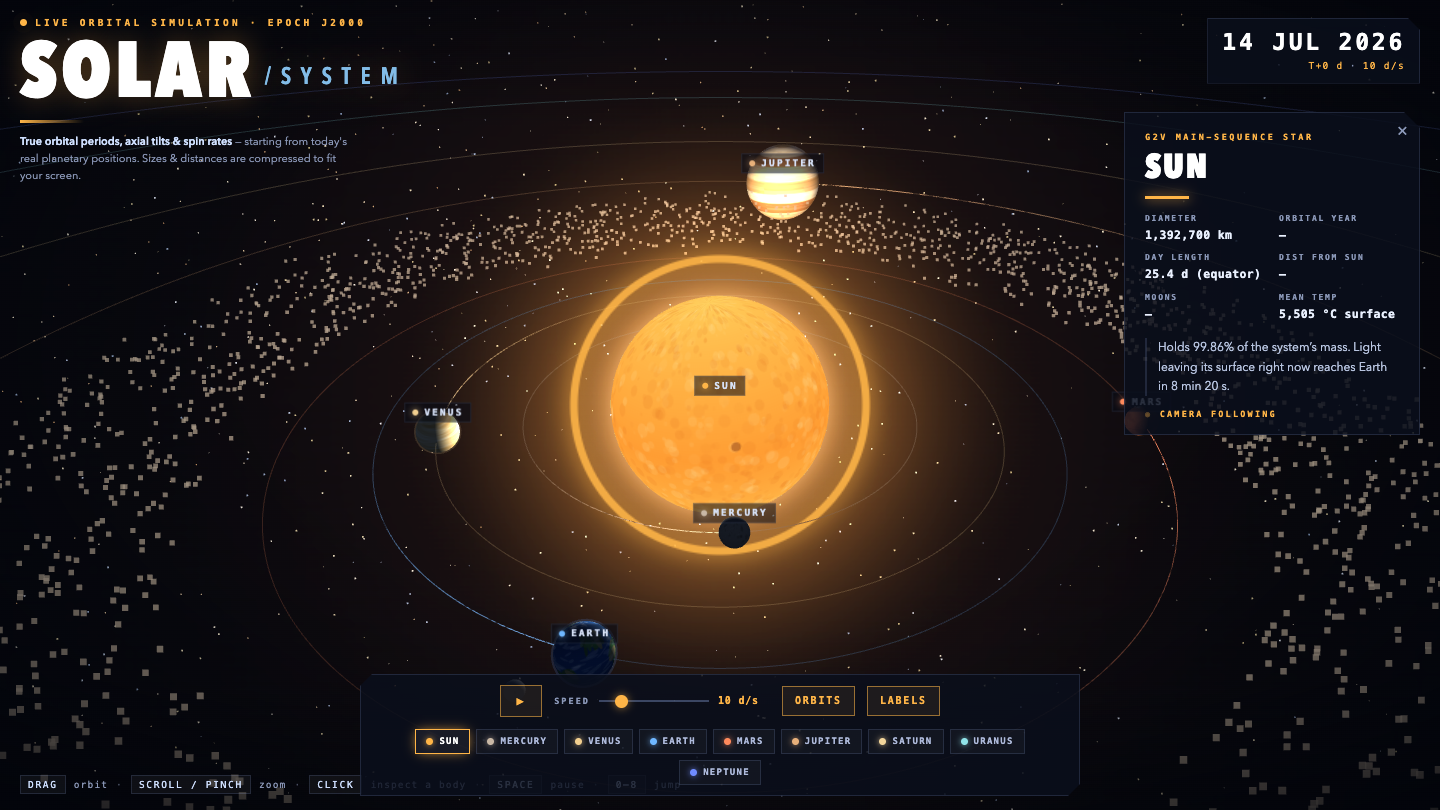
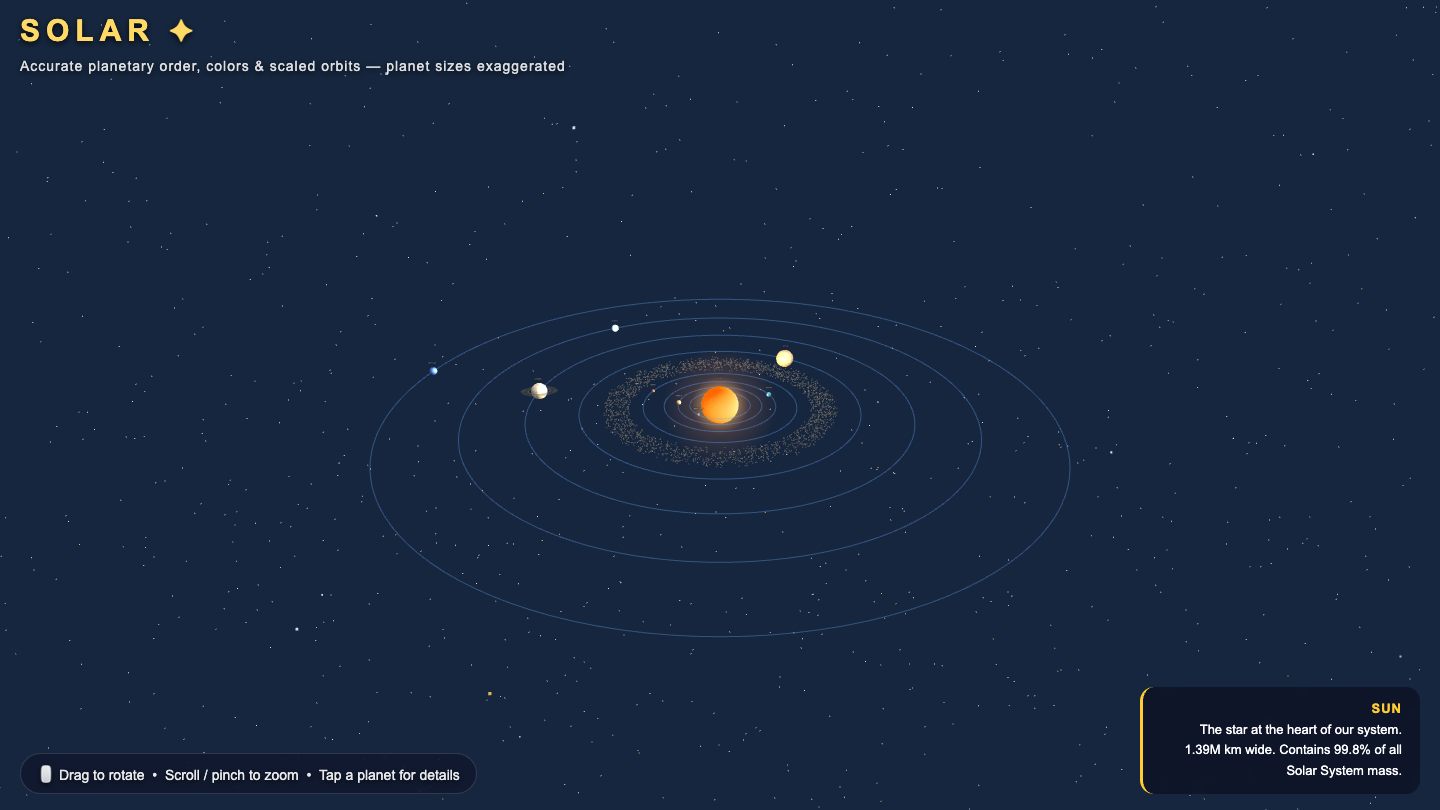
What I saw: Strong 3D render with glowing sun, distinct textured planets, asteroid belt, tilted Keplerian orbits, and a polished glass UI with live date/speed and info panel — clearly on-brief and shippable. Minor nit: labels crowd near the inner planets, but overall it beats the field's best.
What I saw: Solar system on canvas with orbits + Saturn rings + moons. 12KB — compact build, drag-to-orbit + scroll-to-zoom. Slightly less polish than Fusion's glass UI version.
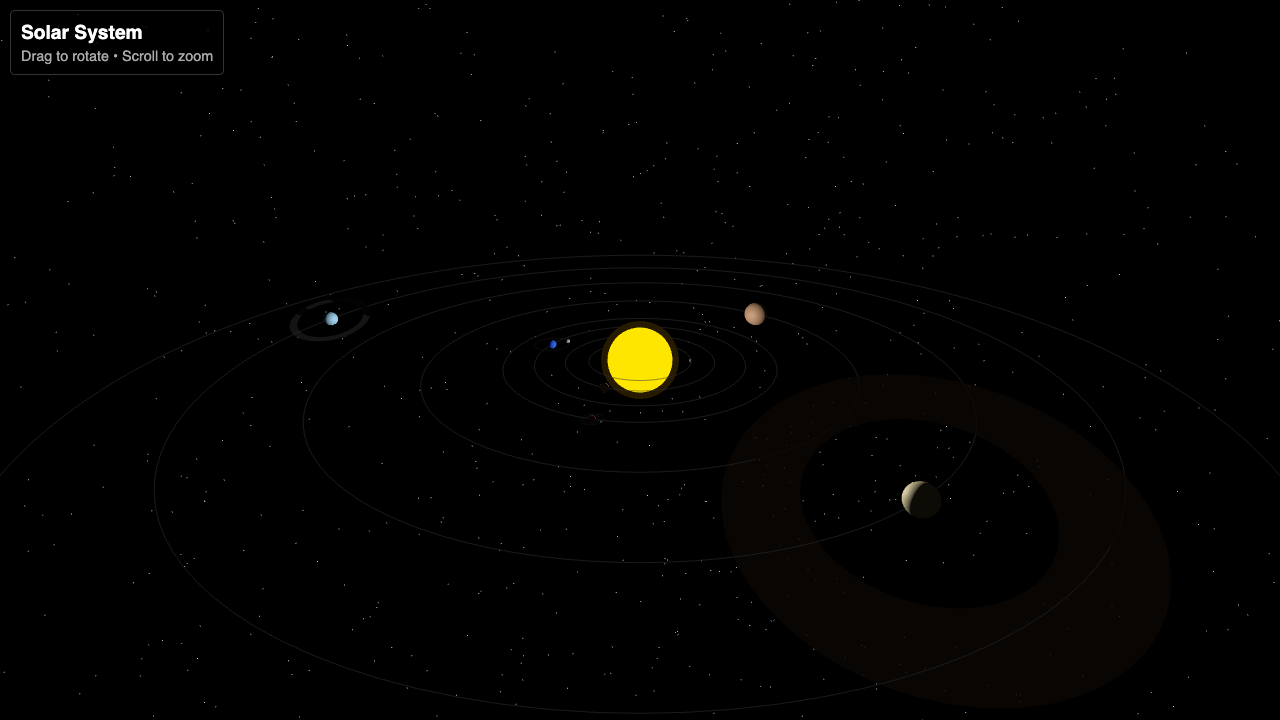
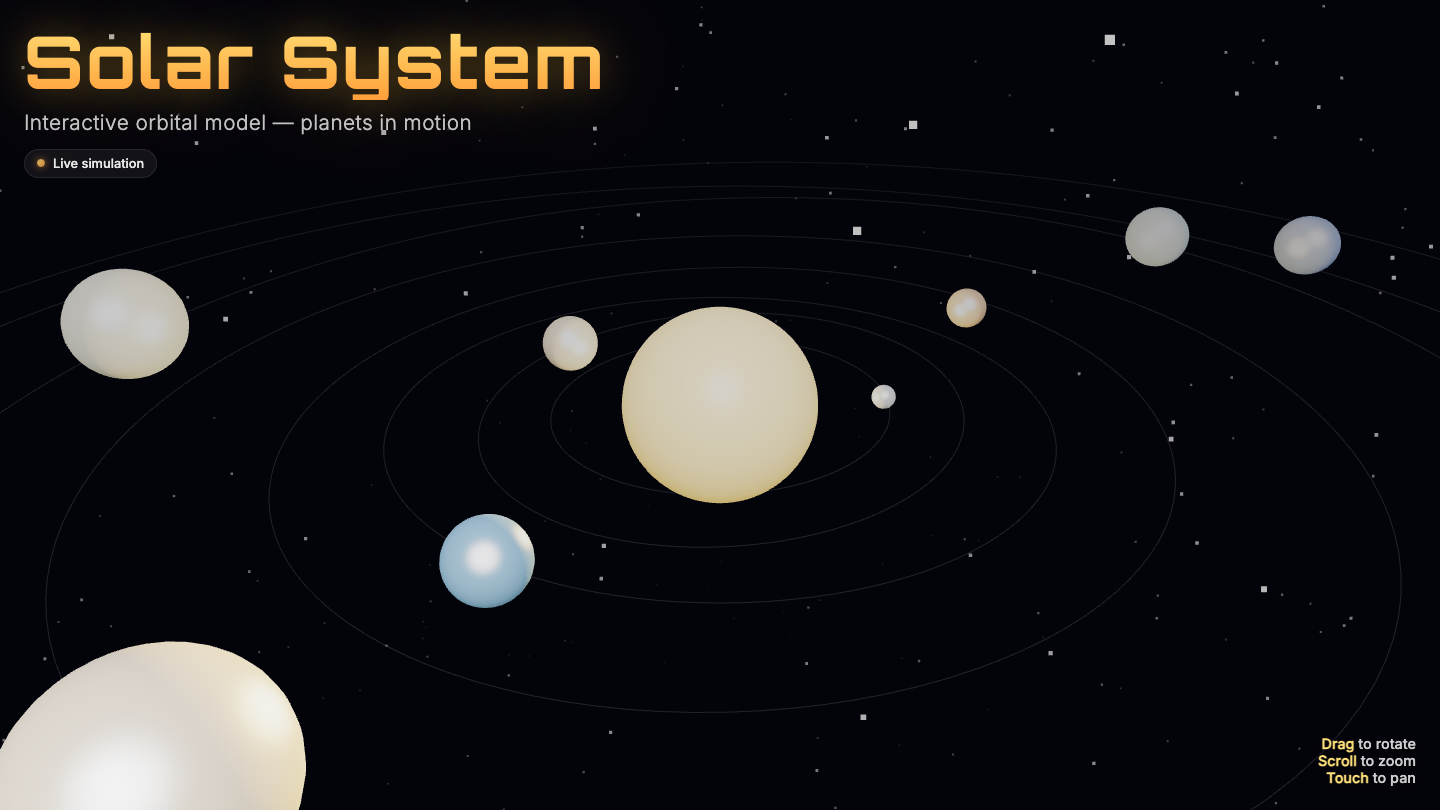
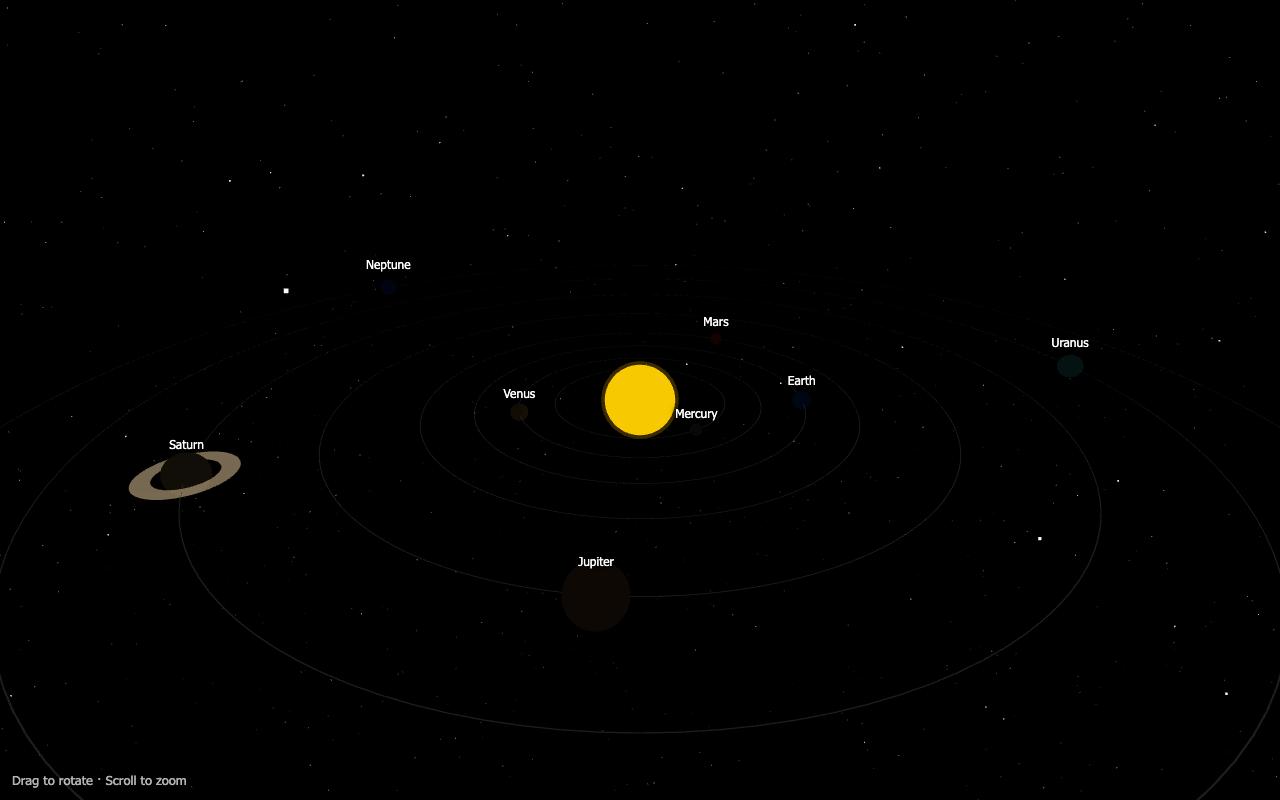
What I saw: Renders cleanly with polished typography, orbit rings, starfield and interactive controls, but the camera framing is broken — the Sun sits off-center, planets aren't clearly the largest bodies, no Saturn rings, and the scale/order reads as a generic sphere scatter rather than an accurate, legible solar system.
What I saw: Three genuinely good space sims. Opus tilts the orbits into real 3D with a bloom-heavy sun and Saturn's rings. GLM's is the most product-like — labelled planets, orbit and label toggles, a clean HUD. Kimi's is a tidy tilted-orbit system with rings and a deep starfield. Opus and GLM are neck-and-neck; Opus takes it on the 3D feel.
The winner on Solar
Fugu Ultra took gold on this task. winner · panel polish.
What I saw: Fugu Ultra v2 rebuild — 55.7KB solar system, the densest solar attempt on the bench. Full </html>, animation loop, Saturn rings, drag-to-orbit + scroll-to-zoom. Smoke-test PASS (3.6% pixel diff after drag, zero console errors). The panel ensemble produces a markedly richer build than Mini's 12KB single-model version.
See Fugu Ultra's full model card: /models/fugu.
Every attempt — live, playable
Side by side. Click any tile to run that model's actual one-shot HTML in a new tab.
 ▶ LIVE
 ▶ LIVE
 ▶ LIVE
 ▶ LIVE
 ▶ LIVE
 ▶ LIVE
 ▶ LIVE
 ▶ LIVE
 ▶ LIVE
 ▶ LIVE
 ▶ LIVE
 ▶ LIVE
 ▶ LIVE
 ▶ LIVE
 ▶ LIVE
 ▶ LIVE
 ▶ LIVE
 ▶ LIVE
 ▶ LIVE
 ▶ LIVE
 ▶ LIVE
 ▶ LIVE
 ▶ LIVE
 ▶ LIVE
How I scored Solar — methodology
Three axes, 0–10 each, averaged. Runs: drop the .html in a browser; if it opens to a broken page, it scores zero. Hits the brief: did the model ship the thing the prompt asked for, or a different thing it found easier. Looks good: visual polish, motion, interactivity — where most of the gap between gold and silver lives.
My scores trace back to the source comparison guides on agentos.guide. See the full methodology page for data provenance, including which source guide each cell's score came from.
Related
More sim benchmarks: all tasks in the Sim category · See the best AI model for Solar · Back to the leaderboard
Run this stack yourself.
Every demo on this bench was built inside the Agent Operating System — one prompt, one shot, single HTML file out. The Agent OS, the prompts, the templates, the weekly walkthroughs and 4,000+ founders shipping with it every day all live inside the AI Profit Boardroom.