GoldieBench Blog · 6 min read
Hermes Rewind + Which AI Models To Run In The Original And The Fork, With Real GoldieBench Scores For Opus 5, GPT-5.6 Sol, Kimi K3 And Hermes MoA
How to turn a rewind fork into a head-to-head between two models, using only the averages on the live GoldieBench models page.
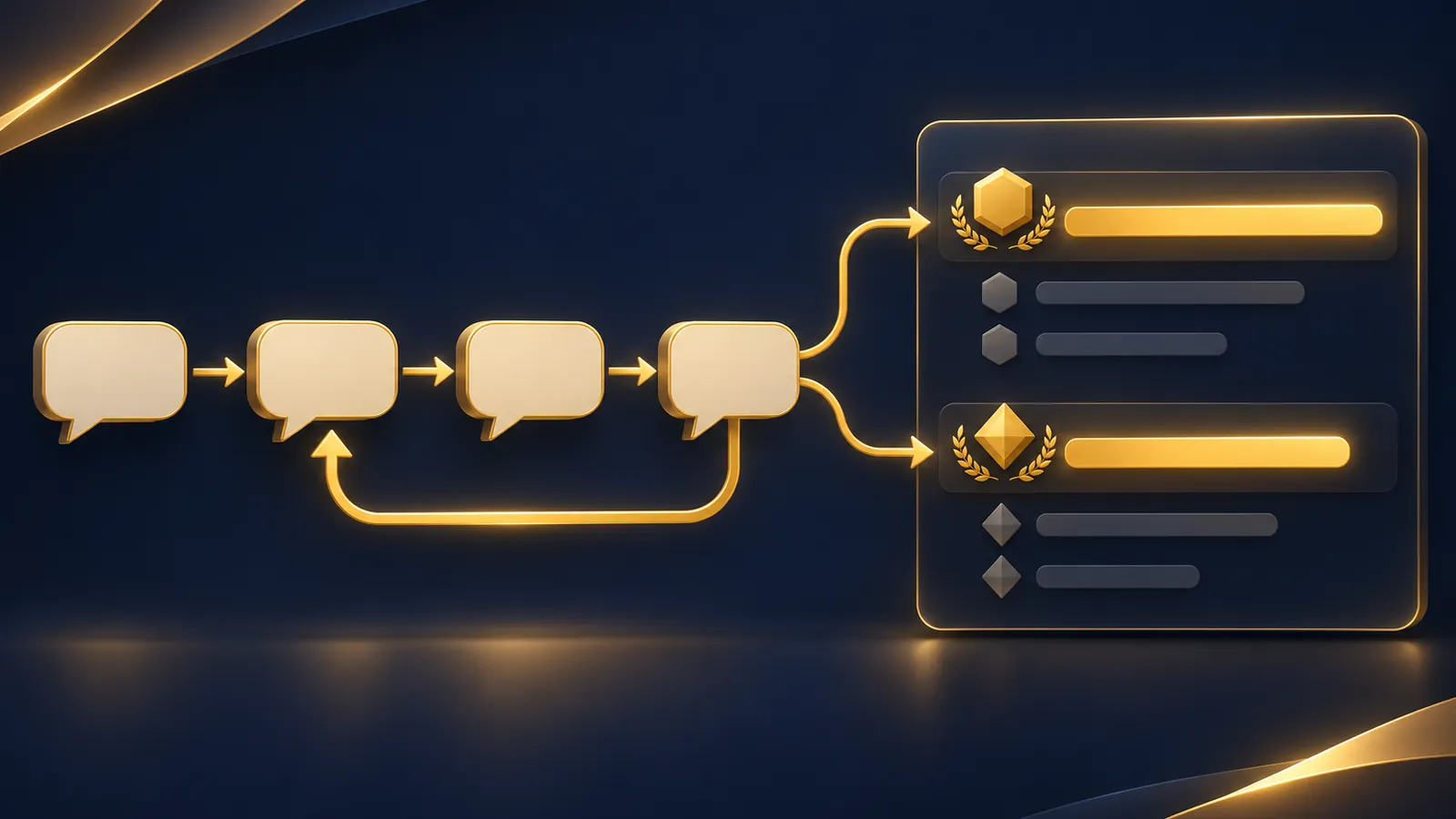
Hermes rewind turns one model run into two: fork a session from an earlier prompt, switch the model in the fork, and the same history gets answered by a different model.
Nous Research added the picker to the terminal apps with the v0.23.0 Hearth Release, dated 5 November 2026.
Below are the scores I read on the live GoldieBench models page on 6 November 2026, and how I would use them to pick the model for each side of a fork.
If you would rather plan your model stack with my team, get your Backlink Gameplan, or try Polar Rank free for 3 days.
How A Fork Becomes A Model Comparison
Press f in the rewind picker, or type /rewind fork N.
Hermes opens a new session holding everything before prompt N, with that prompt waiting in the composer and not yet sent.
The original is left untouched, per the TUI guide.
Now, before you send, switch the model:
/model provider:model-nameThe slash-command reference says /model changes are session-only by default, and --global is what writes them to config.
So the fork runs on the new model while the original keeps its own.
Send the prompt, and you have two answers to the same history from two models.
What GoldieBench Scores Actually Measure
The methodology page sets the rules: every model gets the same fixed prompt, one shot, no iteration and no best-of-N.
Each result must be a single self-contained HTML file that runs in a browser.
Each score is Julian's own 0 to 10, and the leaderboard rank is the average across the tasks a model was scored on.
That matters for rewind.
GoldieBench rewards the first attempt.
Rewind exists for when the first attempt misses, so a fork gives any model a second, better-briefed shot that the bench never measures.
The Shortlist, With Scores Read On 6 November 2026
| Model | Avg /10 | Tasks | Note on the page |
|---|---|---|---|
| Fusion | 8.59 | 47 | Multi-model panel, ensembled |
| Claude Opus 5 | 8.27 | 50 | Anthropic flagship |
| Hermes MoA | 8.17 | 47 | A panel of models merged by a chair |
| GPT-5.6 Sol | 8.16 | 50 | OpenAI flagship |
| Claude Fable 5 | 8.10 | 47 | Newest Anthropic model |
| MiniMax M3 | 7.97 | 47 | 1M-context model |
| Kimi K3 | 7.89 | 50 | 1M context, tuned for long-horizon agent work |
| Claude Opus 5.5 | 7.57 | 50 | Benched on all 50 builds |
| Gemini 3.6 Flash | 7.08 | 50 | Google's launch-day Flash |
Every average and task count above is copied from the models page as it read on 6 November 2026.
Pairing 1: Top Score In The Original, Challenger In The Fork
Keep your highest-scoring model on the main session.
On the board that is Claude Opus 5 at 8.27 among single models, ahead of GPT-5.6 Sol at 8.16.
When a reply misses, fork from the prompt before it and switch the fork to the other one.
Two flagships separated by 0.11 on the average are close enough that the better answer to your specific task is worth checking directly.
Pairing 2: A Long-Context Model For Long Sessions
Forks copy all the history before the chosen prompt, so a fork deep into a long session carries a lot of context.
The Kimi K3 page lists a 1,048,576-token context and says it is used for long unattended agent runs; it averages 7.89 over 50 tasks.
The Gemini 3.6 Flash page lists a 1,000,000-token window and names high-volume agentic work as its best fit, at 7.08 over 50 tasks.
For a fork from late in a long thread, a large window is the first filter and the score is the second.
Pairing 3: A Panel In The Fork
The Hermes MoA page describes a panel of frontier models with an aggregator that writes one final answer; its default panel is Claude Opus 4.8 plus GPT-5.5, merged by Opus 4.8.
It averages 8.17 over 47 tasks.
The same page lists the trade-off: roughly 110 to 140 seconds per single-file build, against one call for a solo model.
That makes the panel a good fork for a prompt you really care about, not for every quick retry.
How To Judge The Two Answers
A fork comparison is only fair if the two sides get the same input.
So send the prefilled prompt unchanged in the fork, and change only the model.
If you also rewrite the prompt, you are testing the brief and the model at once, and you will not know which one made the difference.
Then title both sessions with /title, for example the task name plus the model name.
Read the two outputs against the same short checklist: did it follow the brief, did it miss any facts, does it need fewer fixes.
Keep a note of which model won which kind of task; over a few weeks that note is a better guide for your own work than any public average.
What The Scores Do Not Tell You
- They measure one-shot creative coding builds, not business writing or research.
- They do not measure how a model handles an edited brief after a rewind.
- Context size is listed per model page, but the average does not factor it in.
- Some models on the page show no average yet, so they are not in the shortlist.
Use the scores to pick candidates, then let your own fork comparison decide.
Small-Business Examples, Step By Step
- Agency: a client outline is built on Claude Opus 5; the strategist forks from the brief, runs
/modelto GPT-5.6 Sol, sends, and compares the two outlines. - Shop: product copy is drafted on Gemini 3.6 Flash for volume; for the hero product the owner forks and switches the fork to Claude Opus 5 for a second take.
- Accountant: a long session collecting client email templates is forked late on to Kimi K3, chosen for its large context, to draft a new template set with no figures in it.
Rewind Versus Compaction For Model Choice
Rewind and compaction both touch history, but they want different models.
Compaction needs a summary model with a window at least as large as the main model, which I covered in Hermes compaction and its model pairs.
Rewind needs nothing extra; the fork just runs on whatever /model you set.
Edit and resend also keeps an archive of the cut turns, which the sessions guide says still appears in exports.
Where Rewind Runs Today
Per the pull request, the picker is in the TUI and classic CLI, the TUI needs the shared gateway, and messaging-platform rewind is later work.
Desktop already has its own edit-and-resend.
Image prompts cannot be picked.
Or get your Backlink Gameplan and plan your stack with my team, or try Polar Rank free for 3 days.
Fork your next missed reply onto a second model from the shortlist, and get your Backlink Gameplan, try Polar Rank free for 3 days, or join the AI Profit Boardroom if you want help choosing models for Hermes rewind.
FAQ
Can a fork use a different model from the original session?
Yes. Switch with /model in the fork before you send. The change is session-only by default, so the original keeps its own model.
Which model scores highest on GoldieBench?
On 6 November 2026 the models page listed Fusion at 8.59, then Claude Opus 5 at 8.27 among single models.
Do GoldieBench scores measure rewind performance?
No. They score one-shot single-file builds. A fork gives a model a second attempt, which the bench does not measure.
Which model suits a fork from deep in a long session?
Start with a large context window. Kimi K3 lists 1,048,576 tokens and Gemini 3.6 Flash lists 1,000,000 on their GoldieBench pages.
Keep reading
 Hermes Compaction + Which AI Models To Run As Main And Summary Model, With Real GoldieBench Scores For Opus 5, Kimi K3, MiniMax M3 And Gemini 3.6 Flash
 Hermes Delegation + Which AI Models To Put In The Planner And Worker Seats, With Real GoldieBench Scores
 Hermes Agent Cron Job + Which AI Models To Pin On Each Schedule, With Real GoldieBench Scores For Opus 5, GPT-5.6 Sol, Kimi K3 And Gemini 3.6 Flash
🌐 Sister-site take:
- 📺 Video notes + links to the tools
- 🆓 Get a FREE AI course + community + 1,000 AI agents
- 🎥 Learn how I make these videos