GoldieBench Blog · 10 min read
Hermes Agent Browser Use: What It Is, How To Set It Up, And The Models That Handle It Best
Hermes Agent Browser Use: Browser Use is the default browser driver in Hermes. What it is, how to set it up, safe tasks, limits and which models suit it.
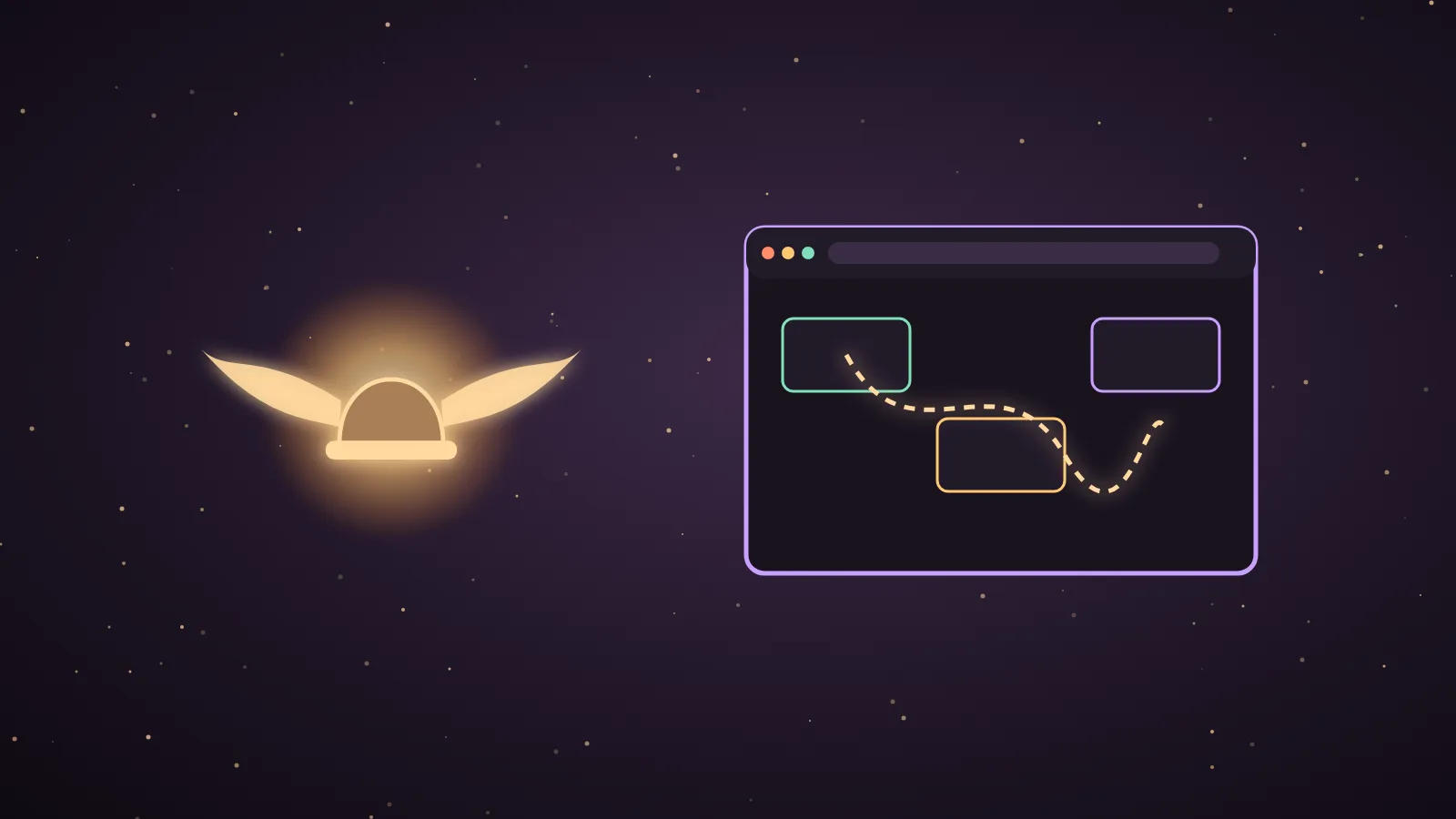
Hermes Agent Browser Use is a real, built-in integration, because Browser Use is the default browser driver inside Hermes Agent and Browser Use Cloud is one of the cloud browsers Hermes supports.
Hermes Agent is the free, open-source agent from Nous Research, and Browser Use is the MIT-licensed browser automation project at github.com/browser-use/browser-use.
You do not need a plugin or an MCP server to connect them.
It solves a simple problem, which is that most business websites have no clean way for an agent to plug in, so the agent has to use the page like a person does.
In this post I'll cover what the integration is, how it works, how to set it up, how to use it for real browser tasks, and where it breaks.
I checked every fact against the official Hermes docs, Browser Use's docs and my own install on 12 October 2026.
What is Hermes Agent Browser Use?
The keyword covers two things, and I'll answer both.
The first is Hermes Agent working with the Browser Use project.
The second is Hermes Agent using a browser to do a job, which people also call browser use.
These are the facts on the first part.
| Question | What I verified |
|---|---|
| Is there an official integration? | Yes, the Hermes docs call Browser Use mode the default browser driver. |
| Is it a plugin? | No, a search of the curated plugin catalog for browser-use returned no entries. |
| Is it an MCP server? | No, Browser Use is not in the list printed by hermes mcp catalog. |
| What tool does the model get? | It gets one tool called browser_exec. |
| What is the engine? | The engine is Browser Harness, wrapped by the Browser Use CLI 3.0. |
| What does it cost? | It is free on a local browser, and cloud browsers are pay as you go. |
Browser Use's own product page confirms it from the other side.
It says Hermes Agent ships Browser Use as its default browser driver, and that the Nous Portal Tool Gateway routes Hermes cloud browsing to Browser Use Cloud.
How Hermes Agent Browser Use works
Hermes has always had browser tools, such as browser_navigate, browser_click and browser_type.
Each of those is a separate tool call, so a ten-click task is at least ten calls.
Browser Use mode replaces that set with a single tool.
The docs say the agent writes and executes Python in the browser to click, type, drag, scrape and interact with pages.
One call can therefore carry out a whole chain of steps.
The driver and the browser are separate choices.
The driver is how Hermes controls the page, and Browser Use mode is the default driver.
The browser is where the page runs, and that can be Hermes's own local Chromium, a Browser Use cloud browser, Browserbase or Firecrawl.
Local browsing uses the Chromium that Hermes packages, in a clean throwaway profile, so your own Chrome is never touched.
Camofox is the one exception, because it has no endpoint for the harness to attach to, so it keeps the older tools.
The browser_exec tool is only offered to sessions that have terminal access, because it runs model-written Python on your machine.
How to set up Hermes Agent Browser Use
The setup is three commands on a machine that already has Hermes.
hermes update
hermes tools
hermes
The update matters, because the current docs say the Browser Use engine ships with every install.
My own install is a late-September build of v0.21.4, and its tools menu still lists Browser Use as a row that installs a separate CLI.
In the tools menu, open Browser Automation and choose Local Browser, which is free and needs no key.
You do not have to switch Browser Use mode on, because it is the default whenever browser.backend is unset.
You can force it or turn it off in the config file.
# ~/.hermes/config.yaml
browser:
  backend: "browser-use"   # force Browser Use mode
  # backend: "off"         # use the built-in browser tools instead
You can also type /browser use off in a chat to go back to the click-by-click tools.
If Hermes tells you the Browser Use CLI was not found, it has fallen back to those older tools, and the update fixes it.
Adding Browser Use Cloud
You only need the cloud for sites that block a normal automated browser, or for a server with no screen.
# ~/.hermes/.env
BROWSER_USE_API_KEY=your_key_here

# ~/.hermes/config.yaml
browser:
  cloud_provider: browser-use
The docs say Browser Use Cloud runs managed Chromium with stealth and residential proxies on by default, and that it includes CAPTCHA solving and persistent profiles.
A paid Nous Portal subscription can run the same Browser Use cloud browsers through the Tool Gateway, with no separate Browser Use account.
My best browser for Hermes ranking compares every option underneath the driver.How to use it: three browser tasks with approvals
These are starting prompts, and I am not presenting them as measured results.
| Task | Example instruction | Your approval step |
|---|---|---|
| Research | Open these three pricing pages and build a table with the page address next to each price. | You spot-check the addresses. |
| Form filling | Fill in this form with the details below, do not press submit, and show me a screenshot. | You press submit yourself. |
| Logged-in check | Open my dashboard and report yesterday's totals without changing any settings. | You keep the task read-only. |
The docs make an honest point about research.
For simple information retrieval, web search and web extract are faster and cheaper than a browser.
The browser is worth it when a page needs clicks, a login or dynamic content.
For form filling, the stop instruction is your approval gate.
Hermes's approval system is built around dangerous shell commands, and as far as I can tell from the docs it does not pause before each click.
Set browser.headed: true while you learn, because it opens a visible window that stays open between turns.
For logged-in checks, Hermes has two routes.
Setting browser.use_real_profile: true makes Hermes drive a managed copy of your active Chrome profile.
Typing /browser connect in the terminal CLI attaches Hermes to a Chrome window over the Chrome DevTools Protocol.
If the agent reaches a sign-in page with no saved login, Hermes asks you in a masked prompt.
The docs say the password is encrypted on your machine, bound to that site, and filled into the page without the model seeing it.
Safety: logins, payments and CAPTCHAs
| Area | What Hermes does | What I'd add |
|---|---|---|
| Logged-in sessions | Real profile browsing is off by default, and turning it off deletes the copied profile. | I use a clean profile unless the task truly needs my accounts. |
| Passwords | Saved logins are filled into the page without entering the model's context. | I remember that the site itself still receives the password. |
| Payments | Every saved-card fill asks you first, and sessions with nobody present are refused. | I do the final payment click myself. |
| CAPTCHAs | Browser Use Cloud includes CAPTCHA solving. | I don't use it on sites whose terms forbid automation. |
| Shell commands | The approvals.mode setting gates dangerous commands. | I keep it on smart or manual and avoid YOLO mode. |
The Hermes docs describe real profile browsing as a consent-gated convenience and not an isolation boundary.
Browser Use's README is just as direct about CAPTCHAs.
It says results depend on the site, and that no browser configuration guarantees every challenge can be avoided or solved.
What Hermes Agent Browser Use costs
| Item | Published cost |
|---|---|
| Hermes Agent | It is free and open source. |
| Browser Use mode with a local browser | It is free. |
| Browser Use Cloud session | It is $0.02 per browser-hour, metered by the minute. |
| Managed residential proxy | It is $5 per GB. |
| Nous Subscription browser | It is pay as you use against a paid Nous Portal plan. |
| The model | It depends on the model you run, and this is usually the bigger bill. |
The cloud prices come from Browser Use's pricing page, which says there are no subscriptions and that top-up credits never expire.
Two of its pages gave different figures for the free signup credit when I checked, so I have left that number out.
Limits you should know
| Limit | What it means for you |
|---|---|
| Text-based reading | The built-in tools read a text snapshot of the page and can miss visual detail. |
| Snapshot size | Snapshots are cut at 15,000 characters by default, and the full copy is saved to a file. |
| No file downloads | The docs list browser file downloads as unsupported for the built-in tools. |
| CLI-only connect | The /browser connect command does not run from Telegram, Discord or the web interface. |
| Lightpanda | The lightweight Lightpanda engine has no screenshots. |
| A done answer is not proof | You still need your own check that the job really finished. |
The MCP route and Jev Ultrafast
Browser Use publishes MCP servers of its own.
The hosted one is at https://api.browser-use.com/v3/mcp, and the local one starts with uvx --from 'browser-use[cli]' browser-use --mcp.
Hermes can add a custom MCP server with hermes mcp add.
I have not tested that pairing, and Browser Use's MCP page lists Claude, Cursor and Windsurf but not Hermes.
The built-in route is simpler, so I'd treat MCP as optional.
Jev Ultrafast is a separate browser agent from the Browser Use team that lets TypeSafe's Jev model choose every click.
It is not part of Hermes, and my Jev Ultrafast GitHub post explains it.
Which models handle Hermes Agent Browser Use best?
This is the part where GoldieBench is useful, so I have kept it for the end.
Hermes Agent Browser Use doesn't ship its own model.
The model in your Hermes profile does the thinking, and in Browser Use mode it also has to write working Python.
That makes the model choice matter more than it did with the older click-by-click tools.
I want to be straight about what our board can tell you.
GoldieBench scores one-shot builds, such as games and apps, on a 0 to 10 scale.
It does not score browser tasks, so there is no GoldieBench browser score and I am not going to invent one.
The browser numbers below are Nous Research's own, from the benchmark notes in the Hermes repo.
What Nous Research measured
They compared the older browser tools with browser_exec on live multi-step web tasks.
| Model | Tokens per task, older tools | Tokens per task, Browser Use mode | Change | Tasks passed |
|---|---|---|---|---|
| Claude Opus 4.8 | 64,594 | 25,934 | About 60% fewer | 18 of 18 on both |
| Kimi K3 | 56,464 | 19,230 | About 66% fewer | 18 of 18 on both |
| Claude Sonnet 5 (easy set) | 40,095 | 27,991 | About 30% fewer | 15 of 15 on both |
| Qwen3 Coder 30B (easy set) | 60,068 | 58,763 | Roughly level | 13 of 14, then 10 of 11 |
Their own summary is that the saving concentrates on multi-step tasks and grows with task hardness.
It also says weak coders burn the savings retrying their code.
Their caveats matter as well.
The tasks ran on simple practice sites with no anti-bot systems, and each cell had three or fewer runs.
So read the table as a direction, and not as a promise for your sites.
How those models score on GoldieBench
Three of the four models in that test are on our board.
| Model | GoldieBench average | Scored tasks | What I take from it |
|---|---|---|---|
| Kimi K3 | 7.89 | 50 | It had the largest token saving in Nous's test, and it is a strong builder here too. |
| Opus 4.8 | 7.51 | 47 | It passed every hard browser task in both arms of Nous's test. |
| Claude Sonnet 5 | 7.01 | 47 | It saved about 30% on the easy set, which is a smaller win. |
Qwen3 Coder 30B is not on GoldieBench, so I can't give you a build score for it.
The pattern lines up, though.
Models that write clean code in one shot are the ones that got the most from Browser Use mode.
The models I'd pick today
These are build scores, so treat them as a guide to coding strength and not as browser results.
| Role | Model | GoldieBench average |
|---|---|---|
| Top pick for long browser chains | Claude Opus 5 | 8.27 across 50 scored tasks |
| Frontier alternative | GPT-5.6 Sol | 8.16 across 50 scored tasks |
| Value pick for scheduled checks | MiniMax M3 | 7.97 across 47 scored tasks |
| Everyday Hermes brain | Kimi K3 | 7.89 across 50 scored tasks |
| Local and private | Qwable 5 27B Coder | 7.14 across 41 scored tasks |
If you run a small local model, I'd be careful.
Nous's notes suggest a weak coder gains little from Browser Use mode, so typing /browser use off may serve you better.
You can compare every offline option on the local models page, and my wider picks are in my best Hermes Agent model post.
My take
The integration is real, it is on by default, and both companies document it the same way.
The safety design around passwords and cards is better than I expected.
The gap is that browser clicks are not individually approved, so your prompt has to carry the stop points.
Update Hermes, pick Local Browser, and test one harmless task before you go anywhere near a logged-in tab.
Also On Our Network
- Agent Operatorsthe five-step Hermes Browser Use setup for operators
- AI Income Deskseven browser jobs a business can hand to Hermes
- AI Tool Verdictevery Hermes Browser Use feature, with a verdict and scores
- agentos.guidewhere Browser Use fits in an Agent OS
- agentos.guideJulian's own voice browser built on Jev
So the answer is simple: choose a strong model, start on a clean local browser, and add your own stop points, which is everything you need to get going with Hermes Agent Browser Use.
FAQ
Does Hermes Agent work with Browser Use?
Yes, and it is built in. The official Hermes docs describe Browser Use mode as the default browser driver, and Browser Use Cloud is a supported cloud browser provider. No plugin or MCP server is needed.
How do I set up Hermes Agent Browser Use?
Run hermes update, then run hermes tools and open Browser Automation. Choose Local Browser for free local browsing. Browser Use mode is the default driver, so nothing else needs switching on.
What is browser_exec in Hermes?
It is the single browser tool the model gets in Browser Use mode. The agent passes it Python code that clicks, types, scrolls and scrapes, so one call can complete several steps.
Which model is best for Hermes Agent Browser Use?
A strong coding model, because the agent has to write working Python. Hermes Agent Browser Use doesn't ship its own model. In Nous Research's own test, Claude Opus 4.8 and Kimi K3 used about 60% and 66% fewer tokens in Browser Use mode, while a small local coder saw no real saving.
Is there a GoldieBench score for browser tasks?
No. GoldieBench scores one-shot builds and does not score browser tasks. The board is useful for judging coding strength, such as Claude Opus 5 at 8.27 and Kimi K3 at 7.89.
How much does Browser Use Cloud cost with Hermes?
Browser Use lists cloud browser sessions at $0.02 per browser-hour and managed residential proxies at $5 per GB, with no subscription. Local browsing in Hermes is free.
Keep reading
 Hermes Herald AI Agent: Which Brain To Run It On, With Real GoldieBench Scores
 Herald OS: What It Is, How To Set It Up, And Which Benchmarked Models To Run Under It
 Hark AI Agent: What It Is, The Model Behind It, And How Those Brains Score On GoldieBench
🌐 Sister-site take: read this on agentos.guide