GoldieBench Blog · 11 min read
The Best Hermes Agent Memory In 2026: The Ranked List, The Setup, And The Models That Actually Save
The best Hermes Agent memory is built-in memory plus an Obsidian vault. See 7 options ranked, how each works, setup steps, and which models save reliably.
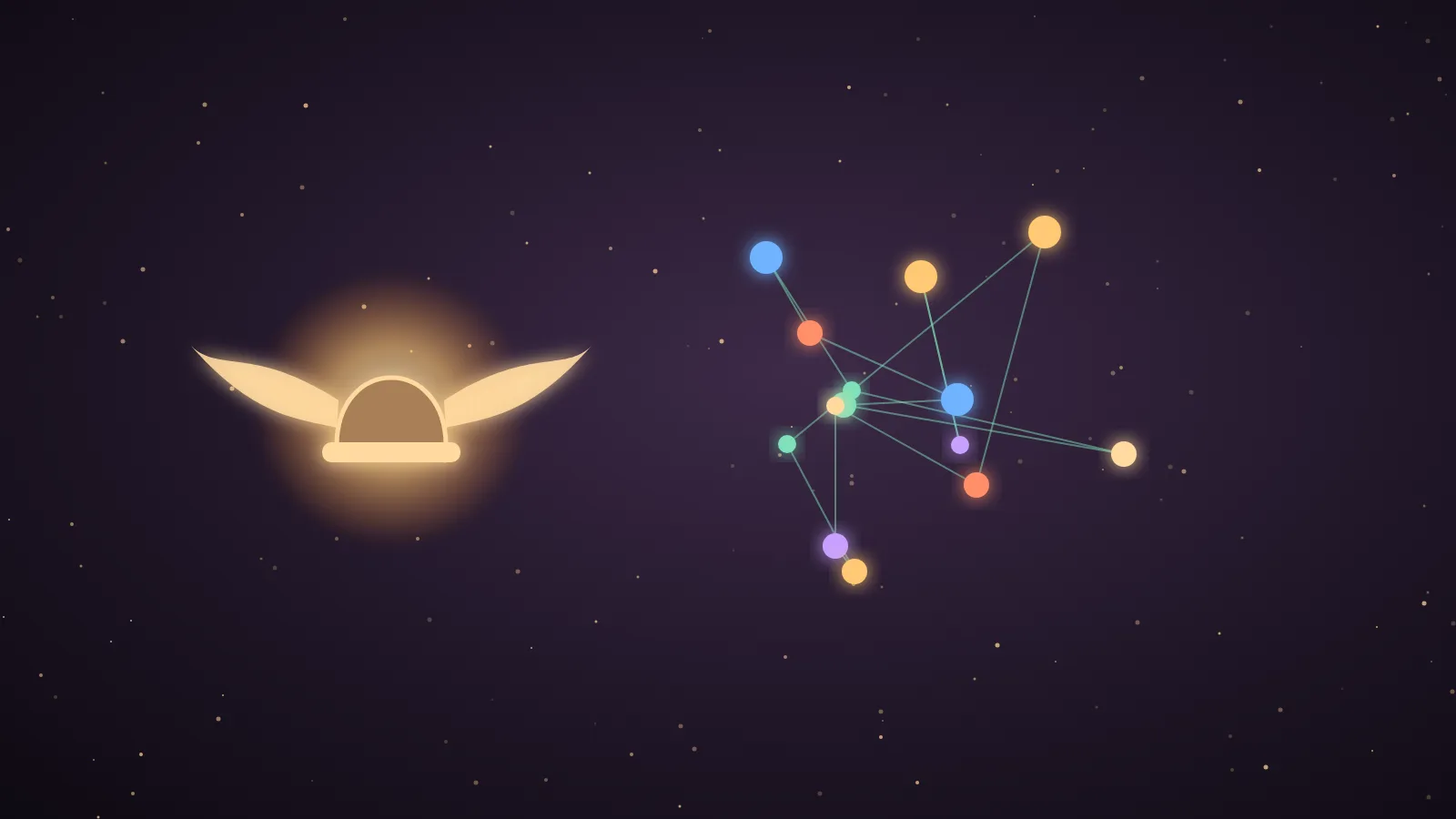
The best Hermes Agent memory is the built-in memory with an Obsidian vault on top, which is a plain folder of notes that Hermes reads before it works and writes to after it finishes.
The built-in memory on its own is my second pick, and per-profile memory is my third.
Hermes Agent is the free, open-source agent from Nous Research, and its memory is what stops you from explaining your business again every morning.
This is my own ranking, based on the setup I run daily and on the official Hermes docs.
I'll give you the ranked list first, then how each option works and how to set it up, then the privacy rules, and finally which models handle memory well.
The top three Hermes Agent memory picks at a glance
- 🥇 Built-in memory plus an Obsidian vault is the best overall, because it is free, private and shared by every agent you run.
- 🥈 Built-in memory only is the best starting point, because it is already switched on.
- 🥉 Per-profile memory is the best way to keep separate clients or jobs apart.
How I ranked the best Hermes Agent memory options
I ranked every option on four things.
The first is whether I use it every day, and my top three pass that test.
The second is cost, and most of this list is free.
The third is privacy, which means where your data ends up.
The fourth is how much setup a normal user has to do.
I ranked the external providers from the official docs rather than from months of testing each one.
The 7 best Hermes Agent memory options, ranked
| Rank | Option | Best for | Cost | Where the data lives |
|---|---|---|---|---|
| 1 | Built-in memory plus an Obsidian vault | Several agents sharing one brain | Free | Plain files on your own machine |
| 2 | Built-in memory only | One agent on one machine | Free | Two files in your Hermes folder |
| 3 | Per-profile memory | Separate clients, roles or agent teams | Free | Each profile's own folder |
| 4 | Holographic | Deeper local recall with no outside service | Free | A local SQLite database |
| 5 | Honcho | Multi-agent systems that share one user | Paid on the cloud, free when self-hosted | Honcho Cloud or your own server |
| 6 | Other official providers | Teams with one specific need | Most have a free mode, and RetainDB is listed at $20 a month | It depends on the provider |
| 7 | Memory helper plugins | Reviewing, protecting and browsing memory | Free | They read your existing memory files |
How Hermes Agent's built-in memory works
You need to understand the built-in memory first, because everything else sits on top of it.
The official memory docs say two files make up the agent's memory.
MEMORY.md holds the agent's own notes about your environment and what it has learned, and it is limited to 2,200 characters.
USER.md holds your profile and preferences, and it is limited to 1,375 characters.
Both files are stored in the ~/.hermes/memories/ folder.
Hermes injects them into the system prompt as a frozen snapshot when a session starts.
That means a fact saved in this session shows up in the next session and not in the current one.
The agent edits the files itself with a memory tool that can add, replace or remove an entry.
Memory does not compact itself, so when a file is full the tool returns an error and the agent has to make room.
The docs also describe session search, which stores every past session in a local SQLite database with full-text search.
The small files hold the facts that must always be present, and session search finds older details on demand.
How each Hermes Agent memory option works and how to get it
1. Built-in memory plus an Obsidian vault
A vault is a folder of text notes, and Obsidian is the free app that shows them and keeps them on your machine.
You create an empty vault, give Hermes the full folder path and ask it to build the folders.
My own vault uses nine folders, which are Inbox, Daily, Projects, Areas, Resources, Memories, Archive, Wiki and Agentic OS.
One protocol file tells every agent to read before it works and to write before it leaves.
Seven of my agents read the same vault, and each one appends to its own folder so nothing gets overwritten.
The full walkthrough is in my Hermes and Obsidian second brain guide.
2. Built-in memory only
You already have this, because Hermes creates and manages the two files for you.
The agent saves preferences, corrections and environment facts on its own as you work.
You can turn on write_approval in the config if you want every save to wait for your yes.
3. Per-profile memory
A profile is a separate Hermes home with its own config, keys, memory, sessions and skills.
The profiles docs say memory is scoped per profile by design.
You run hermes profile create with a name, and you add the clone flag if you want your current memory files copied across.
The docs warn that two agent processes should never share one Hermes home, because both write memory automatically.
4. Holographic
Holographic is a local SQLite fact store with full-text search and trust scoring.
The docs describe it as the choice for local-only memory with no external dependencies.
You select it by running hermes memory setup.
5. Honcho
Honcho is an external provider maintained by Plastic Labs that builds a model of the user across sessions.
The docs say it is best for multi-agent systems with cross-session context.
You install it with hermes plugins install honcho and then run the memory setup.
6. The other official providers
The memory providers docs also name Mem0, Hindsight, Supermemory, OpenViking, ByteRover, RetainDB and Memori.
| Provider | What the docs say it is best for | Cost in the docs |
|---|---|---|
| Mem0 | Hands-off memory with automatic fact extraction | Free or paid |
| Hindsight | Knowledge-graph recall with entity relationships | Free or paid |
| Supermemory | Semantic recall with user profiling | Free or paid |
| OpenViking | Self-hosted knowledge management with structured browsing | Free |
| ByteRover | Portable, local-first memory with a CLI | Free or paid |
| RetainDB | Teams already using RetainDB | $20 a month |
| Memori | Agent-controlled recall with structured attribution | Free or paid |
Only one external provider can be active at a time, and the built-in memory stays on alongside it.
Which providers come bundled depends on your Hermes version, so run hermes memory --help to see your own list.
7. Memory helper plugins
The plugin catalog is separate from the provider list.
I ran hermes plugins search memory on 10 October 2026, and it listed 58 entries in the memory category.
I have not tested most of them, so I only name the helpers whose catalog descriptions solve a clear problem.
The hermes-memory-wiki plugin is marked official, and it adds a Memory Wiki dashboard tab with a read-only audit panel for the two memory files.
The memory-review plugin lets you tick staged memory writes and approve or reject them.
The memory-rewind plugin keeps a version history of built-in memory so you can restore a past version.
The memory-shield plugin keeps the agent from rewriting or wiping what it remembers about you.
The obsidian-memory plugin lets you browse and edit Obsidian vault notes from the Hermes dashboard.
Community plugins are third-party code, so read each disclosure before you install one, and my plugins marketplace post explains the tiers.
Why a folder beats a bigger memory
The built-in memory is roughly 1,300 tokens in total, and that is on purpose.
Those tokens are paid for in every prompt, so a small always-on memory keeps every session cheap.
A vault works the other way round, because nothing in it costs anything until the agent opens a note.
When I measured my own vault for my guide, the whole thing was around 870,000 tokens, and one clean wiki page was around 122 tokens.
So my protocol tells every agent to read the short clean page first and never to dump the whole vault into context.
It also tells the agent to say so when the answer isn't there, which stops it from inventing a client or a number.
The other reason I like a folder is that it survives a model change.
When a new model comes out, I swap the brain and the new one reads the same notes.
How to set up the best Hermes Agent memory in six steps
First, install Hermes and have one normal conversation so the built-in files exist, and my best Hermes Agent setup ranking covers the install.
Second, install Obsidian and create a new, empty vault.
Third, give Hermes the actual folder path and ask it to create the folders.
I once said "this folder" instead of the full path, and Hermes built everything in its own workspace.
Fourth, write an About You note with who you are, what you do and how you write.
Fifth, add the protocol file with the read-before and write-after rule.
Sixth, ask Hermes to use the memory tool to save the vault path, and then start a new session.
The docs note that a skill is often a better home for a location that a recurring task needs every run, and my best Hermes Agent skills ranking covers skills.
The commands that manage Hermes Agent memory
| Command | What it does |
|---|---|
| hermes memory setup | It opens an interactive picker for an external provider. |
| hermes memory status | It shows which memory provider is active. |
| hermes memory off | It disables the external provider and leaves the built-in memory on. |
| hermes memory reset | It erases all built-in memory, so use it with great care. |
| hermes journey | It shows a timeline of learned skills and memories that you can edit or delete. |
| /memory pending | It lists the saves that are waiting for your approval. |
| /new | It starts a fresh session so new memory entries are loaded. |
The privacy rules for Hermes Agent memory
Memory is a list of true facts about you, so it needs more care than a chat log.
I learned that while filming my Herald OS video, which is embedded at the bottom of this page.
I opened the Memory page to show everything Hermes remembered, and my Telegram details were visible on screen.
So I now check memory before I share my screen, record a video or join a call.
I keep passwords, API keys and tokens out of memory and out of the vault.
I read a cloud provider's data terms before I switch it on, because an active provider receives your conversation turns.
The docs say Hermes scans memory entries for injection patterns and scrubs recognisable secrets before it hands data to a provider.
Those are backstops, and they don't replace the habit of keeping secrets out.
My Herald OS post covers the rest of that interface.
What to store in Hermes memory and what to leave out
| Store this | Leave this out |
|---|---|
| Your preferences, such as tone and format | Passwords, API keys and tokens |
| Environment facts and tool quirks | Facts a quick search can find again |
| Corrections you have made more than once | Logs, code dumps and data tables |
| Project conventions and where things live | Temporary paths and one-off debugging details |
| Completed work with a date | Anything already in your SOUL.md or AGENTS.md files |
The docs suggest merging entries once a file passes 80% of its limit.
Long material belongs in the vault, where there is no character limit.
Tips and limits before you rely on Hermes memory
A reply like "I'll remember that" is only text, because memory persists only when the model calls the memory tool.
You can check a save by opening the memory file, but only do that when nobody can see your screen.
A Telegram or Discord chat is one long session, so new entries stay invisible until you run the new session command.
Memory is per profile, so a CLI session on one profile and a bot on another do not share notes.
Herald OS has Spaces for Ideas, Work and Personal, but I haven't confirmed that a Space keeps a separate memory, so I use profiles for real separation.
A vault with three notes gives generic answers, so feed it real call notes and decisions for a few weeks.
Which models handle Hermes Agent memory best
This is the part GoldieBench is for, so I'll be precise about what the data does and doesn't show.
Hermes memory doesn't ship its own model, because the saving is done by whichever model you plug into Hermes.
The model has to decide a fact is worth keeping and then call the memory tool correctly.
The official docs say small local models, roughly under 30 billion parameters, often produce the "saved" confirmation without making the tool call.
The docs' fix is a stronger model for setup, because a smaller model reads existing entries fine once they are in the system prompt.
GoldieBench does not measure memory or tool calling.
It scores models on one-shot builds, so treat the numbers below as a guide to general capability and not as a memory score.
| Model | Type | Live GoldieBench average | My view for memory work |
|---|---|---|---|
| GPT-5.6 Sol | Cloud | 8.16 | It is a strong main brain for setting up memory and writing vault notes. |
| GLM-5.2 | Cloud, open weights | 7.77 | It is my value pick, and it has a one-million-token context window. |
| Opus 4.8 | Cloud | 7.51 | It is a deep reasoner that suits planning and long vault sessions. |
| Qwable 5 27B Coder | Local | 7.14 | It builds well, but it sits under the size the docs flag for unreliable saves. |
| Agents-A1 | Local | 4.83 | It scores low on builds, but it was tuned for long-horizon tool work. |
| Gemma 4 12B MLX | Local | 3.98 | It is fine for reading memory, and I wouldn't trust it to set memory up. |
Agents-A1 is the interesting one, because a low build score does not mean poor tool calling.
I haven't run a dedicated memory-save test on the bench, so I can't give you a measured save rate for any of these models.
My practical routing is simple.
I use a strong cloud model when I'm teaching Hermes new facts or building the vault, and I let a cheaper or local model do routine work that only needs to read memory.
You can compare more brains in my best Hermes Agent model ranking, the best LLMs for Hermes Agent and the local models board.
How to choose your Hermes Agent memory
Choose the built-in memory if you are new and run one agent.
Choose the vault if you run several agents or want your knowledge to outlive any one model.
Choose profiles if you serve separate clients.
Choose Holographic if you want deeper recall with no cloud.
Choose Honcho if several agents need one shared view of the same user.
Choose another provider only if its niche matches a real problem you have today.
Also On Our Network
- Agent Operatorsthe step-by-step Hermes memory setup for operators
- AI Income Deskhow agencies and creators use Hermes memory
- AI Tool Verdictevery Hermes memory option scored in one verdict
- agentos.guidehow memory becomes the third layer of an Agent OS
- agentos.guideThe full Hermes and Obsidian second brain guide on agentos.guide
Keep the built-in files on, build a vault, pick a model that really calls the memory tool, and you will have the best Hermes Agent memory.
FAQ
What is the best Hermes Agent memory?
My pick is the built-in memory with an Obsidian vault on top. The two built-in files hold the short facts Hermes needs in every session, and the vault holds everything else as plain text that any agent can read.
How does Hermes Agent's built-in memory work?
The official docs say two files, MEMORY.md and USER.md, are loaded into the system prompt as a frozen snapshot at session start. MEMORY.md is limited to 2,200 characters and USER.md to 1,375 characters, and the agent edits them with a memory tool.
Does Hermes Agent memory ship its own model?
No. The memory is saved by whichever model you connect to Hermes, so a model with weak tool calling can claim a save it never made. The docs recommend a stronger model for setup.
Does GoldieBench measure memory?
No. GoldieBench scores models on one-shot builds, not on memory or tool calling. I use the live averages, such as GPT-5.6 Sol at 8.16 and GLM-5.2 at 7.77, only as a guide to general capability.
Which external memory providers does Hermes support?
The official docs name Honcho, OpenViking, Mem0, Hindsight, Holographic, RetainDB, ByteRover, Supermemory and Memori. Only one external provider can be active at a time.
Is Hermes Agent memory private?
The built-in files and an Obsidian vault stay on your own machine. A cloud provider stores your data on its servers, so read its terms first, check memory before you share your screen and keep passwords and API keys out.
Keep reading
 Hermes Herald AI Agent: Which Brain To Run It On, With Real GoldieBench Scores
 Herald OS: What It Is, How To Set It Up, And Which Benchmarked Models To Run Under It
 Hark AI Agent: What It Is, The Model Behind It, And How Those Brains Score On GoldieBench
🌐 Sister-site take: read this on agentos.guide