GoldieBench Blog · 6 min read
Migrate Grok Bot To Hermes + Which AI Models To Run Each Imported Bot On, With Real GoldieBench Scores For Opus 5, Hermes MoA, Kimi K3 And Gemini 3.6 Flash
Grok Bot chose your models for you. After the move, Hermes asks you to choose. Here is a shortlist with the scores read on GoldieBench.

When you migrate Grok Bot to Hermes, you gain a decision Grok Bot never asked you to make: which AI model runs each of your Bots.
The Grok Bot FAQ says it picks the backend model for every task, with no model picker, and doesn't show which model handled a request.
Hermes hands that choice back to you, profile by profile.
Below are the GoldieBench scores I read on the live models page on 3 November 2026, and how I'd match them to the kinds of Bots people bring over.
If you'd like my team to make the call with you, book a free SEO strategy session.
The Move Itself, In Three Lines
Hermes v0.22.6, released on 2 November 2026, added hermes migrate grok-bot to the official agent-importers plugin.
Grok Bot has no export button, so Hermes prints a prompt you paste into each Bot, and the Bot returns grok-bot-export.json.
You import it into a profile per Bot with hermes -p <profile> import-agent grok-bot, and the full map of what lands where is in the import guide.
Why The Model Question Appears After The Import
The export brings routines, skills, memory, facts about you and the Bot's role.
It doesn't bring a model, because Grok Bot never exposed one per Bot.
So every new profile starts on whatever main model your Hermes install already uses.
That's fine for a first test, and it's the wrong long-term setting for a roster of Bots with very different jobs.
Imported cron jobs arrive paused, which gives you a natural moment to set the model before anything runs.
I'd make that the rule: no imported job resumes until its profile has a model chosen on purpose.
The Scores I Read On GoldieBench
All figures are average scores out of 10 from the GoldieBench models page, read on 3 November 2026.
| Model | Average score | Tasks scored | Notes from its GoldieBench page |
|---|---|---|---|
| Fusion | 8.59 | 47 | Multi-model panel, Fable 5 plus GPT-5.5 |
| Claude Opus 5 | 8.27 | 50 | 1,000,000-token context |
| Hermes MoA | 8.17 | 47 | Panel merged by a chair, default Opus 4.8 plus GPT-5.5 |
| GPT-5.6 Sol | 8.16 | 50 | OpenAI flagship |
| Claude Fable 5 | 8.10 | 47 | Anthropic, first Mythos-class model made generally available |
| Grok | 8.09 | 47 | 256,000-token context, X-native |
| Kimi K3 | 7.89 | 50 | 1,048,576-token context, long-horizon agent work |
| Gemini 3.6 Flash | 7.08 | 50 | Google's launch-day Flash |
One caveat on the Grok row: its model page shows 8.09, while the methodology page still lists Grok among unranked models.
Treat that row as provisional.
What These Scores Measure, And What They Don't
GoldieBench gives every model the same fixed prompt, one shot, and the result must be a single self-contained HTML file.
Each result is scored 0 to 10, and the leaderboard is the average across scored tasks.
That's a strong signal for first-try build quality.
It isn't a test of a cron job firing on time, or of how well a model follows a Bot's memory over weeks.
Use the scores to shortlist, then judge the shortlist on a week of your own Bot's real runs.
Task counts matter too: an average over 50 tasks is a steadier number than one over 20.
Every model in my table has at least 45 scored tasks, which is why I left out thin entries such as LongCat-2.0, scored on four tasks.
Pairing 1: Research And Reporting Bots
These are the Bots that read a lot and write a long report on a schedule.
I'd start them on Claude Opus 5, the top single model in the table at 8.27 across 50 tasks.
If you'd rather not bet on one vendor, Hermes MoA scored 8.17 on 47 tasks, and its GoldieBench page describes a panel of models whose drafts a named aggregator merges.
The page lists the default panel as Opus 4.8 and GPT-5.5, aggregated by Opus 4.8, through an OpenRouter key.
Pairing 2: Memory-Heavy, Long-Running Bots
Some Bots arrive with a large MEMORY.md and long skills.
Kimi K3 is the model on this shortlist whose GoldieBench page lists a 1,048,576-token context and a focus on long-horizon agent work.
Its average is 7.89 over 50 tasks, below the top group on one-shot builds.
For a Bot whose value is remembering a lot rather than building in one shot, I'd still test it first.
Pairing 3: Digest And Inbox Bots
Morning digests and inbox summaries run often and do lighter work.
Gemini 3.6 Flash scored 7.08 across 50 tasks, and its page calls it faster and lighter on tokens than earlier Flash models.
That's a sensible lane for high-frequency, low-complexity routines.
Move the Bot up to a stronger model only if its summaries start missing things.
Pairing 4: Bots That Lived On X Content
If a Bot's job was watching X, the Grok row is the obvious one to test.
The GoldieBench Grok page describes it as X-native with real-time timeline context and a 256,000-token context window.
Remember the unranked note above before you lean on its 8.09.
Pairing 5: Bots That Build Things
Some Bots write pages, scripts or small tools rather than reports.
This is the closest match to what GoldieBench actually tests, so the scores carry the most weight here.
Fusion tops the page at 8.59 over 47 tasks, and its card describes Fable 5 and GPT-5.5 ensembled through OpenRouter.
GPT-5.6 Sol, at 8.16 over 50 tasks, and Claude Fable 5, at 8.10 over 47, sit within a tenth of a point of Hermes MoA.
At that spread, I'd pick between them on what your other profiles already use, so you manage fewer provider accounts.
Don't Forget The Auxiliary Models
Hermes also runs side tasks such as context compression, session titles and image analysis.
The configuration docs say those follow your main model by default.
On an expensive main model, that adds cost on every side task.
Set auxiliary.<task>.provider and auxiliary.<task>.model to a lighter model once the main pick is settled.
hermes -p research model          # pick the main model for this profile
hermes -p inbox model # a lighter one for the digest BotA One-Week Test Plan After The Import
- Import one Bot into its own profile and leave its cron jobs paused.
- Set a main model from the pairing that fits the Bot.
- Pause the routine in Grok Bot, then run
hermes cron resume <id>on the Hermes copy. - Compare a week of outputs with what the Bot produced before the move.
- Swap the model only if quality or speed misses the mark, then move the next Bot.
Hermes v0.22.6 reaches CLI users through hermes update, while .exe and .dmg Desktop installs get it with the next bundled release, per the release notes.
For the Claude Code, Codex and Cursor side of the importer, see Hermes import agent and the model to pick after.
For the Agent OS that runs these profiles, get access to the AI Profit Boardroom.
Also On Our Network
- Agent Operatorsthe six-step operator run from export prompt to resumed cron jobs
- AI Income Deskwhether a small business should move its Bots, and which one goes first
- AI Tool Verdicta scored verdict on the Grok Bot importer, row by row
- agentos.guidefive copy-paste prompts that let your agent run the Grok Bot import
- aiprofitboardroom.comthe complete Grok Bot to Hermes migration guide on the AI Profit Boardroom blog
Import one Bot, give its profile a model from the table, run it for a week, and book a free strategy session if you want help choosing models when you migrate Grok Bot to Hermes.
FAQ
Does the Grok Bot export include a model setting?
No. Grok Bot picks the model for each task and has no model picker, so the export carries routines, skills, memory and role but no model.
Which model scored highest on the GoldieBench shortlist?
Fusion, at 8.59 over 47 tasks, read on the GoldieBench models page on 3 November 2026. Claude Opus 5 led the single models at 8.27 over 50 tasks.
Can each imported Bot use a different model?
Yes. Import each Bot into its own profile with hermes -p, then set that profile's main model with hermes model.
Do GoldieBench scores tell me how reliable a cron job will be?
No. They average one-shot build scores out of 10, so use them to shortlist and judge the final pick on your own Bot's runs.
Is the Grok score on GoldieBench final?
Treat it as provisional. The Grok model page shows 8.09, but the methodology page still lists Grok as unranked.
Keep reading
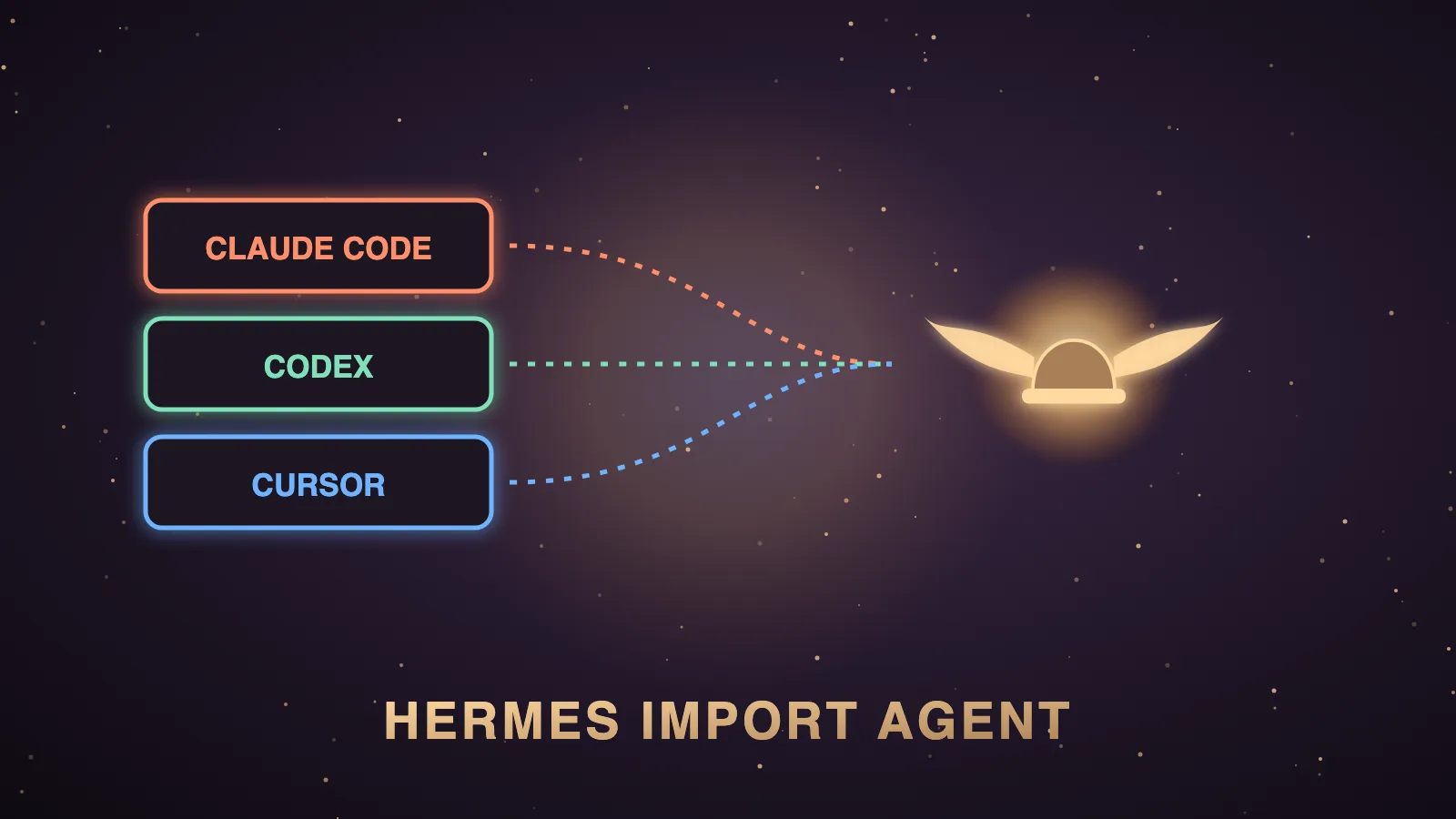 Hermes Import Agent: What It Moves From Claude Code And Codex, How To Use It, And The Model To Run Afterwards
 Hermes Agent Cursor + Which AI Models To Run After You Import: Real GoldieBench Scores For Cursor Users
 Grok Bot Skills + Which AI Models To Draft, Test And Port Them With, Using Real GoldieBench Scores
🌐 Sister-site take: read this on agentos.guide